
Balcony wall art in 2026 runs from a $30 set of sealed terracotta discs to a full stone veneer that can push 15 pounds per square foot before adhesive. What narrows the field is not budget but load: most residential balcony slabs top out at 40–100 pounds per square foot, and your lease probably forbids the lag bolts that wrought iron demands. Powder-coated aluminum and silicone-gasketed acrylic frames are what survive a humid August without swelling at the miters or fogging from the inside out.
1. Hanging Planter Frames

Wall-mounted planter frames turn the plants themselves into the artwork, which saves you from choosing between greenery and something to hang. The frame gives the trailing leaves a shape to grow against, and the whole thing reads as one piece rather than a pot stuck on a wall.
Powder-coated metal or sealed teak are the only materials I would trust through a full season of rain and sun; raw steel rusts, and untreated wood warps. A powder-coated frame in black or warm white keeps the focus on the foliage, while teak weathers to silver and looks intentional either way.
I like the balance best when the frame is simple and the plant does the work. A rigid geometric grid with a soft pothos or string of pearls spilling through it gives you the contrast that makes gallery walls interesting, but the plant keeps changing. Two to four of these, spaced with real breathing room between them, fill a balcony wall without the cluttered feel of a solid green wall. The trick is leaving enough gap that each frame has its own visual territory, especially on the narrow walls most balconies give you.
For renters, the mounting matters more than the frame. A bracket system that sits on a railing or hangs from a tension rod keeps the wall untouched, and the frame still sits flat enough to read as art from inside the room.
Recommended Products

Balcony Rail Planter: Rectangular outdoor planters was designed to maximize inside growing space allowing dirt and roots to grow strong and deep.This special design can be hung on the balcony, window, garden,railing, anywhere in the room,also can be used as desktop.

Picture Frame Design Plant Shelves: Our wall hanging planters distinguishes with its unique design and decorative feature, perfectly combining plants and wall decor. Add a modern visual effect to your wall, window, enhancing the personality and charm of your indoor and outdoor space.
2. Woven Wall Hangings

Woven wall hangings soften a balcony’s hard edges in a way paint never could. Macramé, rattan, and outdoor textiles bring in the layered texture that makes a small outdoor space feel finished rather than bare.
The material choice matters more out here than it does indoors. Seagrass and rattan hold up against morning dew and light rain if the balcony has any overhang at all, but direct exposure calls for mounting under a covered corner or bringing pieces in during storms. A collection in varying sizes reads as intentional; keeping the color family consistent keeps it from looking like storage.
A large woven textile hung flat against the wall works like temporary architecture. Stripes or muted botanical prints coordinate with most balcony furniture without fighting it, and the piece can move with you when the lease ends. Cane panels do something similar while filtering light, which helps if the wall faces west and turns brutal by four o’clock.
The mounting is the part I watch most carefully. Concrete and stucco eat flimsy hardware, so I plan for anchors rated for the actual wall type, not the drywall I wish I had.
Recommended Products

Durable Iron Construction – Crafted from premium wrought iron, this hanging planter offers long-lasting strength and stability, making it ideal for both indoor hanging planters and hanging planters for outdoor plants.

Size: Our white fence hooks measures 6 inch in Length and 2.1 inch in width, could fit most of vinyl fence and door

Heavy Duty Steel Plant Hanger – Supports Up to 22 lbs: Made from thickened 2.8mm steel, this heavy duty hanging plant holder safely supports up to 22 lbs, providing strong and reliable support for your favorite flower pots and indoor plants
3. Mosaic Tile Wall Art

Ceramic tile gives you a permanent, personal mark on a rental balcony without the cost of stone. A large-format, light-colored tile in cream or soft grey cuts grout lines to almost nothing, which reads as more wall and less grid in tight spaces. That continuity matters when the whole balcony might be sixty square feet.
I would stick with ceramic for any project under a few hundred dollars. It handles rain and heat without the premium that porcelain or natural stone commands, and the face of the tile does the visual work, not the price tag. Light tones reflect what sunlight the space gets and keep the wall from feeling like it is leaning in.
The catch is prep. Tile goes over painted walls only if the surface is cleaned and primed so the adhesive bonds. Skip that step and tiles detach by the second season. Grout needs sealing, and the wall needs periodic checks where water collects, but the tile itself asks little beyond that. For a weekend install with a result that reads as built-in, this is the trade I would make: permanence for patience.
Recommended Products
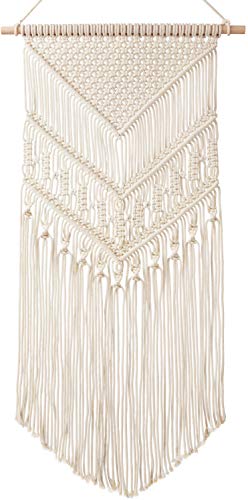
Size : Macrame 14" Width X 33" Length (from the dowel to the bottom of the longest fringe). Wood dowel: 17". Tips: The macrame may be curly during transport, you can iron it with an iron steam or pull down the strings to regain the straight shape.

【Chic Design】The macrame wall hanging inspired by tribal objects, ethnic art, and boho design,Featuring hand knotted macrame textiles, layered fringe details, geometric wave knit patterns, and wool ball, Its unique design integrates into any home or office decor.

Handmade Woven Basket Set: you will receive 7 pieces of boho wall basket decors, with 7 different styles, which are exquisite and beautiful; Sufficient quantities can meet your decoration and replacement needs, and you can also share them with your family or neighbors
4. Vertical Garden Art

A full-wall planting system turns a blank balcony surface into something that reads as intentional decor rather than a storage solution. What convinced me, reading through the options, is that the narrow wall-mounted containers work best when you stagger them rather than line them up like a shelf. Mount each at a height where you can water without drips hitting the one below, and leave a gap of at least a few inches between rows for air to move through.
For renters, the mounting is the sticking point. A simple wood or metal bracket system screwed into studs will hold the weight of wet soil, but check your lease first; many landlords allow holes for "decorative fixtures" under a certain diameter, though the exact size varies too much from building to building to pin down. If drilling is off the table, a purpose-built vertical planter with pockets hangs from a single rail or leans against the wall like a ladder, and the whole thing travels with you.
Succulents and ferns keep the maintenance low enough that the wall still looks fresh in late summer when most container gardens have gone ragged. Mix in a few compact flowering plants for the seasonal shift, but keep the majority foliage-based. The containers themselves should relate to your railing finish; matte black metal against warm wood reads as two projects, not one.
Recommended Products

Boho Wall Decor: you will receive 13 pieces of boho wall basket decors for room, sufficient quantities and nice combination will meet your decorative needs, featuring rustic colors and natural textures, you can combine them as you like to fit different rooms, creating an intense bohemian atmosphere

3 Styles of Boho Beach Decor: the package contains 3 pieces sea creature shapes including 1 stingray, 1 shark, and sea turtle wall decor, even including fishing lines for hanging; The wicker wall decor set brings a charming coastal touch to your decor; The stingray wall decor is about 13 x 14 inch, the shark wall decor is about 14 inch in length and the sea turtle bathroom decor is about 12 inch in length

[Quality Material] These round wall decorations are mainly made of woven grass. They are not easy to deform or fade and are hand-woven. The surface pattern is smooth, orderly, safe and wear-resistant.
5. Painted Wall Murals

Direct paint on a balcony wall reads as commitment, which is exactly what makes it work. A single wall in deep olive, clay, charcoal, or muted navy gives more impact than a cluster of small pieces, and it sets up greenery and light furniture instead of competing with them. On a very small balcony, that darker wall turns the space from unfinished to intentionally enclosed.
The catch is the surface and the exposure. Exterior masonry or stucco needs a coating rated for it, not interior leftover, and anything fully exposed to rain and sun will need repainting faster than a protected nook. Before buying a single can, confirm the building or rental allows the change; some leases treat paint as damage, others as wear.
For something less flat, texture paint adds the same interest woven baskets bring to harder walls, but permanently. A bright color with texture underneath can carry the whole wall without extra pieces, though the contrast with your furnishings matters more once the color gets that loud. I like the balance of a patterned floor against a plain bright wall, or the reverse, but not both competing at once.
If permanence feels risky, an understated mural in the same shade and material as the wall itself, moulded on or carved into it, gives art without the statement color. That approach survives a rental inspection better, and it ages more quietly than a color you tire of.
Recommended Products
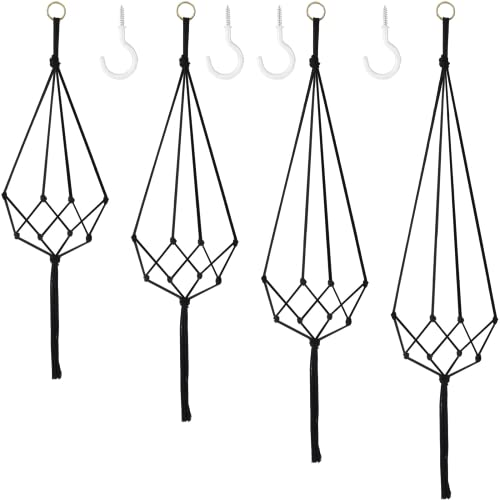
Beautiful and Stylish: This black hanging plant holder, adorned with lovely tassels, adds a touch of bohemian flair to your home. The set includes hangers in various sizes, creating a sense of visual depth and layering when displayed. This macramé plant hanger embodies the artistic sensibility of modern, elegant décor, creating a relaxing and soothing atmosphere for anyone who beholds it

Premium Material: Handcrafted from 100% durable brown cotton cord and mounted on a smooth wooden rod. Designed in a unique woven pattern with wooden accents, this macrame artwork is rich in texture and visually warm

HANDMADE WEAVING CRAFT – Hanging plant holders made from eco-friendly recycled cotton rope and metal ring, It has a strong flexible woven design, sturdy and durable, accommodates planters of all shapes and sizes, you can take them home for your plants with confidence
6. Metal Wall Sculptures

Wrought iron hangs heavy on a balcony wall, and that weight matters more than most people think until they try to install it. Aluminum solves the heft problem entirely; it carries the same scrollwork look at a fraction of the poundage, though it will dent where iron dings. Corten steel sits between them, developing that rust-colored patina that actually protects the metal underneath, but the runoff stains anything porous below it for the first year.
For a rental balcony, aluminum mounts with standard hardware and comes down clean. Wrought iron needs lag bolts into structural support, which most leases forbid, and corten steel demands you commit to the wall and the drip pattern. I have seen iron pieces rip out of hollow-core stucco that was never meant to hold fifty pounds of wind load. The finish matters too: powder-coated aluminum holds up without touch-ups, while raw iron wants annual sanding and oiling if you are anywhere near salt air.
Recommended Products

Stylish Living Wall Plant Décor: Vertical gardening is a fundamental technique to maximize space in small areas. This decorative hanging wall planter is perfect for small spaces, balconies, or patios. Essential use both indoors and outdoor.

Material: Hanging fence planter made of metal iron. Durable and lightweight. Balcony flower pots are not easy to rust or damage, and have a long service life

Transform Your Outdoor Wall Decor with this sleek metal planter measuring 16×5.1×5.1 inches! Crafted from rust-resistant metal, it thrives in rain or shine, making it perfect for wall planters for outdoor plants. Dual wall mount and hook mount options let you style patios, balconies, or indoor herb gardens effortlessly.
7. Framed Nature Prints

A framed print on a balcony wall looks finished in a way tapestries and loose panels rarely do, but the frame is where most people lose the piece to moisture. I learned this after watching a supposedly "indoor-outdoor" wooden frame swell at the miters within one humid summer, the glass fogging from the inside out. The fix is metal or powder-coated aluminum framing with a silicone gasket seal: no wood, no pressboard backing, and glass replaced with UV-stabilized acrylic that will not shatter in a temperature swing.
The seal matters more than the frame material itself. A proper outdoor frame uses a continuous gasket between acrylic and metal, plus desiccant tape inside the rabbet to absorb the humidity that will find its way in regardless. Without this, condensation pools at the bottom of the print and breeds mildew behind glass you cannot wipe clean without disassembling the whole unit.
"Materials must be durable so that accessories and upholstery stand up to the elements and time"
For a renter, this means buying the frame once rather than replacing water-damaged prints every season. Botanical and landscape subjects hold up best: their colors shift less noticeably under UV than portraits or graphics with precise skin tones or brand colors. Hang with a French cleat or similar bracket that keeps the frame slightly off the wall surface, allowing air to pass behind it rather than trapping rain against the backing.
Recommended Products

Perfect Size for Railings & Fences: This deck planter for railing measures Top: 9.8" x 5.1", Bottom: 8.3" x 3.9", Height: 4.3". It fits most patio railings, fences, and balconies, making it ideal for herb planters outdoor or small flowers

Enhance Your Outdoor Space: Elevate your outdoor area with this set of 4 adjustable planter brackets (Note: Planter pots are not included)

These special metal bucket pot with an attached hook,can be hung on the railing, balcony, window, anti-theft net, trellis,fence,indoor or outdoor anywhere,also can be used as desktop.
8. String Light Wall Display

String lights arranged in a deliberate pattern turn a blank balcony wall into something that reads as intentional art after sunset. The trick is treating the bulbs as dots in a design rather than tossing a strand overhead for general glow. A simple zigzag, a loose chevron, or a draped wave from one anchor to another gives the eye a shape to follow. Small clips with tiny clothespins let you hang Polaroids or postcards between the bulbs, which layers the light with something personal that changes out in minutes.
Renter-friendly anchors are the make-or-break detail. Adhesive hooks rated for outdoor use hold up through a season on painted metal or smooth concrete, and they pull off clean when the lease ends. For textured stucco or brick, a slim tension rod wedged between the balcony railings and an overhang can carry the weight without touching the wall at all. I have seen the adhesive route fail once on a humid August, so a dry afternoon and a wiped surface matter more than the package promises.
The finished look works best when the wall behind has some weight to it, maybe a painted accent or a thin shelf with a few plants below the light pattern. One dominant element, one supporting layer, one living thing. That hierarchy keeps a small balcony from feeling like a storage corner that happens to glow.
Recommended Products
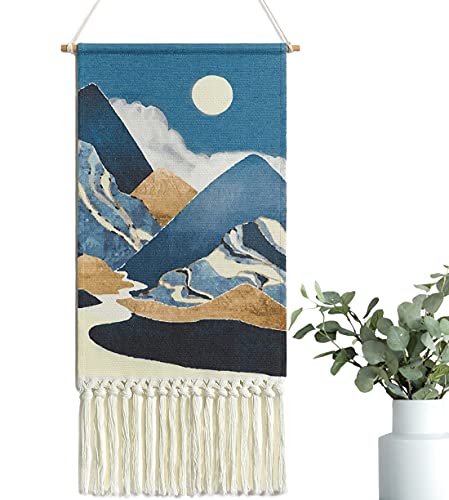
【Blue Mountain Wall Hanging Art Decor】: The moon sun& mountain blue macrame tapestry perfect for bedroom, living room, sitting room, apartment, baby nursery, home, dorm room, boho theme parties wall hanging. You can hang it above your bed, sofa, fireplace, table, desk, adds more Aztec chic feeling to any space.
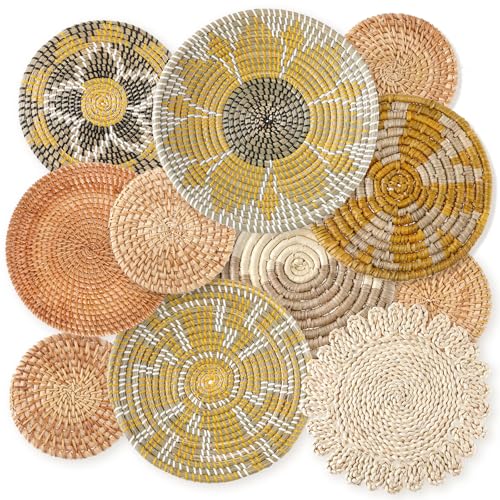
Handmade Product: the boho wall basket decor is made of bulrush, light but strong, reliable and lasting, no bad smell and no burrs, do not worry about scratching your hands, and with the fragrance of natural reeds, which you can use with confidence; It is also suitable for any occasion and makes a nice gift option

【Premium Basket】The boho woven wall basket decor is mainly knitted by bulrush and wicker, which is light but strong, boast excellent moisture resistance. With premium workmanship, each rustic basket not only has a high quality, but also has a distinct touch and rustic charm. The enjoyment and aesthetic is endless when you decorate your space with the hanging wicker basket.
9. Ceramic Wall Plates

Ceramic wall plates bring a handcrafted, Mediterranean feel to a balcony without the weight of traditional outdoor art. A grouping of blue-and-white pottery, earthy terracotta, or softly glazed pieces turns a plain wall into something that looks collected over time rather than bought in a single afternoon.
The trick is spacing. A few larger plates create more visual impact than a cluster of tiny ones, and generous gaps between them keep the arrangement from reading as clutter. Mix sizes and colors, but stick to a cohesive palette so the wall still feels like one statement.
For sourcing, thrift stores and estate sales are the obvious starting points, though a mismatched set from your own kitchen works just as well. Abstract placement beats a rigid grid: start with one anchor piece and build outward, adding more as you find them. For exterior hardware, spring for stainless steel disc hangers or coated wire plate hangers rated for outdoor use. Standard indoor hooks will rust through in a season, and nothing ruins the look faster than a plate face-down in a planter.
Recommended Products

Transform Your Walls: Elevate your home decor with our Set of 7 Rustic Boho Wall Baskets! Handcrafted with love, these exquisite baskets bring nature's charm right to your walls, adding warmth and character to any space.

✨ EXQUISITE HANDMADE ARTISTRY & UNIQUE DESIGN: Each seagrass wall decor fan is meticulously handcrafted by skilled artisans, making your set truly one-of-a-kind. Featuring intricate knots and a natural fringe finish, this woven wall art brings an organic, soulful texture to your home that mass-produced items simply cannot replicate.

Boho Wall Decor: you will receive 9 assorted boho wall baskets, 4 artificial monstera leaves, and 2 artificial vines; Each piece has a woven hanging hook on the back, making it easy to hang on the wall and display a charming boho style
10. Wooden Slat Art

Horizontal strips of treated cedar or redwood can turn a blank balcony wall into a geometric feature without the weight of a full panel install. I like running them in one direction rather than mixing both; a single orientation reads as intentional, and on a narrow balcony that visual consistency keeps the space from feeling chopped up. Leave a ¼-inch gap between slats so rainwater drains through instead of pooling, which is what eventually warps the boards and pops the finish.
A clear sealant goes on after cutting, not before, so the end grain gets the same protection as the face. For renters, a freestanding slatted panel leaned against the wall gives the same warmth without anchor holes, and it doubles as a trellis if you want to layer greenery in front of it later. Natural wood against black metal furniture and cream cushions is the combination I keep seeing work; the tones do the styling for you.
Recommended Products

HANDMADE WEAVING CRAFT – Hanging plant holder made from eco-friendly cotton rope and metal ring, It has a strong flexible woven design, sturdy and durable, enough to hold the weight of the pots, not easy to break, you can take them home for your plants with confidence

Style: Handcrafted macrame wall hanging made with soft cotton tassels and wrapped yarn on a natural wooden dowel. This elegant boho wall decor adds warmth, texture, and artisan charm, making it a beautiful piece of fiber wall art for modern boho homes.
11. Pebble or Stone Wall Design

A flat stone wall brings the same rough texture indoors that woven baskets offer on a smaller scale, but the weight is the real issue on a balcony. Most residential balcony slabs are rated for 40–100 pounds per square foot of live load, and a full stone veneer can hit 15 pounds per square foot before you add any adhesive or backing. That adds up fast on a 6-by-10 wall.
Pebbles under half an inch thick, set in a flexible exterior tile adhesive, stay light enough for most balconies. Larger fieldstone or slate needs a different approach. I would skip mortar beds entirely and look for mesh-mounted sheets designed for exterior use, which spread the load and let you test fit before anything permanent touches the wall. Mechanical fasteners beat glue if your balcony wall is concrete block or stucco; adhesive alone on painted or composite surfaces will fail the first freeze-thaw cycle.
If your building is rental, this is probably a no-go. The load and the drilling both run afoul of standard lease language, and removal means chipping stone off a surface you do not own. For owners, the payoff is real: stone holds temperature differently than paint or wood, so a south-facing balcony wall stops reflecting heat back at you the way white stucco does.
12. Hanging Photo Collage

A cluster of personal photos turns a balcony wall into something that actually belongs to you, but standard frames surrender fast to rain and sun. Weather-resistant frames with rubber gaskets and UV-blocking acrylic are the baseline; they seal out moisture and keep prints from bleaching to pale ghosts inside three months. Metal or resin housings beat wood here, since even treated timber swells and warps with daily humidity swings.
For the DIY route, printing on aluminum or outdoor vinyl matters more than the frame you pick. Aluminum prints arrive ready to hang, the image baked straight into the metal surface so there is no paper layer to trap water. Outdoor vinyl, the same material used for car wraps, can be mounted with removable adhesive strips that survive a lease agreement. Both run roughly the cost of a mid-range canvas print, but they outlast paper by years.
The arrangement itself needs a plan before drilling starts. Balcony walls are narrow; a tight grid of four to six pieces reads as intentional, where a loose scatter looks like you ran out of space mid-project. I leave two inches between frames, enough to let air circulate behind them and dry any condensation that sneaks in. Skip the glass entirely, even the tempered kind; it fogs, it shatters in temperature swings, and the weight pulls cheap hooks straight out of stucco.
13. Painted Terracotta Discs

Small terracotta discs cost next to nothing at a garden center, and a set of six or eight hung in a loose grid reads as custom art for under thirty dollars in materials. The real work is in the finish. I learned this the hard way after watching a friend’s hand-painted clay circles bloom with white mineral deposits the first rainy month: unsealed terracotta pulls moisture straight through.
Use exterior acrylic or patio paint, then brush on two coats of clear masonry sealer meant for porous stone. The paint layer gives you the color, but the sealer is what keeps the image from lifting when humidity swings. Earthy ochres and soft sage greens suit most balcony exposures without fighting the brick or siding behind them. Pastels work too, though they show grime faster and need a quicker rinse-down schedule.
Drill a single hole near the edge before you paint, or use a disc already center-pierced for nursery tags. Fishing line strung through a row of three or five, hung from small adhesive hooks, keeps the arrangement rental-friendly. The discs move slightly in wind, which catches light differently across the painted surface and keeps the wall from looking static.
14. Minimal Floating Shelves with Art Pieces

Slim floating shelves give a balcony wall a job without demanding much depth. Two or three pieces per shelf keeps the arrangement readable from inside the room, not just up close against the railing. I look for ledges under four inches deep; anything wider starts catching gusts and looking like a mantel that wandered outside.
The real question is what sits on them. Small sculptures, a potted succulent, a candle in a hurricane glass: these rotate out fast when the season shifts or when you get bored. That flexibility is the point. A planter box commits to one plant; a shelf lets you move things around on a Tuesday evening.
Weight capacity matters more than people expect. A ceramic plate or cement figurine adds up fast, and balconies see real wind. Mount into studs or solid masonry, not just the wallboard, and keep the heavy stuff toward the wall side of the shelf. I would not trust a floating bracket with anything over ten pounds unless the hardware specifically says otherwise; most do not.
Wind is the quiet problem. A tall, light piece, a framed print that catches air like a sail, a loose votive: these end up in the neighbor’s yard or worse. Low, dense objects win here. I have seen a glass paperweight hold a stack of postcards in place through a spring storm that blew the chair cushions clean off.
15. Fabric or Cane Panels

A stretched textile on a simple frame turns a blank balcony wall into something that reads like a room, not an afterthought. Outdoor-rated fabrics, the kind sold for patio cushions and awnings, hold up to UV and mildew far better than anything pulled from the indoor bolt. Sunbrella or similar solution-dyed acrylics keep their color through seasons of direct exposure and hose off without drama.
The frame itself needs the same honesty. Pressure-treated 1x2s or cedar strips, assembled with exterior screws and a couple of coats of spar urethane, will not warp the way raw pine will. Stretch the fabric with stainless staples or outdoor hook-and-loop so you can swap it when the pattern tires you. Stripes and muted botanicals coordinate easily with existing furniture without shouting for attention.
Cane or rattan panels give a softer, more diffused effect, filtering afternoon light rather than blocking it. They pair naturally with woven furniture and clustered plants, though they will weather faster than synthetic fabric and need a covered spot or annual sealing to last. Two ways to play this: fabric panels if you want color you can change on a whim, cane if the texture itself is the point and you do not mind the upkeep.
16. DIY Balcony Wall Décor with Plates

A cluster of mismatched plates reads as collected over time, not bought in a single afternoon, which is exactly the low-budget, low-commitment mood a rental balcony needs. Thrift stores and estate sales hand you the palette for a few dollars apiece: a blue willow saucer, a chipped enamelware plate, a terracotta dish with a crack too wide for the kitchen. The trick is sticking to a cohesive palette even as the sizes and patterns scatter, or the wall tips from eclectic into yard-sale chaos. I have seen arrangements that pull this off with nothing but warm whites and rust reds, or deep blues across every era of ceramic.
Abstract placement wins over grid rigidity for balcony plates. Start with one large piece off-center and build outward in an irregular shape, adding as you find more. The wall becomes a living collection rather than a finished installation, which suits the slow accumulation most renters actually manage.
Hanging hardware for outdoor ceramics needs thought. Wire plate hangers grip the rim without drilling through the glaze, and adhesive disc hangers work on lighter pieces if your balcony forbids holes. In either case, a dab of clear silicone on the back of each plate keeps it from swinging in wind gusts. I would skip anything over about eight inches across unless you are anchoring into masonry; the torque on a wire hanger in a storm snaps cheap hooks clean off.
17. Tropical Balcony Wall Decoration

Bold leaf prints and palm motifs read tropical fastest, but the line between mood and theme-park is thin. I learned that watching a neighbor’s balcony go from "vacation rental" to "vacation rental that tries too hard" with one too many flamingo pinks. The safer play is saturated green on green, or a deep teal ground with one warm accent, coral or amber, kept to a single piece.
Paint gives you the most control over that balance. A bright color with texture, something like a lime-wash or a rolled-on plaster finish, carries the humidity and shadow of real foliage without literal leaves. If you want prints instead, one oversized botanical, 24 by 36 inches or larger, beats a grid of smaller frames that read as collected clutter. Outdoor-safe frames with glass or acrylic fronting matter here; paper behind standard glass will buckle in a season.
For renters, a single removable wall mural with a banana-leaf pattern covers more wall with less commitment than paint, and peels clean when the lease turns. The texture you lose against real plaster you gain in being able to swap it when the mood shifts. Either way, leave more negative space than the pattern wants. A tropical wall that crowds every inch feels like a queue at a resort, not a balcony you actually live on.
18. Outdoor Balcony Wall Décor with Miniature Niches

Miniature niches solve the weather problem that stops most balcony wall art ideas at the door. A recessed shelf set back into the wall shields whatever sits inside from direct rain and sun, while the surrounding frame draws the eye to the piece like a built-in spotlight. Surface-mounted boxes with a solid top lip do nearly the same job for a fraction of the effort, and they are the version renters can actually take with them.
The construction split matters. Owners can cut into stucco or siding and install true recessed niches with a waterproof back and sloped sill to drain any water that finds its way in. Renters need surface-mounted boxes that screw into studs or anchors, sealed on all six faces, with a small weep hole hidden at the bottom edge. Both versions benefit from a small light at the top of each niche; the glow turns the contents into evening decor and stretches the usable hours of the balcony.
What goes inside should be small enough to swap out on impulse: a glazed ceramic figurine, a piece of coral, a tiny framed print behind glass. The niche does not make the object waterproof; it just reduces the exposure enough that ordinary indoor pieces survive a season or two outdoors. Plan to rotate them, not to set and forget.
19. Trellis

A wall-mounted trellis turns bare balcony siding into living architecture without the commitment of a full vertical garden. The lattice itself provides structure and rhythm, and climbing plants fill the gaps over time rather than demanding instant coverage.
Money plant and similar climbers will use the support to spread across the surface, but the trellis keeps working even before they reach full density. Wood or wrought iron options double as anchors for small lanterns or hanging planters, so the wall stays functional at every stage of growth. Mount the trellis where you actually need privacy, not as a full surround; concentrating greenery on one side preserves openness while blocking the sightline that matters.
For renters, a narrow trellis against the rail-side wall gives the effect without enclosing the whole space. Let the plants grow into it gradually. The layered look develops over a season or two, which suits a weekend timeline and a few hundred dollar budget far better than trying to buy maturity upfront.
20. Artificial Grass Cladding

Synthetic turf panels read as living wall at about ten feet, but up close the plastic weave gives itself away. Rolls come in different pile heights and blade densities, so the texture you choose matters more than the color. A shorter, denser nap looks tidier against stucco or concrete; longer blades catch the breeze and read more like actual grass, though they also collect pollen and city dust that needs hosing off.
What convinced me, reading through the options, is that partial coverage wins over a full wrap. A band of artificial grass behind a single chair or planter reads as intentional accent; wrapping every vertical surface turns the balcony into a miniature sports facility. The panels attach with outdoor-rated adhesive or screw-through flanges, both of which leave marks a landlord will notice. If you are renting, limit the turf to one removable panel on a freestanding frame rather than the wall itself.
The maintenance reality is less "set and forget" than the product photos suggest. Leaves stick to the static charge, and the backing traps water against the wall if drainage gaps are not left at the base. A balcony in a wet climate needs those gaps planned in, not added after mildew appears.
21. Wall Lights

A pair of compact outdoor sconces can frame a seating area or provide balanced illumination along a blank wall, but the real payoff is how they read as intentional visual elements rather than afterthoughts. Hardwired fixtures give the cleanest look if your balcony has outdoor-rated junction boxes, though most renters I have worked around skip the landlord conversation entirely and go battery-powered. Modern battery sconces run on AAs or rechargeables, mount with two screws, and throw enough warm-toned light to soften a wall without the harshness of overhead sources. The trick is restraint: choose one dominant light, one supporting material, and one organic feature like a slim shelf with a trailing plant. That hierarchy keeps the wall interesting without crowding a small balcony. Glossy surfaces behind the fixture will reflect and amplify brightness, making the space feel larger; matte stone-like textures absorb it and create gentler shadows. If your wall is neutral, the warm glow itself becomes the main feature after sunset.
22. Hammocks

A wall-mounted hammock turns an empty balcony corner into something sculptural the moment you walk out the door. The curve of the fabric against the rail reads as intentional even when nobody’s in it, and that matters on a small footprint where every item has to earn its place. I looked at a lot of balcony setups while researching this piece, and the ones that stuck with me treated the hammock as fixed wall art that happens to hold a person, not the other way around.
Bracket suspension is the practical path for most renters. A single heavy-duty wall bracket on each end lets you clip in the hammock for weekends and unclip it for storms or winter storage without leaving hardware scars across the whole wall. The bracket itself stays, but a slim matte black pair against concrete or stucco looks deliberate enough to register as design.
Structural honesty is where this idea lives or dies. The forces pull outward, not straight down, so the anchor points need to go into stud, masonry, or a reinforced balcony column, never just the facade finish. If your building won’t allow drilling, a tension-mounted stand wedged between floor and ceiling achieves a similar silhouette without the commitment, though it eats more square footage than the bracket route.
Storage is the part most people skip until the first rain. A hammock left wet molds within a week. The clip systems that let you drop the whole body into a deck box in thirty seconds are the ones that survive real use, not the ones that look best in the product photo.
23. Anything That Makes You Happy

A balcony wall does not owe anyone a category. The carved or cement murals that sources describe, the ceramic plates, the wood handicrafts: those are starting points, not a finish line. What actually hangs there can be the pressed flowers your grandmother framed, the concert poster that survived three apartments, or the small ceramic dish you made in a community class. The only requirement is that you protect what you cannot replace.
Paper or canvas without glass will not survive a season of rain and sun. That is the hard limit the sources keep returning to. My own reading of them left me with two practical paths. If the object is flat, a sealed outdoor frame with UV-resistant acrylic instead of glass will keep ink from fading and paper from warping. For three-dimensional pieces, wood or ceramic already handle weather better, but a penetrating sealant applied every year or two buys real longevity. A ceramic plate, for instance, can live outside indefinitely if it is frost-rated and you avoid letting water freeze in any hairline crack.
The emotional weight of a balcony matters more than its square footage. A wall that holds something you already own turns the space into a room you step into, not a display you assembled from a checklist. The protection is the only part that takes research; the choosing takes nothing at all.
24. Vertical Herb Garden

Wall-mounted planters turn a bare balcony wall into something you actually use. Narrow containers stacked at staggered heights hold basil, thyme, rosemary, and mint where you can reach them without bending. A wood or metal mounting system keeps the whole arrangement flat against the surface so you do not lose walking space on a small apartment balcony.
Six hours of direct sun is the minimum for most culinary herbs; mint tolerates less, rosemary wants more. I arrange the thirstiest plants at the top where they drain down onto drier-loving thyme below. Harvest from the top third of each plant every week or two through the growing season, and the stems bush out instead of going woody and sparse.
The containers themselves read as decoration, especially when you mix the soft green of sage with something that flowers. A narrow vertical arrangement gives the feel of a garden without the footprint of one.
What Holds Up Outdoors

The sun and rain on a balcony do not negotiate. A piece that looks perfect in June can warp, fade, or grow mildew by September if the material was chosen for looks alone. Marine varnish or exterior polyurethane on wood buys you seasons of service; standard indoor finishes surrender fast. Powder-coated metal resists rust far better than paint alone, though chips at the mounting holes still need touching up before water finds them. For framed prints, acrylic replaces glass without the shatter risk or the condensation that fogs up behind real glazing. I learned the acrylic lesson after a framed botanical print spent one humid week turning into a terrarium. The image survived; the cardboard backing did not.
Working With a Rental Balcony

Renters face the same blank balcony walls as everyone else, but the solution has to leave zero trace. Command strips rated for exterior use will hold lighter frames and small metal pieces through a season of humidity, though in my reading the failure point is always a textured stucco surface the strip never fully grips. Tension rods stretch between two walls to become an instant rail for hanging lightweight panels or a row of small planters; no holes, no lease violation. A freestanding slatted panel, the kind meant as a room divider indoors, leans against the exterior wall and reads as architectural interest rather than afterthought. Magnetic hooks clip onto metal railings and hold wind chimes or small art pieces that move with the breeze. The catch is weight: anything over a few pounds needs the rod or the screen, not a magnet fighting gravity and a gust at the same time.
Mirrors for Small Balconies

An oversized outdoor mirror does more on a balcony than it would indoors, because the reflected sky and railing lines actually double the perceived depth. I learned this the hard way with a heavy framed piece that moved in a wind gust and left a gouge in the siding. Outdoor-rated mirrors exist for a reason: the backing and sealant keep moisture from flaking the reflective layer, and the frame hardware is meant for exterior expansion and contraction.
A rounded mirror softens the geometry when your balcony is all straight rails and rectangular planters. Position it to catch daylight or greenery, not the neighboring brick wall you are trying to forget. For mounting, a French cleat rated for exterior use spreads the load across wall studs better than wire, and in any zone with real wind, a mirror over about 24 inches needs two contact points minimum. I would not hang anything I could not lift comfortably with one hand; if a guest could knock it loose stepping out with a drink, the bracket is wrong.
The slim shelf-and-mirror pairing works because it gives you a single drop zone for keys or a small pot without demanding a second wall. Keep the frame simple. Ornate reads as clutter when the whole viewing distance is six feet.
Evening Ambience Without Outlets

Battery-powered lanterns and solar sconces solve the wiring problem on most rental balconies without drilling into the building’s electrical. I started with a string of rechargeable globe lights clipped to a tension wire, which gave enough glow for reading after dark but died faster in winter when the shorter days barely topped off the cells. The fix was swapping in larger solar panels mounted on the railing itself, angled south where possible, so the battery bank sat at full charge even under apartment overhangs.
For balconies with zero sun exposure, the newer USB-rechargeable wall lanterns run about forty hours on a single charge and detach for topping off indoors. I keep two on rotation, one on the wall while the other lives by my kitchen charger. The magnetic mounting plates stick with adhesive strips that pull clean at move-out, which matters more than the fixture cost when you are trying to keep a security deposit intact.
When to Bring It In

The resin prints I hung last October looked fine through the first freeze, but by February the surface had crazed into a web of hairline cracks that caught the light wrong. Anything with a sealed coating or printed ink needs to come inside once nights drop below 40 degrees, even if the label says weather-resistant. I learned that the hard way with a canvas piece that mildewed where the backing touched the railing; now I store flat, never rolled, with a sheet of wax paper between stacked pieces so they do not stick.
Powder-coated metal and glazed ceramic can stay out year-round in most climates, though I wipe them down before the first snow so salt spray does not pit the finish. For items too large to move, like a mounted tile panel, a fitted tarp hung an inch off the surface beats leaving it bare; trapped moisture is what kills things, not the cold itself. My balcony is only four feet deep, so I keep a narrow bin just inside the door for the smaller pieces, and the routine of swapping them takes about twenty minutes once I notice the forecast dipping.
Frequently Asked Questions
How do you style a small balcony using tiles?
Choose large-format, light-colored tiles in cream or soft grey to reduce grout lines and make the wall read as more continuous surface than grid. This continuity matters most in tight balcony spaces where every visual inch counts. Keep the rest of the decor minimal so the tile itself carries the design.
What are the best budget-friendly tile ideas for balconies?
Ceramic tile is the practical choice for any project under a few hundred dollars. It handles rain and heat without the premium that porcelain or natural stone demands, and the face of the tile does the visual work rather than the price tag. Light tones also reflect available sunlight and keep the wall from feeling like it is leaning in on you.
Are outdoor tiles weather-resistant and safe for walls?
Ceramic outdoor tiles are built for changing weather and hold up fine on balcony walls through rain, heat, and sun. The real vulnerability is the installation, not the material. Tile over painted walls only if the surface is cleaned and primed so adhesive bonds properly; skip that step and tiles detach by the second season. Grout needs sealing, and the wall needs periodic checks where water collects.
How to maintain balcony wall tiles in Indian weather?
Regular cleaning with gentle cleansers and periodic sealing of grout lines will keep tiles sound through heavy monsoon cycles and intense heat. Protect the surface from accumulated moisture and harsh chemicals; where water pools after rain, check more often. The article does not specify Indian climate differences beyond standard exterior tile care, so treat it as standard balcony maintenance with stricter attention to humidity and drainage.
Leave a Reply