
A buckwheat neck pillow pattern is a sewing plan for a firm, moldable travel or sleep pillow filled with buckwheat hulls rather than foam or down. The catch is weight: a standard 20-by-26-inch size needs 7 to 9 pounds of hulls, so fabric choice and seam strength matter more than with lighter fills. Organic cotton or linen at 5 to 7 ounces per yard holds that load without popping stitches, and a zipper closure lets you adjust fill or wash the case later.
Sourcing Materials

Organic buckwheat hulls run about $35 for five pounds through online retailers carrying USDA certified stock, and buying in bulk is the move if you plan more than one pillow. The certified organic label matters less as a buzzword and more because conventional hulls can carry dust or chemical residues that trigger exactly the allergies you’re probably trying to escape by choosing buckwheat in the first place. Look for triple-cleaned and dust-free on the listing; that processing step is what keeps the fill from breaking down into irritants against your face.
For fabric, a standard neck pillow needs 5–7 oz. per yard of organic cotton or linen to hold its shape through daily use. Japanese-style pillows run lighter at 3–4 oz. and drape differently, so match the weight to the pattern rather than grabbing whatever’s on sale. A few online fabric stores run standing discounts on linen if you catch the right code, though sales rotate often enough that I’d check current promos rather than quoting one.
Optional herbs are where personal preference takes over. Dried chamomile, rose petals, lemon balm, or peppermint layer into the hulls for scent, but start small; a heavy hand with hops or rosemary turns a sleep aid into something that keeps you awake sorting out the smell.
Recommended Products
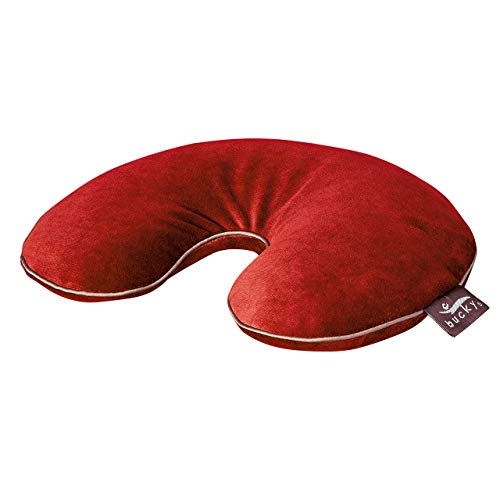
RELAX IN COMFORT – U-Shaped neck pillow is 12×13" in size, perfect for men and women

【Buckwheat Hull Filling】The internal filling is tartary buckwheat hulls Material,Not easily deformed which helps with sleep and reduces cervical pressure.The pillow cover is made of soft fabric .
Cutting Fabric to Size

A standard pillow needs a 20-by-26-inch cut, while the Japanese-style shape runs 14 by 20 inches. Both of those are the finished size, so the fabric itself has to be larger. I add one inch to each dimension for a half-inch seam allowance on every side; a 21-by-27-inch rectangle gives you room to sew without shaving the pillow down smaller than you meant to.
Fabric weight matters more than I expected when I first read through the options. Buckwheat hulls run 8 to 9 pounds in a standard pillow, and that load will push through anything too light. For the 20-by-26-inch size, a medium-weight fabric around 5 to 7 ounces per yard holds its shape through years of shifting and settling. The smaller 14-by-20-inch Japanese pillow can get away with 3 to 4 ounces per yard, since there is less total weight bearing down on any one seam.
Washing the fabric before you cut is the step I would have skipped and regretted. Cotton especially shrinks on the first wash, and a pillow that fits perfectly on day one can end up tight and lumpy once the fabric draws in. Prewash, dry it flat or tumble it the way you will later, then measure and cut.
Recommended Products

100% BUCKWHEAT HULLS: We pick and use premium buckwheat hulls which are treated with high temperature. They are dust-free and no odor. Our buckwheat hulls are the perfect match for buckwheat pillows.

Anthony's Organic Buckwheat

Chemical/Odor Free– organic buckwheat hulls that promote air circulation for a natural cooling effect
Sewing the Pillowcase

A standard machine stitch works for three sides of the buckwheat neck pillow pattern, but double-stitch the seams. A popped seam with buckwheat hulls everywhere is not the kind of mess anyone wants to vacuum out of carpet. I leave the fourth side partially open for filling, about six inches of unstitched space, then finish that gap after turning the cover right side out.
For the closure, a zipper changes everything. Hand-sewing a gap shut works once, but you are stuck with that fill level forever. A zipper lets you pour hulls back out for washing the case, for adjusting firmness as they settle, or for replacing hulls a year down the line. I tuck the zipper pull toward the inside so it does not snag hair or invite a curious kid to unzip what becomes a very expensive confetti cannon. Most standard dress zippers in 7–9 inch lengths fit a neck pillow opening fine; just sew it in before you close the three sides, with right sides together, so the teeth end up hidden inside the finished cover.
Recommended Products

【Organic Buckwheat Pillow】Offers unparalleled support thanks to the adjustability and the natural firmness of its hull fill. The hulls promote consistent airflow to maintain a comfortable core temperature, making the buckwheat neck roll pillow ideal for hot sleepers.

FIRM CYLINDER CERVICAL SUPPORT FOR NECK PAIN RELIEF – The firm buckwheat hulls allow your head to be supported evenly over the whole buckwheat neck pillow.The cylindrical shape of buckwheat neck pillow naturally conforms to your neck curve, filling the gap between your neck and shoulders for side sleepers and back sleepers.Wake up feeling refreshed — no more morning neck tension or discomfort.

🌸100% TARTARY BUCKWHEAT HULLS: Buckwheat is divided into common buckwheat and tartary buckwheat. The tartary buckwheat of Lofe adjustable buckwheat pillow helps eliminate fatigue and tension, and make you sleep more calmly. Our buckwheat pillow filled with tartary buckwheat hulls can relax your neck. We pick and use premium tartary buckwheat hulls which are treated with high temperature.
Filling With Buckwheat Hulls

A kitchen funnel saves the mess when pouring buckwheat hulls into a small neck pillow opening. For a standard 20-by-26 inch pillow, 7 to 9 pounds of hulls fills it to a typical firmness; a Japanese-style 14-by-20 inch pillow takes about half that, or 3 to 5 pounds. The hulls weigh far more than down or polyester, so the pillow gains heft fast and a cheap zipper will strain under the load.
I like to set a bowl on a scale and pour hulls through the funnel until I hit the midpoint of the range, then test the pillow on my shoulder. Too stiff means too full; a handful removed lets the hulls shift and cradle the neck the way they’re supposed to. A few tablespoons of dried lavender or chamomile mixed in before the last pound goes in adds scent without affecting the structure, though the hulls themselves already carry a faint earthy smell that fades after the first week.
Recommended Products

Organic Cotton Shell with Extra Pillowcase for Easy Care – The inner shell is made from unbleached organic cotton, soft and breathable against your skin. An additional organic cotton pillowcase is included, machine-washable for easy maintenance. The buckwheat hull pillow's finished size may be 1–2 inches smaller than listed after filling — this is normal and ensures a firm, supportive fill.
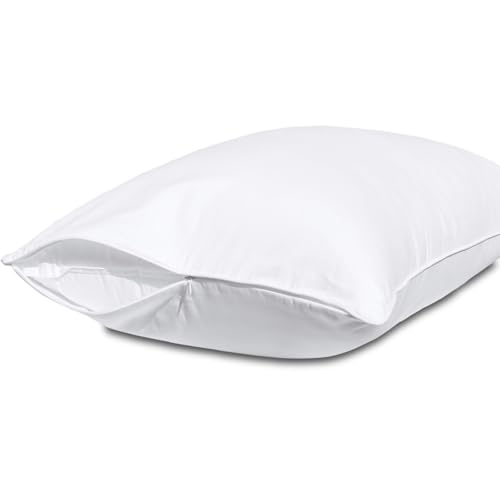
100% Cotton Pillow Protectors: Made of 100% organic cotton, our white standard pillow cases are designed to offer a your best good sleep, wake up with cool feelings.

Contains: Brand New 2 PCs Pillowcases 26" X 20", No Insert or Filler, Solid Colored
Sealing the Pillow

A zipper closure wins for buckwheat pillows because the hulls last for years and you will want to refresh the case long before the fill gives out. Hidden zippers also keep curious kids from treating the bedroom like a grain silo. If you sew the opening shut instead, double-stitch every seam. One popped line and you are vacuuming hulls for a month. The sources all warn of this specifically: a broken seam makes a mess that is not worth the time saved by a single row of stitches. I have settled on zippers for anything filled with loose material, but if you are giving the pillow as a gift and want a cleaner look, a tight hand-sewn ladder stitch after the final fill will hold as long as the fabric does. Just plan to cut it open later when the hulls need sunning or replacing.
Recommended Products

Organic natural pure 100% linen fabric, plain, solid colour

Package Includes: You will receive a 63-inch wide and 2-yard (1.8m) long muslin fabric; the suitable size design provides plenty of material for your sewing and creative projects; Note: order QTY more than 1, receive several separate packs

Organic Cotton Muslin Dress-Making Fabric – This 100% cotton muslin fabric is 60 inches wide and 2 yards in length. It is 100% organic cotton and plain-woven fabric that's smooth and fine in texture with multiple uses
Caring for the Pillow

Buckwheat hulls last several years, but the pillow itself needs a little routine attention to get there. About once a month, I set mine outside in direct sun for a few hours. The heat pulls out any moisture the hulls have absorbed, and sunlight does the heavy lifting on bacteria without any detergent needed.
The hulls are not machine washable, full stop. Water swells them, ruins their structure, and turns what should be a supportive fill into something closer to wet cardboard. A removable, washable pillowcase is the workaround here, and it is non-negotiable if you want the pillow to stay clean without sacrificing the fill. Spot-clean the inner case only when you must, and let it dry completely before refilling.
Plan on replacing the hulls every couple of years. The Asthma and Allergy Foundation suggests replacing pillows on roughly that timeline anyway, since sweat, dust, and skin cells accumulate regardless of fill type. With buckwheat, the hulls themselves are the consumable part, so a fresh refill beats buying a whole new pillow.
Recommended Products

RELAX IN COMFORT – U-Shaped neck pillow is 12×13" in size, perfect for men and women

REFILL YOUR BUCKY PRODUCT – 2 lbs of triangular shaped hulls grip together under the body weight providing passive, stable support
🍃100% TARTARY BUCKWHEAT HULLS: Buckwheat is divided into common buckwheat and tartary buckwheat. The tartary buckwheat of Lofe adjustable buckwheat pillow helps eliminate fatigue and tension, and make you sleep more calmly. Our buckwheat pillow filled with tartary buckwheat hulls can relax your neck. We pick and use premium tartary buckwheat hulls which are treated with high temperature.
Benefits of Buckwheat Fill

Buckwheat hulls behave differently than any synthetic fill I’ve worked with, and those differences become the whole point of sewing your own neck pillow rather than buying one.
- The hulls shift under weight to match your shape, settling into the hollow of your neck and the curve of your skull without the slow rebound of memory foam. That conforming quality keeps your head from tilting forward or rolling sideways, which is where morning neck pain usually starts.
- Air moves freely through the gaps between hulls, so heat escapes instead of collecting against your skin. You’ll notice them cooler in warm weather, and the same structure insulates enough to avoid the cold-side-of-the-pillow shock when the room temperature drops.
- The slight rustle and gentle pressure against muscle tissue create a massage-like effect as you shift in sleep. Sources describe this as helping with both neck and back pain, especially for people who wake with tension headaches.
- Buckwheat hulls last years without breaking down, and when they finally do, they compost cleanly. No plastic microfibers, no landfill bulk. The zero-waste quality matters more than I expected once I started tracking how often standard fills flatten out and get tossed.
Recommended Products

🌟 NUTRIENT RICH: Complete protein (all 9 essential amino acids), rich in rutin + quercetin, and packed with B vitamins, manganese, magnesium, zinc, copper, potassium, iron + folate

USDA Certified Organic Buckwheat Flour

Natural Medium Grade Buckwheat Hull Pieces
Common Pillow Sizes

A standard 20×26 inch pillow works for most adult sleepers and still fits a regular pillowcase, while the 20×30 inch queen adds length if you shift positions or want more surface area. The Japanese-style 14×20 inch cuts both dimensions down, which matters more than it sounds once buckwheat hulls add their weight.
| Size | Dimensions | Typical fill weight | Best for |
|---|---|---|---|
| Standard | 20 × 26 in | ~8 lb | General adult use, fits standard cases |
| Queen | 20 × 30 in | n/a | Sleepers who move or want extra length |
| Japanese-style | 14 × 20 in | ~3–5 lb | Travel, kids, or anyone who wants less bulk to reposition |
I would skip the queen unless you already own queen cases, because buckwheat gets heavy fast and a larger pillow is harder to adjust in the night. The Japanese size is the one I keep coming back to in write-ups: lighter to lift, easier to mold, and the 3–4 lb range most people land on after testing beats the full 5 lb for daily use.
Recommended Products

Unique Contoured Desaign: The buckwheat pillow concave middle section cradles your neck, filling gaps and stretching cervical muscles for targeted pain relief and spinal alignment; buckwheat neck pillow offering vertical, horizontal support, and curvature stretch for neck traction;

READ FIRST – COMPACT 12" NECK ROLL, NOT A FULL-SIZE PILLOW: This is a precision cervical bolster (12" long 4" diameter) designed to slip under your neck while your head rests on a regular pillow – or to support your lower back, knees, or travel naps. It is intentionally smaller than a standard sleeping pillow. If you want a full 22"x14" Korean buckwheat sleeping pillow, please look elsewhere – but if you want targeted neck decompression in a portable, adjustable form, you've found the right one

Firm Support: filled with buckwheat hulls, this neck pillow provides firm, stable support rather than a soft foam feel; Ideal for users who prefer structured cervical support; If it feels too high or too firm, simply remove some buckwheat hulls to adjust the height and comfort level; It is warm in winter and cool in summer;This helps relieve neck pain and improve sleep; The pillowcase is made of thick fabric, not only thick and durable but also breathable and comfortable
Fabric and Filling Choices

Cotton and linen both work for the shell, but they behave differently once the hulls go in. Cotton softens over time and takes prints well if you want the pillow to look decent on its own. Linen creases more and costs more, but it breathes better, which matters when you’re sleeping on something this heavy. I used a mid-weight cotton twill for my first one and it held up fine.
Size splits into two practical camps. A standard pillow at 20×26 inches needs 7 to 9 pounds of buckwheat hulls and can hit nine pounds total weight. The Japanese style at 14×20 inches uses roughly half that fill, about 3 to 5 pounds, and the lighter load means you can get away with lighter fabric, 3 to 4 ounces per yard instead of 5 to 7.
| Standard (20×26 in) | Japanese (14×20 in) | |
|---|---|---|
| Shell fabric weight | 5–7 oz/yd | 3–4 oz/yd |
| Buckwheat fill | 7–9 lbs | 3–5 lbs |
| Total finished weight | Up to 9 lbs | Lighter, portable |
| Best for | Bed, permanent spot | Travel, neck-specific support |
The fill range is wider than most people expect. Back sleepers can run the lower end and still get support; side sleepers need the mass to keep the head level. The hulls shift and settle, so the real number that matters is what you end up adding after the first week of use, not what goes in on day one.
Recommended Products

SIZED FOR YOUR BED – Bucky organic bed pillow is 23×16" in size.

Smooth & Zippered Pillowcase-Made of 100% organic cotton, our standard pillow cases are designed to offer a your best good sleep, wake up with cool feelings.
Organic Cotton Shell with Extra Pillowcase for Easy Care – The inner shell is made from unbleached organic cotton, soft and breathable against your skin. An additional organic cotton pillowcase is included, machine-washable for easy maintenance. The buckwheat hull pillow's finished size may be 1–2 inches smaller than listed after filling — this is normal and ensures a firm, supportive fill.
Frequently Asked Questions
Recommended Products

Supremely Soft & Comfortable Henley Tee Shirts – Step up the attraction factor of your casual t-shirt for men! The Organic Signatures 100% natural slub cotton Henley lends a spot-on chillaxed sophistication to your daily attire while being equally comfy and stylish for layering. The relaxed fit skims close to the body without clinging to the mid-section. The best part? Henley shirts for men feel deliriously silky-soft and gentle to the skin due to the high-quality breathable cotton fabric.

Supremely Soft & Comfortable Henley Tee Shirts – Step up the attraction factor of your casual t-shirt for men! The Organic Signatures 100% natural slub cotton Henley lends a spot-on chillaxed sophistication to your daily attire while being equally comfy and stylish for layering. The relaxed fit skims close to the body without clinging to the mid-section. The best part? Henley shirts for men feel deliriously silky-soft and gentle to the skin due to the high-quality breathable cotton fabric.
How much buckwheat hulls do I need for a pillow?
A standard 20-by-26-inch pillow takes 7 to 9 pounds of buckwheat hulls, while a Japanese-style 14-by-20-inch pillow needs about half that, or 3 to 5 pounds. Back sleepers can use less fill; side sleepers need the full amount to keep the head level. The hulls settle during the first week of use, so plan to adjust after a few nights.
Can I wash my buckwheat pillow?
Buckwheat hulls are not machine washable; water swells them and ruins their supportive structure. Air the pillow outside in direct sun for a few hours about once a month to pull out moisture and reduce bacteria. Use a removable, washable pillowcase to keep the surface clean without risking the fill.
What size should I make my buckwheat pillow?
The standard 20-by-26-inch size works for most adults and fits regular pillowcases. The Japanese-style 14-by-20-inch cut is lighter to lift and easier to reposition, making it better for travel or neck-specific support. A queen at 20 by 30 inches adds length but gets heavy fast with buckwheat fill.
Leave a Reply