
Fence wall art ideas range from a $10 driftwood installation to a $300 laser-cut steel panel, and the right choice depends on whether you own the fence or answer to a landlord. Renters should lean toward removable panels like mosaic tile on plywood, which lifts off in one piece when the lease ends. The detail that separates lasting outdoor pieces from replacements by spring is the sealant: penetrating silicone on grout lines, not surface film, so moisture behind a cracked tile can still evaporate instead of pushing the whole panel loose.
1. Hand-Painted Botanical Mural

A hand-painted botanical mural turns fence boards into a slow-growing garden scene that costs less than a single hanging planter. Exterior acrylic or latex paint runs $20–$80 for enough color range, and the real work is in the sealing. Two coats of clear exterior polyurethane, brushed on after the paint has cured for at least 48 hours, keep the image from chalking out by late summer. I would skip the spray sealant; it pools in the grain and leaves streaky patches that catch the light wrong.
Brush choice matters more than paint brand. A two-inch flat wash lays in sky or background foliage fast, while a quarter-inch angled shader is the only way to get believable leaf veins without the paint blobbing. For the fine stuff, I have learned to work with the fence gaps, not against them: let a vertical slat break the stem rather than trying to paint a continuous line across it. The eye fills in the connection from three feet back, and the boards look intentional rather than interrupted.
Recommended Products

Mural paint offers lasting results on both outdoor and indoor murals, canvas, and other mediums

Mural paint offers lasting results on both outdoor and indoor murals, canvas, and other mediums

WEATHERPROOF DURABILITY: Specially formulated with advanced scuff-resistant technology, ABEIER outdoor acrylic paint offers superior water resistance and UV protection. Your artwork remains vibrant and intact, resisting fading, peeling, or cracking even under harsh sunlight or heavy rain. No more worrying about your garden decor losing its luster after a storm.
2. Mosaic Tile Fence Art

Broken tiles pressed into a plywood panel give a fence the look of a Mediterranean courtyard without the permanence of mortar on masonry. I like this approach for renters because the panels lift off in one piece when the lease ends. A half-inch exterior-grade plywood backing, primed on all faces, keeps the panel from warping through humid summers. For adhesive, a modified thin-set rated for freeze-thaw cycles matters more than the tile itself; standard mastic turns brittle after a single hard winter and the tesserae start dropping onto the patio by spring. Grout lines need sealing with a penetrating silicone sealer, not a surface film, so moisture that gets behind a cracked tile can still evaporate instead of pushing the whole panel loose. Materials run roughly $20 for a small panel of salvaged broken tile up to about $100 if you are buying cut vitreous tile new. The real cost is the weekend of sorting shards by color and pressing them into a pattern while the adhesive stays open. A sheet of tile mesh, the kind sold for kitchen backsplashes, laid over the design before the thin-set skins makes transfer to the plywood almost foolproof.
Recommended Products

WATER-BASED WOOD FINISH: Our sealant provides top-notch protection against wear and tear in high traffic areas. It's odorless and suitable for use on wood siding, log homes, swing sets, outdoor furniture, wooden deck and fence, and more
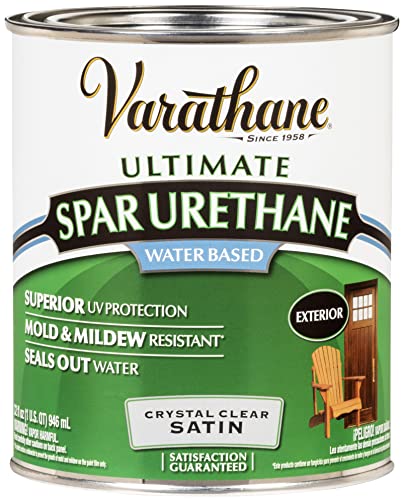
Durable, protective poly for outdoor wood surfaces such as furniture, doors, windows, fences, trim and more
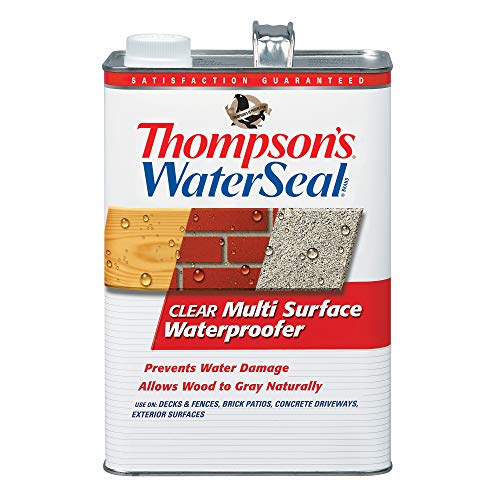
WATERPROOFING STAIN – Bring out the beauty of your outdoors with Thompson’s WaterSeal Clear Multi-Purpose Waterproof Stain. Proven to waterproof concrete, brick, exterior wood and other exterior surfaces.
3. Driftwood Fence Art Installation

Driftwood pieces arranged on a fence in sculptural compositions carry a weathered texture no manufactured piece quite matches. The material is free if you live near beaches, riverbanks, or wooded areas where fallen trees collect, and the only real cost is $5 to $15 for exterior screws and construction adhesive.
The mistake most people make is mounting pieces as they find them, which reads as clutter rather than form. Sorting by size helps: start with the largest driftwood as your anchor, then build outward in radiating lines, loose geometry, or a rough figure. Pre-drilling hard driftwood keeps the wood from splitting when you drive screws, and the holes let adhesive sink in for a stronger bond. Exterior screws plus construction adhesive together handle weather better than either alone, and the natural silver-grey patina that develops over seasons only improves the look.
Coastal or bohemian garden styles suit this best, though any fence facing a naturalistic planting works. The pieces should touch or nearly touch; gaps wider than a few inches break the visual weight and the composition falls apart.
Recommended Products

3d Tile: Packed 5 sheets 3d black tiles per box. Individually sealed with plastic flim.

Genuine solid Teak wood (Tectona Grandis) in natural finish

Package Contents: Each glass backsplash tile measures 12" x 12", with 8 sheets per pack, covering a total area of approximately 8 sq.ft., suitable for both small and large projects
4. Reclaimed Metal Fence Art

Scrap metal from old machinery, tools, or architectural salvage welds into fence panels that no one else owns. The materials cost nothing if you know a farmer, a mechanic, or a demolition site willing to let you haul away bent horseshoes, corrugated iron, or lengths of wire. Welding holds strongest, though heavy-duty construction adhesive works for lighter pieces at roughly $10 to $30 in supply cost.
Rust is the real maintenance item. Left alone, reclaimed metal develops an oxidized patina that reads as authentic industrial texture, but active flaking weakens the piece and stains whatever sits below it. A clear sealant stops the spread without killing the color variation between galvanizing, raw steel, and old paint layers.
Weight matters more than most people guess. Fence boards, especially the cedar or pine common in residential backyards, carry only so much before they bow or pull screws. Mount heavier assemblies to posts, not rails, and distribute the load across two or three points. A cluster of old hand tools reads as one sculpture; a single sheet of corrugated steel is a sail waiting for wind.
Recommended Products

Convenient applicator bottle included; applicator tip

Keep a clean, NATURAL APPEARANCE and improve the DURABILITY of your grout in your shower, kitchen, bathroom, and tile flooring

SUPERIOR TILE GROUT SEALER: Protects tile and grout from water, stains, and dirt. Ideal for kitchens, bathrooms, and showers. Maintains a clean look for longer lasting surfaces.
5. Geometric Painted Fence Art

Masking tape and exterior timber paint turn fence boards into a geometric installation for about $25 to $60, depending on how many colors you buy. Two to three colors is the sweet spot; more than that and the fence starts reading busy instead of graphic.
The real work is in the taping. Low-tack masking tape works best, but rough wood grain will pull it loose or let paint seep underneath if you just slap it on. Press each edge with a putty knife or the back of a spoon to seal it into the grooves. I have seen chevrons, diamonds, and simple color blocks all work well; the pattern matters less than whether every line is actually straight across multiple boards.
Paint bleed is the failure mode here. A thin coat of the base color over the tape edge first, left to dry, creates a seal before you lay down the contrast color. Remove the tape while the topcoat is still slightly wet. Wait until it is fully dry and the tape lifts chips with it; pull too early and you drag wet paint across the line you just tried to perfect.
Recommended Products

【Exquisite Metal Wall Art】 The Metal Hummingbird Wall Art features intricately crafted metal birds that bring a touch of life and vibrancy to your home or outdoor space

Package Include: A set of 4 colorful gecko (blue, green, purple, red). Gecko size: 9.8''(L)x5.7''(W).

2 Pack 3D Layered Flower Set Package includes two pieces of 12-inch dimensional metal flower decor with different gradient color designs. Multi-layer petals create vivid stereo visual effect to liven up blank walls.
6. Hanging Garden Sculpture on Fence

Metal and ceramic garden sculptures turn a plain fence into something that catches light and casts shadows as the day moves. Most pieces run $30 to $200, with resin on the lower end and hand-finished metal climbing toward the top. The real work is in how you hang them.
A single hook on one rail will torque the whole panel in a breeze. I space brackets across two rails minimum, sometimes three on anything over fifteen pounds, so the load spreads horizontally and the fence doesn’t bow. For wind-prone spots, a sculpture that spins or sways on its mount will last longer than one rigidly fixed, since the movement bleeds off stress rather than fighting it. Ceramic needs more care than you’d think; the glaze holds up, but the body cracks where the mounting bolt meets if you overtighten. A rubber washer there, not metal on ceramic, saves the piece.
Recommended Products


WHITE OUTDOOR ACRYLIC PAINT – Comes in a large 2040ml (69oz) bottle with press pump, perfect for big outdoor projects. Whether you’re working on fences, decks, walls, patio, porch, parking lot, mural, exterior, concrete or seasonal crafts like Halloween pumpkin painting and Christmas decorations, this outdoor paint provides consistent coverage and long-lasting brightness.

32 VIBRANT OUTDOOR ACRYLIC PAINT – Comes with 32 bottles outdoor acrylic paint set(2 oz / 60 ml each), 3 brushes, 1 sponge, 1 art knife, and a color wheel guide. Perfect for outdoor projects like fences, furniture, murals, concrete walls, or seasonal crafts like Halloween pumpkin painting. Great pumpkin painting kit for Halloween arts, pumpkin painting supplies, and festive DIY decorations.
7. Living Fence Art with Trained Plants

A fence covered in climbing plants trained to a wire frame reads as sculpture rather than overgrowth, and the whole setup costs less than a takeout dinner. Wire and starter plants run $10–$30, with the real investment being time.
Sun-baked fences suit ivy or Virginia creeper, both aggressive enough to fill a geometric grid or spiral in a single season if you tie new growth every three to four weeks. Shadier spots call for climbing hydrangea, slower to establish but willing to follow a frame without demanding constant pruning. Espalier fruit trees work too if you want the added structure of bare winter branching, though they need more disciplined shaping.
The wire frame itself should be pre-bent into the design before you plant, because trying to wrestle mature stems backward breaks them. Hearts and simple letters show results fastest; a tight geometric grid reads as modern but needs two or three seasons to look intentional rather than accidental.
Pruning happens on the same schedule as training, not as a separate chore. Snip anything that escapes the frame immediately, or the living outline softens into a green blob by midsummer. What starts as weekend project becomes a long game, but each year the definition improves.
Recommended Products

Protects indoor wood surfaces such as furniture, windows, cabinets, trim and more

CLEAR SEALANT: Our water-based sealer provides top-notch protection against wear and tear in high traffic areas. It’s odorless and ideal for use on wood siding, log homes, swing sets, outdoor furniture, wooden decks and fences, and more.

CLEAR WATERPROOFING WOOD SEALER: Olympic WaterGuard clear sealer waterproofs and protects exterior wood and masonry without changing the surface's natural look.
8. Stencilled Fence Art Patterns

A repeating stencil pattern turns a plain fence into something that reads as intentional wallpaper for the yard. I like the flexibility: buy a tile or Moroccan motif online for about $12, or cut your own from stiff plastic folder material if you want something custom. Exterior acrylic paint and a small foam roller run another $8–$15, so the whole project stays under $40.
Registration is where most people trip up. The fence boards themselves are your grid, not a hindrance, if you plan for them. I mark the center of each board with light pencil and treat every board as its own mini-canvas, repeating the stencil once per board rather than trying to stretch a motif across the gaps. The eye reads the rhythm and fills in the continuity; the gaps become breathing room instead of breaks.
For boards that are warped or uneven, a flexible stencil material helps it lie flat without bleeding underneath. I tape the corners down with low-tack painter’s tape and roll from the center outward, lifting straight up while the paint is still wet to avoid smearing the edge. Two thin coats beat one heavy coat every time; thick paint will seep under even a well-secured stencil and blur the line you wanted crisp.
Recommended Products

𝗧𝗶𝗹𝗲 𝗠𝗮𝘁𝗲𝗿𝗶𝗮𝗹 𝗮𝗻𝗱 𝗙𝗶𝗻𝗶𝘀𝗵: Cobalt blue 1×1 square mosaic glass tile. Glass is non-porous, so it will not absorb water, stains, or odors, and the color reads with depth because light passes into the chips instead of sitting on a painted surface. The mesh backing holds every chip in alignment, so the pattern repeats cleanly sheet to sheet. The color stays consistent from sheet to sheet and box to box, so repeat orders and later repairs match.

Dimensions: Sheet size: 11.8"x11.8"/300mm x300mm ;Chips size: 0.8"x 0.8"/20mmx20mm;Thickness: 0.16"/4mm. This mosaic tile is mesh mounted

Tile Packing Quantity: Case of 5 sheets beige pebble ceramic tiles covering 5 square feet. Each pebble stone tile measures about 12 x 12 inches, 6 mm thickness and weights about 2 lbs.
9. Fence Art with Repurposed Kitchen Items

A wall of mismatched colanders and graters reads as junk until you group them with intention. I learned this the hard way after spacing three enamel pots randomly along my fence; from ten feet back they looked like I’d forgotten to take out the trash. The fix is clustering: four or five pieces tight together, then a gap, then another cluster. Paint everything in one exterior chalk or acrylic palette so the shapes talk to each other even when the objects don’t match.
Drainage holes in colanders and sieves will trap water and rust your hooks if you don’t seal them. A dab of exterior caulk from the back solves it in thirty seconds. Deep-bowled items like old fondue pots can hold succulents or moss, which turns the sculpture into a planter, though in my experience the planting option works better on a fence that gets morning sun and afternoon shade. Heavy-duty exterior hooks run the mount; figure $10 to $25 total for paint and hardware since the kitchen pieces themselves are free. Copper pans and colorful enamelware suit cottage or bohemian gardens best, while all-one-color groupings read more modern. The dividing line between collection and clutter is about eighteen inches: anything closer than that and the eye stops seeing individual pieces.
Recommended Products

SEAL SMARTER. Breathe Easy Stain Block Technology. Powerful Professional Formula Without Toxic Fumes. Protect Grout, Marble, Ceramic, Mosaic, Stone, Granite & More

SCS Certified INDOOR ADVANTAGE GOLD

UltraCare Grout Sealer is an affordable, water-based penetrating sealer that will provide protection against most common stains for sanded and non-sanded cementitious grout joints. It can also be used as a pre-grouting sealer.
10. Shadow Play Fence Art

Laser-cut Corten steel or carved timber panels turn a fence into something that changes by the hour. The gaps in the pattern throw botanical silhouettes or geometric shapes onto the boards behind, and the angle of the sun keeps the image moving from morning to late afternoon. South or west-facing placement gives the longest daily run of sharp shadows. The trick is leaving a gap between the panel and the fence, roughly 3 to 6 inches, so the pattern lands crisp rather than muddled. A light-colored surface behind reads the shadow far better than weathered gray wood. Panels run $50–$300 depending on size and whether you go with welded wire, timber, or steel. I would skip anything too figurative; abstract geometry or simple leaf forms age better and do not look dated as fast.
Recommended Products

Artful and Eye Catching: this metal art wall decor features a clear and vivid cutting shape, which can give a simple and modern style, easily bringing your room with a sense of liveliness and vitality

High Quality and Manual Drawing: Durable iron 3D Dragonfly set with vibrant painting,handcrafted rustic tones and gold powder

METAL FLOWERS WALL DECORATION: Metal flowers wall decoration has concave and convex sense of three-dimensional, exquisite workmanship. Suitable for your outdoor patio decoration, also the floral wall art is unique decorations that can add bright colour to your home.
11. Children’s Fence Art Project

A dedicated fence section for kids’ art works best at waist height for the smallest child using it, usually the bottom two to three fence boards, so a toddler can reach without a step stool and an older kid can still bend down to add detail. Exterior-grade acrylics hold up fine, and a single can of clear outdoor varnish brushed over the finished piece keeps the colors from washing out by fall. The whole supply run costs $10–$25 depending on whether you already own brushes. I like to refresh the panel each spring by sanding lightly and painting a new base coat right over last year’s work; the old layers add texture without needing a full strip-down, and the kids get to see how their hand sizes changed.
12. Vintage Sign Collection Fence Art

Old advertising signs, license plates, and found metal signage turn a fence into something closer to a general-store wall or a roadside stop you remember from childhood. The trick is grouping rather than scattering: three or four pieces clustered at eye level read as intentional, while one lone sign looks like you forgot to take it down. I arrange mine in a loose grid, mixing a 1950s Coca-Cola tin with a rusted Pennsylvania plate and a hand-painted "Fresh Eggs" sign I pulled from a barn sale. The variation in size and finish matters more than matching.
Signs run $5 to $50 each depending on whether you dig them out of a junk bin or buy from a curated dealer. For mounting, I use stainless steel picture wire looped through existing holes or grommets, never drilling into the face of a collectible piece. Paper or thin tin needs backing: I sandwich mine between two sheets of UV-resistant acrylic screwed to a pressure-treated strip, then hang the strip. Without that step, a single rainy spring will bleach the color out of a paper sign or send tin curling at the edges. I learned that on a 1940s seed-company poster I hung raw its first season; the bottom third turned the color of old newsprint by October.
13. Woven Willow or Reed Fence Art

Flexible willow or reed branches thread through standard fence pickets in plain basketry patterns that read as texture from a few steps back. The materials run $5 to $25 depending on whether you clip from a backyard overgrowth or buy bundles from a craft supplier. Soaking the branches overnight brings back enough pliability that weaving tight corners does not crack the bark or split the pith. Dry sections will gray and stiffen within a season, which is not a failure so much as the nature of the material. I replace individual weavers as they snap rather than rebuilding whole panels; keeping a bucket of fresh cuttings in water means the repair takes ten minutes and the fence never looks half-finished. The color shift from honey-toned to silvery is part of why the technique works on weathered cedar or painted wood alike.
14. Flower Press Art Panels

Pressed flowers and ferns between two sheets of acrylic or glass read as botanical specimens from a distance and intimate studies up close. I like the effect best when the frames are hung in a loose grid, three or four across a fence run, where morning light catches the translucency. UV-resistant acrylic glazing is the safer choice over glass for anything facing south or west; it will not yellow the petals the way standard plexi does after two summers, and it survives the bump of a garden hose or a kid’s ball. The panels cost $20–$60 each depending on size and whether you buy the frame ready-made or adapt an indoor one.
Moisture between the panes is what kills these. A bead of silicone sealant run along the inner edge of the frame, not just the outer, keeps humidity from creeping in during heavy dew or rain. A covered porch or semi-sheltered fence section extends the life dramatically; direct exposure works but the seal becomes the whole job. Lavender, pansies, and rose petals hold their color longest. Wild ferns go brown eventually no matter what, though the skeleton can be beautiful on its own.
15. Chalkboard Fence Art Panel

Exterior chalkboard paint turns two to four fence panels into a surface you can redraw whenever the mood shifts. A single can runs $20–$35, which is about the cheapest refreshable art you can put outside. The catch is the recoating rhythm: even the outdoor-rated formulas wear down where chalk grinds in, so plan on a fresh coat every spring if you use it weekly, every other year if it is mostly decoration.
Regular chalk washes off in a hard rain. Chalk markers hold up better but need a damp cloth, not an eraser, and they can stain if you leave them on too long. I would keep a set of each and switch to markers for anything that stays up more than a few days, chalk for the daily doodles that change with the weather. A painted timber frame around the panel keeps the edges from looking like an afterthought and gives you a clean line to wipe against.
16. Recycled CD and Glass Jewel Fence Art

Old CDs and glass jewels catch light in a way paint never will. The discs are free if you still have a spindle in a closet somewhere, and colored glass or mirror fragments cost nothing if you save them from bottles or old frames. The only purchase is adhesive: waterproof exterior construction adhesive runs $5–$15, and it is the right choice for glass-to-wood because standard craft glues soften in humidity.
I learned the hard way that more shimmer is not always better. A solid wall of CDs facing south or west throws blinding glare at certain hours, so spacing matters. Overlapping discs in a loose mandala or spiral, with glass jewels filling gaps, scatters rainbow patterns without creating one hot spot. Leave some fence board visible between pieces; the negative space lets the eye rest and the light move.
The composition builds outward from a central piece, whether that is your largest mirror fragment or a CD with interesting iridescence. Press each piece firmly and let the adhesive cure before the next windstorm tests your patience.
17. Copper and Brass Garden Fence Art

Copper and brass garden fence art starts warm and only gets better as the metal shifts color outdoors. Sheet copper cut into botanical shapes, hammered plaques, brass wire sculptures, and copper pipe arrangements all develop that green-blue verdigris patina the sources describe, or the quieter brown tones brass leans toward. Accelerating the patina with a salt-and-vinegar wash speeds the timeline from years to weeks if you prefer the weathered look now rather than later. The real trick is fixing pieces so they do not streak the fence below. Mount them with a slight tilt backward or add a thin spacer block behind the bottom edge so rainwater drips behind the art, not down the fence face. Heavy-duty exterior hooks and masonry anchors hold the weight, and grouping in odd numbers at varied heights keeps the composition from going flat. Seal porous backings if you use any, though the metal itself needs nothing.
18. Display Weather-Hardy Collections

Objects left outside need to earn their place by surviving the year. Cast iron, old hand tools, and solid ceramic pots handle freeze-thaw cycles that crack thinner materials, and the weight of real metal keeps pieces from lifting in wind. I look for items with enough surface variation that rain and rust become part of the look rather than the end of it.
The visual trick with mismatched objects is spacing, not matching. A row of identical items reads as clutter; the same pieces scattered with roughly one-and-a-half times the object’s width between them creates rhythm without uniformity. Split pairs deliberately, the way you’d stagger boots on a fence line, so the eye travels rather than locks. Heavy-duty exterior hooks run about $10 to $25 for a basic set, and welding remains the preferred fix for anything you intend to keep up through more than one season.
19. Mirror Art

A mirror hung on a garden fence does the same work it does inside: it borrows light and doubles the view behind you. The trick is placement that keeps direct sun off the glass, because a mirror angled into afternoon light can concentrate heat onto dry leaves or siding. I check the path at the hour the yard gets the most sun before I settle on a spot.
Bird flight paths matter too. A mirror set where sparrows cut across the yard will draw collisions; shifting it a foot or two to the side usually solves it without losing the effect. For backing, shatter-resistant or safety-backed glass is the only kind that belongs outdoors. Standard mirror backing crumbles with moisture and temperature swing, and when it breaks it leaves hazardous shards. The safety-backed version holds together the way a car mirror does.
Height is the last call. Eye level looks right for the illusion, but anything below six feet in a narrow garden path is a collision waiting to happen. I hang mine at roughly seven feet on a fence that borders a walkway, or I recess it slightly into planting so the frame breaks the outline first.
20. Outdoor Kitchen Art

Copper pans and old enamel colanders read as fence art only if you actually cook out there. I mounted a few near my grill last spring, and the grease film that built up in two weekends was enough to make me relocate everything ten feet away from the flame. Heat-tolerant materials belong closer in; painted wood or anything with a chalk finish needs that buffer zone, or the finish bubbles faster than you’d think. Herb-drying racks work better than pots for the tight space beside a prep area, since air circulates through them and they do not trap cooking residue. Heavy-duty exterior hooks run about $10–$25 for the set, which is the whole budget if the boards and pans come from the back of your own cabinets.
21. Anything Can Be an Art Canvas

A fence is just a fence until you stop seeing it as a fence. The boards, the concrete, even the chain link: they are all surfaces that will hold material if you prepare them right.
I learned this the hard way with a fabric installation that peeled within a month. The problem was not the fabric, which was outdoor-grade canvas, but the fence behind it. Bare wood drinks in moisture and releases it, and whatever you glued down goes with the cycle. Now I start every project with a barrier coat: exterior primer on wood, etching primer on metal, or a skim of thin-set over raw concrete. The art lives on top of that membrane, not on the fence itself.
For fabric, I stretch it like a painter’s canvas and staple into the rails, then seal the edges with marine varnish so water wicks upward and finds no entry. Rope work, which I have seen done beautifully in coiled gradients, needs a different anchor: screw eyes set below the surface line, with the rope tensioned through them so it does not sag when humidity swells the fibers. Found objects pressed into wet plaster are the most forgiving and the most fragile. The plaster keys around the object, but the object must be denser than the plaster or it will pop with frost. I skip anything porous: terracotta, unfired clay, soft stone. Glass, glazed ceramic, and metal hold. The plaster itself should be polymer-modified exterior grade, not the bag labeled "interior only" that I once grabbed by mistake and watched dissolve in the first spring rain.
Weathering is not an enemy if you plan for it. Rope will gray, fabric will fade, plaster will stain. I choose materials where the change reads as intention: indigo rope that goes to silver, raw linen that softens to cream, white plaster that gathers the garden’s green in its pores.
22. Old-Fashioned Seed Packet Art

Vintage seed packet illustrations carry a warmth that modern packaging rarely matches, and reproducing them for fence mounting is straightforward if you respect the paper. High-resolution reproductions are widely available from copyright-free archives and print shops; the key is sizing them to read from a distance without blowing the image so large that the halftone dots turn muddy. I print at 11 by 14 or 16 by 20, depending on fence scale, and always on archival matte paper rather than cheap poster stock.
The frame is where most attempts fail. A standard frame traps moisture; UV-protective acrylic glazing in a weatherproof outdoor frame is the minimum, and I still seal the print itself behind a second barrier. Brush-on acrylic sealant or a spray fixative meant for paper conservation buys extra seasons, though no paper piece survives direct rain indefinitely. Position these under eave overhangs or on fence sections that catch morning sun only, and plan on bringing them in before hard frost if you want the colors to last past a single summer.
23. Oversized Signs

A single word in three-foot letters reads differently from a fence than from a sidewalk. I learned this the hard way with a "GATHER" sign that looked balanced in the garage but shrank to a postage stamp against six panels of cedar. For fence visibility, figure one foot of letter height for every ten to fifteen feet of viewing distance, then add a third if the word sits above eye level.
Thick paint or dimensional lettering helps. A flat sign in matte black disappears at dusk; the same word built up with exterior trim boards or layered plywood catches the last light and reads from the garden path. House numbers need the boldest treatment of all, since delivery drivers read them at speed. I would skip serif fonts entirely; the thin strokes weather first and blur the silhouette.
Directional arrows are the forgiving entry point. One arrow, one word ("HERBS" or "SHADE"), painted on a scrap of 1×12 with a 2-inch brush, tests your scale without the commitment of a full phrase. If it reads from the driveway, you have your ratio for the next piece.
24. Insect Houses and Bug Hotels

A bug hotel mounted on a fence reads as sculpture until you look closer, and the closer look is what makes it art. The trick is treating the habitat like a material composition: bamboo tubes cut to varying depths from 4 to 8 inches stacked alongside drilled hardwood blocks and bundled hollow stems, each depth matching a different pollinator’s nesting instinct. Mason bees want the shorter tunnels; leafcutters prefer something roomier.
Placement height matters more than most guides admit. Solitary bees favor openings between knee and chest level where morning sun warms the tubes but afternoon heat does not bake them. Anything lower than two feet becomes a feeding station for mice, and anything much above five feet turns into a perch for predatory birds scanning the garden. I ended up splitting the difference at roughly three and a half feet, angling the whole assembly ten degrees forward so rain drains out the front instead of pooling inside.
The fence itself solves the back panel problem that freestanding bug hotels always struggle with. Solid backing against the boards means you only need to build the front-facing grid, which halves both the material cost and the time spent cutting. I used a scrap piece of cedar siding as the mounting plate, screwed it to the fence rails, and built outward from there. The cedar weathers to silver-gray within two seasons and needs no finish, which suits the low-maintenance promise of fence-mounted pieces.
Material Durability by Season

Wood swells in humid summers and can crack after a hard freeze if the sealant is thin or old. Metal holds its shape through temperature swings but will rust anywhere that coating gets scratched, so coastal gardens or salted winter roads wear it faster. Tile and glass shrug off UV light and moisture, yet the grout or adhesive behind them is the weak point; freeze-thaw cycles pop tiles off the backing if water gets in and expands.
| Material | Freeze-Thaw | UV Exposure | Humidity | Weak Spot |
|---|---|---|---|---|
| Wood | Cracks without fresh sealant | Fades and warps | Swells, then shrinks | Sealant maintenance |
| Metal | No issue | Heats up, can fade paint | Rusts at bare edges | Scratched coating |
| Tile/Glass | Pops off if water freezes behind | No damage | No damage | Grout or adhesive failure |
I would skip wood for fence art in zones with hard freezes unless you plan to reseal every spring. Metal works if you touch up scratches the same season they happen. Tile and glass survive the widest range of climates with the least attention, though you will want to check the backing adhesive every few years rather than trust the front face alone.
DIY Tools and Techniques

- Drill fence boards with a brad-point bit slightly wider than your screw shank. The brad point centers itself so the bit does not wander, and the extra width leaves room for the screw threads to bite without splitting dried cedar or pine. I keep a 3/16-inch bit in my drill bag for this exact reason.
- Exterior adhesive works faster than drilling for lightweight pieces. Apply it in an S-pattern, not dots, so air cannot get trapped underneath. Press and hold for the full cure time written on the tube; rushing this is how wind gets under a panel and pops it loose.
- Sealing painted surfaces means brushing on a clear exterior polyurethane after the color coat is fully dry. Two thin layers beat one thick one. The second coat goes on only after the first feels smooth, not tacky, to the touch.
The tools that stay in my bucket for all of this: a cordless drill, that brad-point bit set, a caulk gun, exterior construction adhesive, a 2-inch synthetic brush for sealant, and a sanding sponge to knock down any raised grain before paint.
Budget Planning for Multiple Projects

Concrete panels run anywhere from free salvaged materials to roughly $300 per finished panel, and the spread matters more than you think when you are planning more than one fence section. I mapped out five projects for my own backyard last spring and realized the budget only worked if I clustered the ones that shared supplies.
| Cost Tier | Material Source | Typical Range | Best For |
|---|---|---|---|
| Free | Salvaged wood, found metal, collected driftwood | $0–$15 | Botanical murals, kitchen-item assemblages, children’s projects |
| Low | Basic stencils, chalkboard paint, thrifted signs | $20–$75 | Stencilled patterns, chalkboard panels, vintage sign collections |
| Mid | Weatherproof paint sets, sealants, mirror tiles | $80–$150 | Geometric paint, mirror art, seed packet displays |
| Higher | Sheet copper, brass offcuts, mosaic backers | $160–$300 | Copper and brass installations, mosaic tile work |
The free-tier projects eat time instead of money, so I scheduled those for weekends when I had more of the former. Mid-tier paint and sealant covered both my geometric fence section and the stencilled border, so buying the larger can saved about thirty percent over individual quarts. If you are eyeing copper or brass, buy the metal from the same supplier as your mosaic backers; shipping minimums often disappear once the order crosses a threshold, and you split that across two projects instead of swallowing it whole for one.
Frequently Asked Questions
What are some creative ideas for fence wall art?
Hand-painted botanical murals, mosaic tile panels on plywood backings, driftwood sculptures, reclaimed metal assemblages, geometric paint designs with masking tape, hanging garden sculptures, living plant frames trained to wire, stencilled repeating patterns, clustered repurposed kitchen items, shadow-play panels with Corten steel or carved timber, children’s waist-height painting sections, vintage sign collections, woven willow or reed textures, pressed flower panels in acrylic frames, exterior chalkboard panels, recycled CD and glass jewel mandalas, copper and brass pieces that develop patina, weather-hardy cast iron or ceramic collections, and safety-backed mirror installations all work as fence wall art. Each idea suits different budgets, from free driftwood or kitchen items to $300 laser-cut steel panels, and different levels of ongoing maintenance.
How can I make fence art?
Start with a plywood panel for portable pieces like mosaics, or work directly on fence boards for painted designs. For murals, use exterior acrylic or latex paint sealed with two coats of clear exterior polyurethane after 48 hours of curing. For geometric patterns, seal masking tape edges with a putty knife, apply a base color over the tape first, then add contrast colors and remove tape while slightly wet. For driftwood, pre-drill pieces before screwing and add construction adhesive for a stronger bond. For mosaics, use modified thin-set rated for freeze-thaw cycles, not standard mastic, and seal grout with penetrating silicone sealer. Most projects take a weekend of active work plus drying time.
What materials are best for outdoor fence art?
Exterior-grade acrylic or latex paint holds up for murals and stencils when sealed properly. Modified thin-set adhesive and penetrating silicone grout sealer keep mosaic panels intact through freeze-thaw cycles. Exterior screws plus construction adhesive together handle weather better than either alone for driftwood. Reclaimed metal needs clear sealant to stop active rust flaking while preserving color variation. UV-resistant acrylic glazing beats standard plexi for pressed flower panels, preventing yellowing. Exterior chalkboard paint rated for outdoor use refreshes with a new coat each spring or every other year depending on use. Waterproof exterior construction adhesive works for glass-to-wood bonds where standard craft glues fail in humidity.
Leave a Reply