
Rug tufting is the process of punching yarn through a stretched fabric backing with an electric or manual gun to build a piled textile. The cost depends almost entirely on whether you book studio time or buy equipment for a home setup: a single workshop rug runs $73 to $268, while a home kit starts at $300 to $450 before materials. That $65 material cost for a 3-by-3-foot piece, counting premium wool-acrylic yarn and industrial latex glue, is where most first-timers underestimate.
Material Costs

Premium yarn runs about $27 per rug, and that single line item is where most first-timers underestimate. Sources recommend roughly eight ounces of yarn per square foot, so a 3-by-3 rug eats through material faster than the finished piece suggests. Monk’s cloth, the primary backing, adds another $13. Industrial latex glue at $11 and a secondary felt or non-slip backing at $8 keep the piece from shedding or sliding apart. Shipping materials round it out at $6. The total lands at $65 in materials alone, before any time gets counted.
The yarn choice is where I have seen costs swing widest. A wool-acrylic mix at that $27 price point gives the pile its density and sheen, but cheaper acrylic-only yarns mat down faster and the savings disappear when the rug looks tired in a year. Monk’s cloth at $13 is fairly standard, though I have watched beginners rip through extra yards by not adding the recommended two inches of waste on each side before tufting. The glue and backing are harder to cheat; skimp on the latex and the tufts pull free within months, which is a $65 lesson in where not to cut.
Recommended Products

Tufting Gun and Trimmer Kit: BESGEER tufting gun kit includes a tufting gun, a carpet trimmer Kit, 20 rolls of yarn, a 39"X39" tufting cloth, a 39"X35" non-slip final backing cloth, a user-friendly manual for beginnner and a storage box. the rug gun can DIY any patterns you like, and the rug trimmer can trim extra for letters, rounded corners, and edges details. Ideal for small to medium-sized rugs. This is the most complete tufting kit for beginners on the market. You only need to match a tufting frame to start your DIY work

✂【2 IN 1 CUT PILE TUFTING GUN KIT 】The duo tufting gun starter kit features both cut pile and loop pile modes, allowing you to create different textures according to your preference. Cut pile produces a shaggier look, while loop pile creates a more compact finish. You can easily switch between the modes by removing or attaching the scissor head of the rug gun machine starter kit. Beginners may prefer the cut pile mode. (It is recommended to use 8 strands of yarn)

ALL IN ONE STARTER KIT: Your complete rug tufting kit includes a full beginners course, 2-in-1 cut & loop pile tufting gun, carpet trimmer, tufting cloth, backing cloth, 20 skeins of colorful yarn, lint roller, spare bolts, scraper, cleaning brush, L-keys, needle threader, and yarn threader, and all the tools you need to start tufting right away
Labor Costs

A single rug demands 15 to 20 hours from traced outline to finished backing, and that figure assumes a fairly straightforward design. My early projects ran longer because I had not yet learned where the slowdowns hide. Frequent color changes eat minutes per switch; carving clean edges between hues adds another layer entirely. The sources note that a minimal 100-by-100-centimeter piece with four or five colors moves fast, while fine details or dozens of shades stretch the timeline well past the average.
What I failed to account for at first was the invisible labor: rethreading the gun, fixing tension slips, backing and binding. These do not feel like "making" the rug, so I mentally discounted them. They still belong in the hourly math.
Pricing that time is a judgment call without a fixed answer. One approach is to track your actual hours on a few pieces, then decide what your weekend craft time is worth to you. Another is to compare against custom-quoted ranges, which the sources place between $80 and $180 depending on complexity. The gap between those two methods tells you whether you are treating tufting as hobby income or skilled labor. Either choice is defensible, but mixing them by accident, as I did, leads to quotes that feel fair until you divide by the real hour count.
Recommended Products

What You Get: This carpet tufting cloth kit contains 83×59" Yellow Marker Line Monk Cloth, 70.9×47.2" Non-Slip Backing Cloth, Cleaning Brush and Scraper. Perfect for beginners and lovers of carpet tufting.
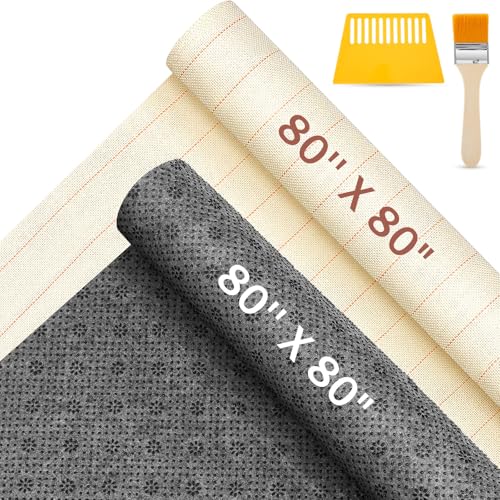
Package Sent to You: including 1 pieces of tufting cloth and 1 pieces of non slip final backing cloth, also includes accessories of 1 piece of cleaning brush and 1 piece of glue scraper, which can meet your various fabric needs during working; Ideal choice for beginners and enthusiasts of carpet tufting

Yarlung Primary Tufting Cloth for Rug Tufting, 82.7"L x 78.7"W, large enough arbitrarily cut to meet your diversified tufting needs for punching needles, carpet punching
Equipment Costs

A $300–450 hardware kit gets you a professional tufting gun, a pressure-resistant frame lined with carpet tack strips, carpet carving clippers, and a yarn winder. That is the entry fee, and the quality of these tools determines about half of how the finished rug looks.
I bought the gun first and skimped on the frame, which I regretted. The frame needs to hold tension without warping, and a simple wood rectangle does not cut it. The clippers matter more than I expected too; carving the pile smooth is what separates a handmade rug from a handmade mess.
The upfront cost spreads thin once you make a second or third rug. By the third, you are under $150 per rug in equipment share, and that keeps dropping. Renting is not really an option I found; this is buy-or-don’t-do-it territory. If you only want one custom rug, buying finished from a studio runs cheaper than absorbing the hardware and the learning curve. The break-even math only works if you plan to tuft more than once.
Recommended Products

42 Assorted colors: This 100% acrylic yarn pack contains 42 colors, bright and lustrous, no duplicates. A ball of acrylic yarn weighs 25g. Perfect for Tufting machine, Tufting gun, Carpet gun machine, Tufting art, Punch Needle, Rug-Punch, Machine Embroidery;

Versatile Application: Suitable for latch hook crafts, crochet rugs, home textiles, and diy rug projects, this yarn allows you to create patterns and unique designs

【Yellow Marked Lines】: This tufting cloth features a yellow line every 5 centimeters. These lines streamline the marking and tufting process. Moreover, when stretching the tufting fabric on the frame, they help you maintain symmetry with ease
Overhead Costs

The space you tuft in costs money even when it is not a studio. I started at a folding table in the corner of my bedroom, and the real expense was not rent but the lighting. A single overhead bulb casts shadows that hide pile direction, so I added a daylight LED desk lamp, then a second one when the first left a dim stripe down the middle of anything wider than two feet. That pair still runs me about thirty dollars in electricity over a year of evening sessions.
Storage piles up faster than finished rugs. Yarn cones, backing rolls, and the rugs themselves need a closet or under-bed bins if you are not tripping over them. I lost a finished piece to dust and dog hair because I leaned it against a wall for two weeks; now everything lives in garment bags, which is another twelve dollars a pop.
If you sell, photography becomes its own line item. Buyers want to see pile height and true color, which means shooting near a window at specific hours or buying a cheap light box. I tried the window. Winter made that schedule impossible, so I bought the box.
Recommended Products

Industrial-strength gel adhesive

Craft Glue Applicator: Dispenses quilter's basting glue with 18 gauge blunt needle tip

Voted America’s Favorite Crafting Glue by generations of crafters, hobbyists, and households
Hidden Costs

Yarn tension was the first thing to cost me money I had not planned to spend. The gun ships with a factory setting, but every wool behaves differently, and the difference between a clean loop and a snarl that rips back through the backing is about half a turn on the dial. I ruined close to two skeins before I learned to test on a canvas corner and count the stitches by hand. That waste does not show up in the neat material lists, yet it is real.
The machine itself asks for maintenance faster than the tutorials suggest. My scissor blades dulled after three rugs, not the six some makers claim. A replacement pair runs roughly what two hours of yarn did, and the oil for the moving parts is another small line item that repeats. The first thing to actually break was the foot on the frame, the part that holds tension against the carpet tack strips. I had built the frame to the pressure-resistant specs, but the repeated leverage of stretching canvas tight found the weak point in the hardware store bracket I had chosen. Upgrading that to a welded joint cost about what the original frame lumber had, so the frame effectively doubled in price after the fact.
Electricity is the cost you notice last and cannot measure without a meter dedicated to the room. I run the gun, the overhead light, and the projector for tracing patterns all at once, and the hours add up. A single rug at 15 to 20 hours of active work is not a weekend project; spread across evenings, it runs into a month of bills you will not attribute correctly unless you are watching for them.
Recommended Products
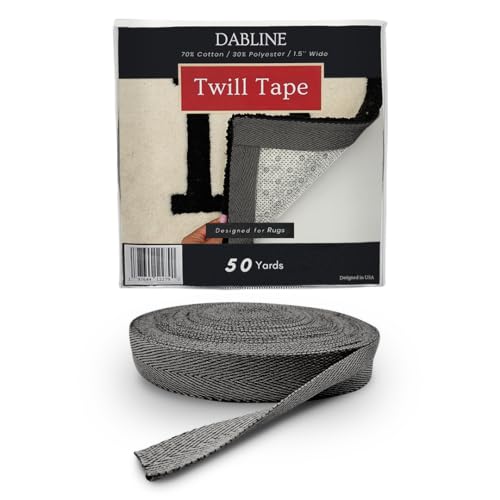
BOOST YOUR RUG'S VALUE: Enhance your rug's appeal and sale value with a professional and clean finish, ultimately boosting its sale value and overall market appeal
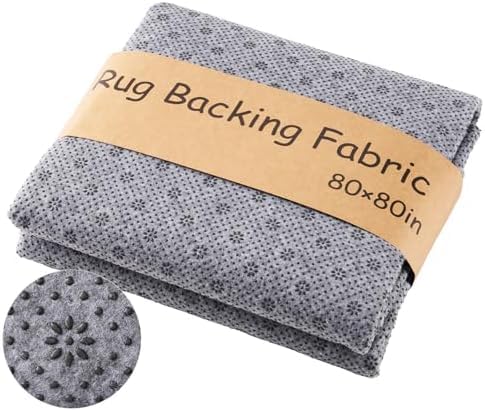
Non Slip: BESGEER rug backing non-slip cloth is made of premium polyester materials, a strong grip to keep your tufting carpet in place and avoid accidental sliding from children or pets playing

elastic band for sewing elastic band pants waist replacement DIY craft elastic luggage reinforcement elastic strap sewing accessories
Pricing Dynamics

Size, complexity, and yarn density are the three levers that move a tufted rug’s price. A 19-by-19 inch piece runs about $73 in a workshop setting, while stepping up to 24-by-28 inches pushes that to $92. The jump to 35-by-35 inches lands at $140, and a 36-by-60 inch statement piece costs $268. Those tiers exist because each tier multiplies everything: more monk’s cloth, more industrial latex glue, more secondary backing, and hours that stack from 2-3 up to 8-plus.
Material costs alone sit around $65 for a roughly 3-by-3 foot rug, counting premium yarn, backing, glue, and shipping materials. The gap between that $65 and the $140 workshop price for a 35-by-35 inch piece is where the pricing dynamics live. Fine details, small text, or frequent color changes slow the tufting gun work way down. Carving between colors for 3D relief adds another expert-level step. A minimal design in four or five colors moves fast; a dense, multi-color piece with tight loops does not.
Custom work I have seen priced out online generally lands between $80 and $180 depending on those variables, though one-of-a-kind pieces with heavy carving or oversized dimensions can push higher. The real question is whether you are paying for time saved or artistry earned.
Recommended Products

【Rug Tufting kit】: Tufting gun kit includes a tufting gun, a carpet trimmer kit, 20 rolls of yarn, a 39 “X39” tufting fabric, a 39 “X35” non-slip backing, and cleaning brush squeegee. The carpet gun allows you to DIY any pattern you like and the carpet trimmer allows for extra trimming of letters, rounded corners and edge details. You can easily DIY your own beautiful creations


Tufting Gun and Trimmer Kit: BESGEER tufting gun kit includes a tufting gun, a carpet trimmer Kit, 20 rolls yarn, a 39"X39" tufting cloth, a 39"X35" non-slip final backing cloth, and a storage box. the rug gun can DIY any patterns you like, and the rug trimmer can trim extra for letters, rounded corners, and edges details. Ideal for small to medium-sized rugs. This is the most complete tufting kit for beginners on the market. You only need to match a tufting frame to start your DIY work;
Workshop Costs vs. Home Setup

A two-hour studio slot at Pop Craft runs $20 plus the rug itself, so a small 19-by-19 piece lands at $73 total. That includes the gun, the adhesive, the trimmer, and someone else handling the latex cure. For a single accent rug, that is hard to beat.
The home path looks different once you spread the equipment across actual output. A starter tufting gun, frame, and backing materials run roughly $300–$400. If you make one rug and shelve the gear, that rug cost you twice the studio price. If you make ten, the equipment share drops to about $30 each, and you have paid yourself back by the fourth or fifth piece. The catch is the learning curve: threading, tension, and tracing eat the first two projects. I started at home because I wanted to work at midnight, but I lost a yard of monk’s cloth to a tension mistake no instructor was there to catch.
| Workshop | Home Setup | |
|---|---|---|
| Entry cost for first rug | $73–$268 | $300–$400+ |
| Cost per rug after 5 projects | Same as first | ~$50–$80 in materials |
| Instruction included | Yes, in-person | YouTube and ruined cloth |
| Best for | One-off gifts, testing the craft | Repeat makers, night owls |
I would still start at home, but only because I knew I wanted the repeat output. If I were making one piece for a nursery or a single statement wall hanging, the studio fee is the smarter money.
Recommended Products

PREMIUM TUFTING CLOTH FOR RUG MAKING: High-quality gray tufting cloth designed for rug tufting projects. Suitable for both beginners and experienced rug makers using tufting guns.

CREATING DETAILED PATTERNS: With a tighter 60/60 threads per 10cm weave density, our grey tufting cloth enables you to create straighter lines, smoother curves, and a higher yarn density. Ready to master complex tufting designs? Use this monks cloth to increase design precision and create sharper patterns

Yarlung rug tufting cloth kit includes 79"L x 59"W Tufting Cloth, 79"L x 40"W Final Backing Cloth, Cleaning Brush and Scraper, ideal gift for lovers of carpet tufting
What I Paid for My First Rug

My first rug was a 3-by-3-foot practice piece, and the materials ran about $65 before I touched the gun. The yarn was the biggest bite, a wool-acrylic mix at $27 for the batch, then monk’s cloth at $13, industrial latex glue at $11, felt backing at $8, and another $6 in shipping supplies I didn’t think about until checkout. I wasted the first yard of cloth by not adding the two extra inches on each side that the backing needs; the tufting stretched the weave and left me short to fold under. That mistake cost me a second $13 cut and an afternoon. Glue went faster than expected too, since I over-applied trying to seal every tuft on the first pass. The finished rug took roughly six hours across two evenings, not counting the hour I spent re-watching how to load the gun after the thread snapped twice. By the end, the $65 figure felt like a floor, not a forecast.
Recommended Products

Single skein: 50g, 100 yard balls make it easy to add a wide variety of colors to your handknits without waste, and for larger single-color projects, this sticky wool will splice together with ease when using the felted join.
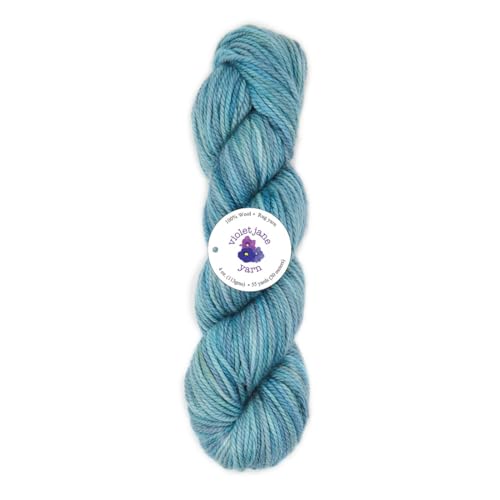
Unique Hand-Dyed Character: Each skein of Violet Jane variegated fine yarn is hand-dyed, giving it natural variations and depth. No two skeins are exactly alike, adding a touch of individuality to every project.

Premium 100% Wool Quality: Made from pure 100% wool, this 3-ply solid rug yarn offers durability, natural softness, and a smooth punching experience. Perfect for creating handmade rugs, wall hangings, chair pads, and more.
Calculating What to Charge

A custom rug pricing tool can spit out a figure in seconds, but most weekend tufters do not have one running yet. The manual method I keep on my phone works fine: start with the $65 material receipt for a 3-by-3-foot rug, add the hours I actually spent at the frame, then multiply that labor by whatever rate keeps me from resenting the project. Profit margin gets added last, after the true cost is staring back at me. Hidden costs like dull scissor blades, wasted yarn from early mistakes, and the electricity to run the gun already ate into the earlier sections; this is where they finally get a line item so I do not price myself into a loss on the fourth rug.
Budgeting for a First Project

A first rug runs about $65 in materials alone for a 3-by-3-foot piece, once you tally the yarn, monk’s cloth, glue, backing, and shipping supplies. That number assumes nothing goes wrong, which it will. Ripped canvas, miscut edges, and yarn that ends up in the trash rather than on the rug are standard during the learning curve, so budgeting for one and a half times that material cost keeps the project from stalling halfway through.
The 15 to 20 hours of labor is harder to price. Early on, I would have paid myself in experience rather than dollars, which is another way of saying I worked for free and called it a hobby. Machine maintenance, blade replacements, and the electricity to run the tufting gun add a few dollars per rug, though they feel invisible until the utility bill arrives.
For a true minimum viable start, buy the gun, stretcher frame, and enough consumables for two rugs, not one. Defer the fancy yarn and the secondary backing upgrades until the first piece is finished and actually looks like something you’d put on your floor.
Recommended Products

BOOST YOUR RUG'S VALUE: Enhance your rug's appeal and sale value with a professional and clean finish, ultimately boosting its sale value and overall market appeal

What You Get: there are 1 piece wooden tufting frame in size of 70 x 70 cm/ 27.6 x 27.6 inch and 1 piece rug tufting fabric that measures 1 x 1.05 m/ 39.4 x 41.3 inch or 1.1 x 1.2 yard, both of them are proper size for both beginners and skilled people, and matched with most standard tables

What You Will Receive: the package comes with 1 piece of shearing guide for carpet trimmer, which is an ideal tool for you to trim your carpet more neatly and uniform, saving your time and energy
When Tufting Stops Making Sense

At a certain size, the math flips hard. I ran the numbers on a 5-by-7-foot rug I wanted for the living room: roughly 35 square feet of tufting cloth, backing fabric, and 280 ounces of yarn at the standard 8-ounce-per-square-foot rate, plus adhesive and the hours of trimming and finishing. The studio rate for that same footprint runs around $140–$268 depending on exact dimensions, and that includes their electric trimmer, latex-based adhesive, and someone else handling the edge rounding. For anything larger than about 3 by 3 feet, buying handmade or booking studio time often beats the material cost alone, never mind the equipment depreciation.
Design limitations matter too. The studios offer set sizes for a reason: 19-by-19, 24-by-28, 35-by-35, 36-by-60 inches. Stray outside those rectangles and you are cutting your own backing, guessing at yarn density, and probably ending up with lumpy edges. I abandoned a runner project after realizing the narrow frame I would need costs nearly as much as a finished Turkish runner on sale, and the "custom" result would look handmade in the wrong way.
Time value is the silent killer. A small accent piece takes 2–3 hours in studio; my first attempt at home took two weekends and still needed professional trimming to sit flat. Renters especially should weigh whether they will use that tufting gun again, or if it becomes another $200 tool collecting dust after one project.
Frequently Asked Questions
How much does it cost to start tufting?
Expect $300 to $450 for a starter hardware kit covering the tufting gun, frame, clippers, and yarn winder, plus about $65 in materials for your first 3-by-3-foot rug. You will not hit break-even until roughly the fourth or fifth piece, so a single-project maker usually spends less at a workshop studio.
What are the hidden costs of tufting?
Wasted yarn and ripped canvas during the learning curve, dull scissor blades that need replacing sooner than tutorials claim, machine oil, frame repairs from repeated tension stress, and electricity for the gun, lights, and pattern projector all add up. Most beginners also underestimate the 15 to 20 hours of actual labor per rug.
How long does it take to make a tufted rug?
A single rug averages 15 to 20 hours from traced outline to finished backing, assuming a straightforward design with four or five colors. Frequent color changes, carved edges, or fine detail push that well past the average; my first attempt took two weekends and still needed outside help to sit flat.
How much does rug tufting cost for materials alone?
Materials for a roughly 3-by-3-foot rug run about $65: premium yarn at $27, monk’s cloth at $13, industrial latex glue at $11, secondary backing at $8, and shipping supplies at $6. That figure assumes no mistakes; first-timers should budget closer to one and a half times that amount for wasted cloth and over-applied glue.
Is it cheaper to tuft at home or at a workshop?
For one rug, the workshop wins. A two-hour studio slot plus materials lands at $73 for a small piece, while home setup demands $300 to $400 in equipment before buying a single yard of yarn. Home only becomes cheaper after four or five rugs, when equipment share drops to roughly $30 per piece.
What size rug is too big to tuft at home?
The math flips hard around 3 by 3 feet. A 5-by-7-foot project needs roughly 35 square feet of cloth and 280 ounces of yarn, plus adhesive and finishing hours; studio rates for oversized pieces run $140 to $268 and include their trimmer, adhesive, and edge rounding. Studios also cap sizes for a reason: stray outside their standard rectangles and you are guessing at density and fighting lumpy edges.
How should I price a custom tufted rug?
Start with the $65 material receipt for a 3-by-3-foot base size, add your actual frame hours multiplied by a rate that keeps you from resenting the work, then add profit margin last. Custom work I have seen quoted generally lands between $80 and $180 depending on complexity, though heavy carving or oversized dimensions push higher.
Leave a Reply