
A finished queen bed needs four to seven pillows, and the cost is ten minutes of stacking each morning. Most people get the back layer wrong: they stand Euro shams alone against the headboard, where two 26-inch squares leave bare mattress showing on a 60-inch frame. The fix is laying standard sleeping pillows flat behind them, so the Euros read as a deliberate step down rather than a failed attempt at width.
1. Classic Look

The classic hotel-style stack starts with two bed pillows standing upright against the headboard, then layers two 26" pillows in front, followed by two 20–22" pillows, and finishes with one small pillow centered at the front. That graduated sizing is what keeps it from looking like a pillow fight happened on your bed.
The small centered pillow matters more than its size suggests. Without it, the arrangement stops at an even number of pairs and your eye keeps hunting for a focal point. The single front pillow breaks the symmetry just enough to feel finished rather than formulaic.
Two 26" euro shams give the middle layer height; the 20–22" pair in front of them keeps the step-down proportional on a queen mattress. Swap that front accent seasonally, or keep the back four constant and change only the center. The 26" and 20–22" sizes are the workhorses here; the small pillow is the punctuation.
Recommended Products
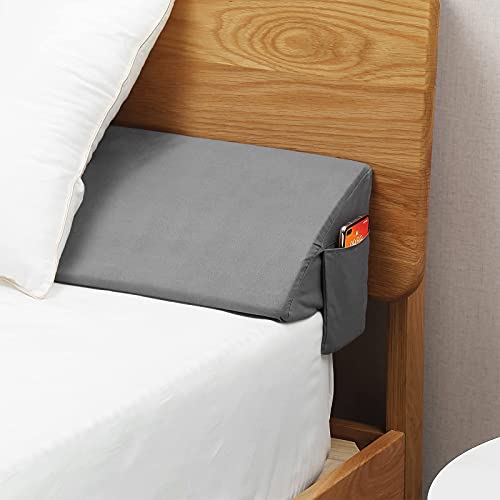
Gap Filler: Fits headboard gaps from 0–6 inches, preventing pillows, phones, and other items from slipping behind the bed.

Gap Filler: Closes gaps up to 6" between headboard and mattress to prevent pillows and items from slipping
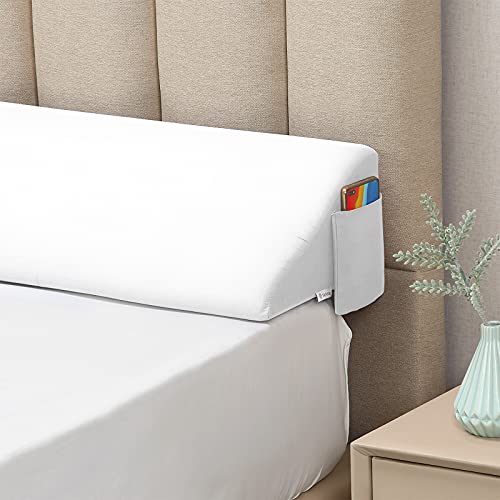
Fill Bed Gaps, Say Goodbye to Falling Items: The Vekkia Bed Wedge Pillow is specially designed to fill the gap between your mattress and headboard, fitting gaps from 0 to 6 inches. It effectively prevents pillows, pets, and small items from slipping through, letting you enjoy uninterrupted comfort every night
2. Fully Pillowfied Look

The fully pillowfied look stacks eight pillows in a strict back-to-front order: two bed pillows upright against the headboard, then two 26-by-26-inch Euro shams, two standard shams, and finally two lumbar pillows at the front edge. What convinced me, reading through a dozen of these setups, is that the scale only works if your headboard clears the Euro shams by a few visible inches. A tall upholstered or wooden headboard handles this fine; a low platform frame swallows the layers and leaves the bed looking buried rather than styled.
Without a headboard, the same eight pillows still line up, but the bed pillows lean against the wall itself and the whole stack reads shorter and more horizontal. The Euro shams, which normally add vertical height, instead become a wide color block across the middle. I would skip this formula on a bare wall unless you genuinely want that maximalist, floor-to-forehead effect; six pillows achieves nearly the same presence with less fighting at bedtime.
The two lumbars at the front are what separate this from the hotel stack. They sit low enough to leave the standard shams readable behind them, and their long, narrow shape breaks up all the squares. A headboard at least 40 inches tall keeps the top layer visible; anything under that and you are decorating your wall, not your bed.
Recommended Products

Oversized for Bed Styling: Measuring 26×26 inches, these large euro sham pillow covers are specially designed for bed decoration. Perfect for layering with other pillows, they add fullness and dimension to your headboard area, creating a luxurious hotel-style bedroom look.

PILLOW INSERT 26×26:Comes with 2 pieces 26×26 inch pillow inserts with a Cotton Cover, breathable and skin-friendly for daily use.

Luxurious Softness & Comfort: Experience cloud-like comfort with these european pillow shams. Crafted from premium microfiber that’s exceptionally soft, breathable, and cool to the touch, they provide a serene sleeping or lounging experience
3. Minimalist Look

A minimalist pillow arrangement on a queen bed runs two bed pillows, two standard shams, two 26–20″ pillows, and one smaller pillow at the front. That is the restrained version of the classic stack, and the restraint is what makes it work or fail.
Fewer pillows means each one faces inspection. Cheap fabric or a sham that pills after two washes becomes the whole story, because there is nothing else to look at. The linen or cotton you choose needs to hold up on its own.
Scale the pair of decorative pillows to your headboard. A taller headboard can carry two 26″ squares without looking lost; a lower headboard or a smaller room reads better with 20″ pillows and a single accent centered in front. I have seen the larger pair overwhelm a low-profile frame and make the bed look top-heavy, which defeats the point of going minimal.
This setup suits small bedrooms because it keeps the visual weight low. The bed still looks finished, but the pillows do not crowd the walls or fight with narrow walkways on either side. For renters working with tight floor plans, that breathing room matters more than a lush stack ever could.
Recommended Products

Luxurious Comfort & Support – Serta Bed pillows feature a breathable 400 thread count 100% cotton cover paired with a plush yet supportive 100% DuraLOFT polyester fill. Designed for medium firmness, these pillows deliver cozy comfort and reliable support for restful, everyday sleep.

QUEEN PILLOWS SET OF 2, 100% COTTON COVER: 250 thread count cotton cover filled with 1,050g of hollow fiber down alternative fill. The result? A plush 8” loft, with more fill than most competitors, inside a naturally breathable shell that’s gentle on skin.

Breathable Material: EIUE bed pillow for sleeping goes with a breathable cotton cover and breathable down alternative microfiber, which is friendly to skin and ensures you a comfortable night's sleep.
4. Eclectic Look

An eclectic pillow arrangement on a queen bed starts with two standard sleeping pillows and two 26-inch Euro shams at the back, then layers three front pillows in overlapping, asymmetrical formation. The largest of the three sits slightly off-center, the middle size overlaps it, and the smallest crosses both, so nothing lines up in a neat row.
The trick to mixed patterns that read collected rather than chaotic is a tight color family. All three prints should share at least one hue; vary the scale so no two patterns compete at the same size; and let one solid anchor the group so the eye has somewhere to rest. I like a linen or velvet solid in the middle position, with a small geometric and a larger floral flanking it.
Sleeping pillows stacked two-deep work here, though four sleeping pillows in two stacks also hold the line. The front pillows can run 20-inch square down to lumbar size, or 22–24-inch squares with a single 20-inch accent. The asymmetry is the point, so resist centering the smallest pillow. Shift it left or right by a few inches and let the overlap do the work.
Recommended Products

PILLOW INSERT 14×36:Including 1 piece of 14 x 36 inch pillow insert with a textured woven fabric cover, durable and breathable. Soft yet supportive, it keeps a beautifully plump shape and is built for styling, making it easy to achieve the classic karate chop look with a full appearance.

EXCLUSIVELY DESIGNED FLORAL PATTERN – This lumbar pillow cover features an original in-house designed floral pattern with crisp white tufted florals on a soft light taupe background, crafted to bring an elegant, one-of-a-kind accent to your bedroom or living room

Premium Quality: Filler is 360g/0.79lb 7D fiber(20% more than other) with good breathability and softness. The cover is smooth brushed fabric, comfortable, durable.
5. Practical Look

Four bed pillows stacked two-deep against the headboard, two 22"–20" pillows in front, and one 18"–20" pillow finishing the row: this is the setup for people who actually sleep with their pillows. The morning routine matters more than the styling. Those decorative layers come off in under thirty seconds, and where they land determines whether this look survives past Tuesday. A bench at the foot of the bed or a basket nearby keeps the sleeping pillows accessible and the decorative ones out of the way. Without that landing spot, the extras end up on the floor or piled on a chair, and the whole arrangement becomes a chore. Patterned pillowcases and a patterned top sheet add interest here since the structure itself is straightforward. I keep four sleeping pillows because some guests want two, but the same logic applies to your own bed: two stacks of two mean nobody is hunting for a spare at midnight.
Recommended Products

PACKAGE INCLUDES : Set of 1 hand block print lumbar pillow cover designed to fit most 14×36 inch lumbar pillows (insert not included). This decorative long lumbar pillow cover instantly refreshes your bedroom, living room, sofa, couch, bench, reading nook, or king bed with elegant artisan-inspired style.

PACKAGE INCLUDES : Set of 1 hand block print lumbar pillow cover designed to fit most 14×36 inch lumbar pillows (insert not included). This decorative long lumbar pillow cover instantly refreshes your bedroom, living room, sofa, couch, bench, reading nook, or king bed with elegant artisan-inspired style.

SOFT BRUSHED MICROFIBER: Made from finely brushed microfiber, these floral pillowcases offer a soft, smooth and lightweight feel. The comfortable fabric feels gentle against the skin and is suitable for everyday sleeping.
6. Decorated Double Layer

Two standard pillows with shams against the headboard form the back layer, then two 26-by-26 inch Euro pillows angled slightly in front. The Euro size matters here: these squares stand upright and add height without the full formality of a complete sham setup on every pillow. One lumbar pillow in front finishes the five-pillow line.
This arrangement splits the difference between minimal and crowded. The Euro pillows do the decorative lifting, so the standards can stay plain and practical. I have seen setups where every pillow wears a sham and the bed starts to look like a showroom; keeping the shams on just the standards keeps the look lived-in.
The upright Euros also help if your headboard is low or absent. Their square shape defines the head of the bed in a way rectangular pillows do not, giving structure without stacking so high that making the bed becomes a project.
Recommended Products

Decorative Pillow Cases with Charming Pom Pom Trim – These queen pillow shams feature delicate pom pom detailing that adds a touch of playful elegance to your bedroom decor. The navy blue pom poms pillow cases are designed to complement various bedding styles, from modern minimalist to cozy traditional setups

【Perfect Bed Gap Filler】 Our triangle pillow measures 6.5"*5" and offers 4 length sizes of bed wedge mattress suitable for a wide range of bed sizes. This triangle wedge cushion can fill a gap from 0 to 8 inches, and can perfectly fill the gap between the headboard or wall and mattress to prevent pillows, toys, remote controls and other items from falling out of the bed.

Set of two 100% waterproof zippered pillow encasement – standard size (20” x 26”)
7. Layered Luxury

Four standard pillows and a single bolster can read as spare rather than empty if the bedding itself is quiet. I stack two sleeping pillows flat against the headboard, add a second row of two more in shams pulled to 20 by 26 inches, and finish with the bolster centered at the front edge. The bolster’s sizing matters more than its pattern: too long and it crowds the shams, too short and the row looks accidental. In a room with plain white or oatmeal linens, this formation gives just enough structure to feel intentional without the busyness of throw pillows you will only fight to store. The hotel reference is apt, but real hotel beds often use king pillows on a queen frame for that stacked height; four standards keep the proportions calmer and the cost closer to a refresh than a splurge.
Recommended Products

Premium 500 Thread Count Egyptian Cotton: Crafted from premium 500 thread count Egyptian cotton with a smooth sateen weave for a soft, breathable, and comfortable feel. Naturally moisture-wicking and gentle on skin, these pillow shams provide lasting comfort throughout every season.

Oversized for Bed Styling: Measuring 26×26 inches, these large euro sham pillow covers are specially designed for bed decoration. Perfect for layering with other pillows, they add fullness and dimension to your headboard area, creating a luxurious hotel-style bedroom look.

【Natural Linen Fabric】 Made of grade natural ramie linen blend. Natural linen fabric makes it soft, comfortable, and breathable—good workmanship, tightly sewn. Color may be different in different light or on different screen
8. Stacked and Propped

Stacked and Propped works best when you skip the shams entirely and let the sleeping pillows do the structural work. Four standard sleeping pillows, each 20 by 30 inches, get split into two vertical stacks of two and pushed against the headboard. The vertical stack needs a headboard tall enough to hide the pillow edges, or the gap reads as a mistake; 24 inches of headboard height is usually the minimum that cleans this up, though a wall-mounted headboard or no headboard at all shifts the look entirely.
Two small lumbar pillows then lean against the front of those stacks. The lumbars do the visual heavy lifting, so their fabric choice matters more than their fill. What the sources disagree on is whether to prop additional pillows in front or stop at two. The lean-forward version, with just the lumbars, stays neater on beds that actually get slept in every night. Adding a third layer of shams or decorative squares in front of the lumbars looks full in a catalog photograph, but light and airy feather fills go floppy by morning and the whole thing needs rebuilding daily. Heavier fills hold the propped shape longer, which is the difference between this looking intentional and looking like you gave up.
Recommended Products

Superior Comfort: Crafted with premium down-alternative filling, blending 40% 3D fiber and 60% 7D fiber, Sasttie queen size pillows strike a great balance of softness and plump firmness, offering an incredibly plush feel for the ultimate huggable comfort

LONG-LASTING: Standard pillow covers are made with a high thread count and a tight weave of the finest quality microfiber fabrics to prolong the life of your pillows. Pillow protectors save pillows from dirt as well as wear and tear.

Ultimate Comfort & Support: This pillow features a breathable, skin-friendly microfiber shell, filled with a soft down alternative, offering a cloud-like feel for a peaceful and cozy sleep. Whether you're side sleepers, stomach sleepers or back sleepers, it provides the ideal support, helping to relax your muscles and relieve pressure.
Pillow Sizes for a Queen Bed

A queen mattress is 60 inches wide, and pillow sizes that look generous on a king can read skimpy here if you are not careful. Standard queen pillows at 20×30 inches fill the width cleanly; standard pillows at 20×26 inches leave too much bare mattress showing on either side and tend to look like an afterthought.
Euro pillows at 26×26 inches sit tall against a headboard and give the arrangement its backbone, but two of them do not span the full 60 inches. They work best layered in front of sleeping pillows rather than standing alone at the back. The 20- and 22-inch square pillows are the real workhorses for a queen bed. They read proportional without crowding, and three across the front is usually the practical limit before the bed starts looking like a showroom set.
I learned this the hard way with a set of 24-inch squares that looked perfect in the store. On my queen bed they hung over the edges just enough to feel wrong, and I ended up swapping them for 20-inch covers that actually let the bedding breathe.
Recommended Products

【Quality Material】Chenille&Cotton Surface,Thick cream white linen Backing.inserts Are Not Included.

Black and White Lumbar Pillow Case Szie: Rectangle throw pillow cases for bed is with the queen size 20×30 inch (50.8×76.2 cm),Pack of 2 standard pillowcases in package.(Pillows are not included)

PILLOW INSERT 12×20: Including 1 pieces of 12 x 20 inch pillow insert with a cotton cover, durable and breathable.
Color Coordination

Color on a queen bed works best when it is pulled from somewhere else in the room: the rug, the curtains, the wall, a piece you already own. Three to four colors, drawn from those anchors, will hold together even when the patterns and textures start to differ.
The 60-30-10 rule is the practical way to keep it from drifting. Sixty percent of your pillow color should be your dominant tone, the one closest to your bedding or largest textile. Thirty percent goes to a secondary that relates but does not match exactly, same family, different finish. The last ten percent is your outlier, the one that looks slightly wrong at first glance. That wrong color is what makes the rest read intentional rather than matchy-matchy. Without it, the bed flattens into a catalog spread.
Designers tend to push for slight contrast in color, pattern, or texture so the arrangement does not look like a set bought as a set. A queen bed carries four to seven pillows comfortably, which is enough layers to build that full story without crowding the sleeper.
Recommended Products

【Set of 2 QUEEN SIZE PILLOWCASES】:Include 2 pillowcases that measures 20 by 26 inches each (NO INSERT INCLUDE). If you need matching DUVET COVER SET, please search: B081DMGT4R. Due to the tailoring, the pattern on the pillowcase may be slightly difference from the image on the page. Hope you can understanding!

Unique design: PANOD farmhouse pillow cover is designed with tassel at edges. front: light grey tufted on cream white chenille fabric. back:cream white chenille

PACKAGE INCLUDES: 2 queen size set dark grey pillow shams, measuring 20"(Width) x 30"(Length), small tassels design make pillow covers more exquisite and cute
Layering Techniques

The 2-2-1 rule is the most reliable structure I’ve found for a queen bed: two 26-by-26 inch Euro shams upright against the headboard, two standard sleeping pillows (20 by 28 inches) laid flat in front of them, and one lumbar or small decorative pillow at the very front. Back-to-front sizing matters because each layer needs to read as a distinct step down; if a front pillow is taller than what sits behind it, the whole stack looks accidentally stacked rather than intentionally layered.
Texture mixing is where this formula stops feeling like a hotel room. I lean toward linen Euros against cotton standards, or a velvet lumbar pulled forward against matte weaves. The contrast lets each pillow claim its own territory even when the colors stay quiet. One source suggests staying inside a single color family and letting texture do the work of variety, which keeps the bed from looking like a catalog spread.
Without a headboard, the same rule applies, just leaned against the wall. The Euros become your vertical anchor; skip them and the standard pillows look adrift.
Practical Considerations

The sweet spot for a queen bed lands somewhere between four and seven pillows total, a range that keeps the bed looking finished without turning it into a morning obstacle course. Go lower and the spread can look spare; push past seven and you are either sleeping in a fort or spending ten minutes every night relocating cushions.
What convinced me, reading through the formulas that actually get used, is that the number has to match your morning routine. If you make the bed in thirty seconds flat, two sleeping pillows and a single throw are probably your ceiling. If you enjoy the ritual of stacking and propping, five or six pieces give you enough layers to build with.
Guest beds follow different logic. Keeping four sleeping pillows on hand, stacked as two pairs, covers the guest who sleeps with two pillows without forcing anyone to hunt through a closet at midnight. The decorative layer in front can stay minimal; your visitors are there to sleep, not admire your shams.
There is also a clear stopping point. Once you have to ask where the sleeping pillows actually are, you have added one layer too many. The bed should still function as a bed.
Arranging Without a Headboard

A queen bed pushed against a plain wall can still look finished if the pillows do the work a headboard would. The wall itself becomes the backdrop, so the color matters more than people expect. On a light wall, every pillow edge reads crisp and dimensional; on a dark wall, those same edges disappear and the stack can look like a single blob unless you vary the textures or add a lighter cover somewhere in the mix.
The usual move is to stack two Euro pillows at the head, lean them against the wall, then layer standard pillows in front and finish with one decorative or lumbar piece. Without a wall behind them, the back row slumps overnight; with it, they stay upright and the bed keeps its shape through morning coffee. I have seen beds where the owner skipped the Euros entirely and just propped sleeping pillows at a steep angle, but that reads more dorm room than styled. The pillow-in-lieu-of-headboard trick works best when the tallest layer is firm enough to hold its line and the fabrics contrast enough with the paint to actually register as a deliberate choice rather than a storage pile.
Frequently Asked Questions
How many pillows should you put on a queen bed?
Four to seven pillows total is the practical range for a queen bed. Four sleeping pillows plus two or three decorative pieces keeps the bed looking finished without turning it into a nightly obstacle course. The exact number should match your morning routine; if you make the bed in thirty seconds, fewer is better.
What size throw pillows look best on a queen bed?
Twenty- and 22-inch square pillows are the most versatile sizes for a queen mattress. They read proportional without crowding, and three across the front is usually the limit before the bed starts looking like a showroom set. Skip 24-inch squares; they hang over a 60-inch mattress just enough to feel off.
What is the 2-2-1 pillow rule?
The 2-2-1 rule means two 26-by-26 inch Euro shams upright against the headboard, two standard sleeping pillows laid flat in front, and one lumbar or small decorative pillow at the very front. Each layer needs to step down in height so the stack reads intentional, not accidental.
How do you arrange pillows on a bed with no headboard?
Stack two Euro pillows at the head and lean them against the wall, then layer standard pillows in front and finish with one decorative piece. The wall becomes your backdrop, so use firm, tall pillows that hold their line and fabrics that contrast with the paint enough to look deliberate rather than like storage.
Leave a Reply