
A jute rug is a flat-woven floor covering made from dried plant fibers, priced from $60 for a basic 5-by-7 weave to just under $3,000 for hand-knotted statement pieces. The catch is moisture: the same natural fibers that give it texture will stain, warp, or mildew if you place it near a frequently opened patio door, a humid basement level, or anywhere damp feet land regularly. I learned the hard way that a sopping wet blot on spilled coffee curls the edge for days, and even mild cleaner applied too wet leaves a watermark that does not lift. For dry living rooms, though, the fiber’s natural brown range masks minor scuffs and bridges mismatched wood tones without demanding exact color coordination.
1. Define the Space

An open living room with no walls to separate it from the kitchen or hallway can feel like one big drift of floor space. A large jute rug solves that without building anything permanent. The rug becomes the boundary line your eye reads instantly.
An 8’x10′ rug works for most standard sofas and a pair of chairs, pulling them into one zone. If the seating runs longer or you have a sectional, a 9’x12′ or 10’x14′ keeps the front legs anchored so nothing floats. I measure the full furniture footprint first, then buy the size that lets every front leg rest on the weave. The Revival Hart runs up to 12’x16′ if the room demands it, though most open plans I have seen settle in that 8’x10′ to 10’x14′ band where the living area meets the dining table or kitchen island.
Placement matters as much as size. I leave eighteen to twenty-four inches of hard floor between the rug edge and the next zone, enough to signal the shift without chopping the room into tiny boxes. The West Elm Celeste at 9’x12′ handles this well in high-traffic spots where people pass through to other rooms. The two-tone weave reads as modern art on the floor, so it defines space without looking like a doormat for the kitchen.
The catch is door swing and vent clearance. A 10’x14′ rug that blocks a return-air vent or catches under a swinging pantry door becomes a daily annoyance. I check those spots before unrolling anything.
Recommended Products

【Safety And Non-Slip Rugs】Our faux wool loop pile area rug is equipped with upgraded thick non-slip TPR backing, which tightly grips all floor types without sliding or curling edges. The stable bottom layer prevents slips and falls, fully protecting toddlers, seniors and playful pets during daily running and activity

🛋️ Fits all Interiors : This Versatile Neutral Boho Rug 8' x 10' area rug blends natural jute and wool to create a stylish boho rug that fits beautifully in living rooms, bedrooms, dining rooms, and entryways. Its neutral tones in tan color and textured weave make it ideal as a large area rug for living room décor, farmhouse interiors, or modern natural fibre spaces.
2. Layering

Layering a smaller rug over jute is where the texture actually starts working for you instead of just sitting there. A flatweave jute in a large size, maybe 8 by 10 or 9 by 12, gives you the coverage and the raw fiber ground, then you drop something with personality on top: a vintage kilim you found secondhand, a low-pile geometric, even a sheepskin thrown off-center near the sofa. The jute fills the visual field so the top rug reads as an accent, not a mistake in sizing.
The trick is keeping the stack low enough that no one catches a toe. A quarter-inch height difference between the two rugs is about the safe ceiling; much more and you are building a trip line in the middle of your living room. Jute itself runs thin, usually under a half-inch, so pair it with something similarly flat rather than a shag or a deep Moroccan pile. I have seen a 2 by 3 Turkish rug look intentional over a 6 by 9 jute, and I have seen the same combo look like a laundry pile because the top rug was too thick and the edges curled.
For open-concept rooms where the furniture floats, the layered setup also anchors the seating area without demanding one giant expensive rug. The jute does the heavy lifting on scale; the smaller rug brings the color or the patina you actually want to live with.
Recommended Products

DURABILITY: Our jute rugs are the perfect solution for any busy family; They are handmade yet their heavy natural fibers make them durable and resistant to slippage; Their rough cross-weave textures mean they're built to last

Neutral Easy Jute Rug: Get a magic of a long lasting rug in the look of natural jute with our new Easy Jute rugs. (Not actually made from jute) Made of safe polyester that is not easy to crack, without scratching, shedding, or fraying with time
3. Underneath Furniture

A jute rug underneath the sofa and coffee table anchors the seating area without fighting for attention. The flat weave matters here: it sits low enough that chair and table legs don’t rock on a thick pile, and the tight construction keeps the surface from buckling under weight. For a standard three-seat sofa, a 6’x9′ rug fits front legs only while an 8’x10′ slides far enough under to catch all four legs of both sofa and coffee table. Front-legs placement works fine in tighter rooms and still reads as intentional; all-legs placement needs the larger size but gives a more settled, room-within-a-room feel. I tried the smaller footprint first in a narrow living room and the scale felt skimpy until I swapped for the 8’x10′, which let the front legs of the side chairs land on fiber too. The neutral tone doesn’t compete with whatever piece you want to highlight, whether that’s a leather sofa or a painted coffee table. Jute’s toughness handles the indentation from furniture feet without the permanent divots you’d see in softer fibers, though a rug pad underneath still helps with grip and even wear.
Recommended Products

✔️ Material: Natural jute 70% and wool 30%

CONTENTS: One (1) COTTON CRAFT Handwoven Reversible Cotton Chindi Accent Rug in Multicolor, measures 20 inch x 32 inch

100% NATURAL JUTE : This rug has been carefully handmade using 100% natural jute fibers, which can result in slight variations in color and weave. These variations add to the rug's individuality and uniqueness.
4. Jute Rug Runners

A full jute rug looks wrong in a hallway or the narrow channel between a sofa and a media console, but a runner solves the problem without crowding the walk line. The standard runner sizes that work in these spots are 2’6" by 8’4" and the smaller 2 by 3 foot mat, both common enough that most collections stock them. I lay the longer runner in the entry that feeds straight into my living room; it catches grit before it hits the wood and gives bare feet something softer than tile for those first steps in. The 2 by 3 foot size fits the gap where my console table sits against the wall, too short for a standard rug but enough to warm the floor and keep the chair legs from rutting the carpet underneath. Jute’s flat weave keeps these low-traffic runners from buckling at the edges, which is the failure point with thicker pile in a narrow width.
Recommended Products

{ RECOMMENDED SPACES } Ideal for patios, porches, decks, balconies, and entryways, this %100 premium polypropylene easy jute rug also suits indoor areas like living rooms, kitchens, and bedrooms. With its natural rug design, it blends warmth and texture into any space.

Rug measures 24×36", made of durable 100% Jute, a shiny vegetable fiber spun into coarse threads.
5. Patterned Styles

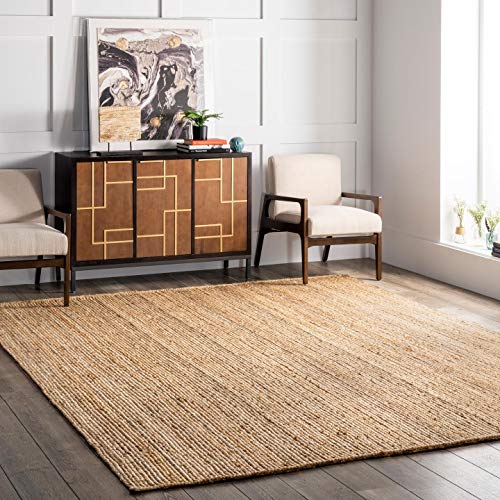
Most jute rugs read as a single wash of oatmeal or wheat, which is exactly why a bordered or geometric weave lands so hard in a neutral living room. The material keeps its restraint; the pattern breaks the monotony without importing color you did not want.
I noticed this first in a friend’s gray-walled rental where a diamond-weave jute sat under a charcoal sofa. The repeating lattice gave the eye something to follow across an otherwise flat plane of beige and gray, and because the pattern was woven in, not printed, it stayed quiet up close. Chevron and stripe borders work the same way: they frame the seating area like a built-in edge, useful when the rug itself is the only warm tone in the room.
The catch is scale. A chunky chevron in a small apartment can feel like the rug is shouting at the furniture. In tighter rooms, a narrow contrast border or a subtle tonal diamond reads as texture first, pattern second. Elle Decor’s observation holds here: retailers are pushing more patterned jute than they used to, so the options exist even at entry-level price points.
One limit worth naming. Jute sheds, and a patterned weave can trap loose fiber in its recesses. A low-power vacuum run with the weave direction, not against it, keeps the surface legible. Skip the beater bar; the fibers are strong but pliable, and aggressive brushing pulls the pattern out of true over time.
Recommended Products

Neutral Easy Jute Rug:Unlike traditional jute,the 5×7 outdoor rug is crafted from polyester.It delivers the classis scalloped jute look you love while withstanding rain,spills,and humidity without deteriorating,perfect for patios,decks,and high-traffic areas.


[COLOR & DESIGN]: SAFAVIEH's Natural Fiber area rug showcases a chunky, hand-woven looped texture in natural tones; actual color may appear darker or lighter than shown, depending on lighting and screen settings.
6. Color Palette

Jute’s natural palette runs from warm oat and wheat to deeper tobacco and sand, with occasional gray undertones that read as neutral without going flat. The color variation within a single rug is what lets it bridge different wood tones; a beige wall, a mid-century walnut media console, and a painted white trim can all sit on the same weave without matching exactly. I look for rugs where the fiber shifts visibly from strand to strand, because that irregularity hides the small scuffs that show up on uniform surfaces.
Dyed jute exists, but the pigment sits on the surface and fades unevenly where feet traffic most. Natural color, left alone, weathers to a softer version of itself over years rather than turning patchy. Warm woods feel especially at home here: the rug’s brown range echoes oak, teak, or the honey pine of older rental floors without requiring a match. Painted trim in white or cream creates a clean edge that keeps the earthiness from going muddy. Existing upholstery, whether linen, leather, or a worn cotton blend, gains texture against the matte fiber rather than competing for attention.
The quiet range survives trend cycles because it borrows from materials already in the room rather than declaring its own color story. A jute rug in natural flax still works when the throw pillows change, or when the wall color shifts from sage to warm white.
Recommended Products

DURABLE AND PLUSH: Crafted from 100% Polypropylene, Long-lasting and sturdy jute backing (rug pad recommended), 0.39 inch rug thickness, meant for indoor use, perfect for high traffic areas, ideal for homes with childrens, fits under most doors

Neutral Easy Jute Rug: Crafted with premium safe polyester material, this faux jute area rug perfectly simulates the natural texture of real jute without easy cracking, peeling, fraying or shedding after long-term use. Features a vintage distressed checkered pattern and neutral muted tone, blending modern minimalist style and farmhouse aesthetics to add timeless elegance and warm rustic charm to any home decor

{ INDOOR & OUTDOOR USE } Enhance bedrooms, kitchens, entryways, and patios with this versatile Natural jute-style rug in 8×10. Natural woven look offers rustic charm and warmth to both modern and classic living environments effortlessly.
7. Durability

Jute fibers are extremely strong and tough, and a tight weave turns that strength into a rug that can take daily living room traffic without showing wear the way softer piles do. Furniture indentations are less of a problem than with plush rugs because the plant fiber springs back rather than crushing flat, which matters if you’re running the rug under a dining-adjacent seating area where chairs get dragged in and out or along the main walkway from entry to sofa. The low profile also means the edge won’t trip anyone, and the tight construction keeps it from buckling underfoot. If you’re placing it where pets track in or spills happen, keep in mind that jute doesn’t absorb odors well and isn’t suited to damp environments, so a blended or alternative fiber may be the better call for those specific zones. For dry, high-traffic living room use, though, the durability holds up through years of real living rather than just looking good for the first month.
Recommended Products

Natural Jute are used to make this everyday rug

Modern geometric rug in classic ivory and silver grey

Product Details: Size: 5' x 7' (60"x84"); Thickness: Rug: 0.19 in; Edge: 0.38 in; . Note: Please ensure door clearance is over 0.4" to avoid jamming. Thick edges may lift, use a smaller non-slip pad to reduce tripping risk
8. Softness

Jute fibers carry a natural softness that sits somewhere between the plush of a wool rug and the scratch of sisal or seagrass. The texture is smooth enough for bare feet, which matters in a living room where shoes tend to come off. I would not call it cushy, but it is comfortable for daily traffic without the stiff resistance you get from harder natural fibers.
A rug pad underneath changes the feel without touching the look. The jute surface stays the same, but the step gains a slight give that takes the edge off hours of standing or lounging. For renters especially, this is a low-stakes upgrade: the pad lifts the rug slightly, adds that bit of cushion, and still rolls up clean when the lease ends. A thin felt or felt-rubber pad does the job without raising the profile enough to trip anyone.
Recommended Products

SIZE: This handwoven jute area rug is 4×6 Feet. We have many more sizes for you to choose from.
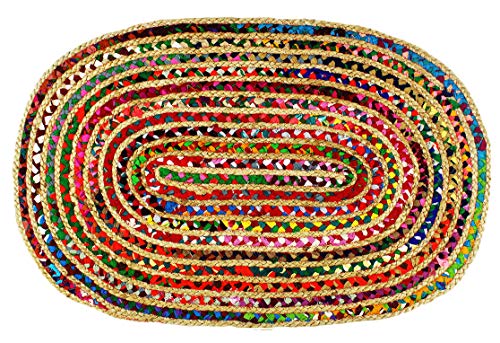
CONTENTS: One (1) COTTON CRAFT Kaia Handwoven Reversible Chindi Area Rug in Multicolor, measures 2' x 3'. The rug is approximately 0.35 inches thick.
9. Sustainability

Jute grows fast enough to feel like a genuine alternative to synthetics, not a compromise. The plants come from Bangladesh and India, need little more than rain, and skip the heavy fertilizer and pesticide load that cotton carries. When the rug reaches the end of its life, the fibers break down rather than sitting in a landfill for decades.
That matters when you’re weighing a $60 entry-level weave against investment pieces that climb toward $2,999. The cheap one still carries the same raw material advantage, and the expensive one isn’t buying better eco-credentials, just denser construction or hand-finished edges. Either way, the fiber itself is renewable and biodegradable, so the environmental case holds across the price spread.
The catch is that jute’s green profile doesn’t make it indestructible. It absorbs moisture, stains easily, and sheds at first. Sustainability here means the material’s origin and end-of-life story, not a promise that the rug will outlast wool. For a living room that sees real traffic, that tradeoff is worth naming upfront: you’re buying a plant that grew quickly and will return to the soil quickly, not a miracle fiber that ignores coffee spills.
Recommended Products


{ INDOOR & OUTDOOR USE } Enhance bedrooms, kitchens, entryways, and patios with this versatile Natural jute-style rug in 2×3. Natural woven look offers rustic charm and warmth to both modern and classic living environments effortlessly.

HANDCRAFTED NATURAL JUTE – Made from 100% premium natural jute fibers, this 6 ft round area rug is skillfully braided by artisans for superior durability and an authentic, earthy texture that complements boho, farmhouse, coastal, and rustic home décor styles.
10. Care Instructions

A jute rug in the living room will shed loose fibers for the first few weeks, especially where people walk the most. Vacuuming on a low setting without a beater bar pulls those fibers up before they mat into the weave; the spinning brush on a standard upright will fray the strands instead. Spills need immediate blotting with a dry cloth, since jute soaks up liquid fast and the dampness leaves a brown water mark that does not lift. Never soak the spot; even a gentle cleaner applied too wet can warp the backing and create a mildew smell that lingers. I learned that after trying to lift coffee with a sopping towel and watching the edge curl for days. For daily care, a quick pass with the vacuum once or twice a week keeps grit from cutting the fibers at the base, and rotating the rug every few months evens out the wear where the coffee table sits.
Recommended Products

[COLOR & DESIGN]: SAFAVIEH's Natural Fiber area rug features a chunky, loop-woven jute texture in a soft neutral tone; actual color may appear darker or lighter than shown, depending on lighting and screen settings.

Classic Woven Faux Jute Design:This 3×5 area rug offers more coverage while maintaining a runner-like versatility. It features a soft, woven faux jute material with a stylish solid color pattern that enhances boho and farmhouse decor. Rug 3×5 Ideal for defining spaces in living rooms, larger entryways, kitchen areas, or beside beds. The 3×5 size provides a perfect rug for under a dining room table or in the center of a room.
What Size to Buy

A 4’x6′ jute rug works for compact seating pairs, two chairs angled toward each other or a small loveseat with a side table. The 6’x9′ size fits most modest sofas, giving you enough fiber underfoot without swallowing the room. For a full living room set, sofa plus two chairs and a coffee table, 8’x10′ is the practical minimum and 9’x12′ gives the front legs of every piece a place to land. Open plans with floating furniture need the larger coverage: 10’x14′ or 12’x15′ to keep the seating from feeling marooned in the middle of the floor.
What the sources do not spell out is the gap. No one gives you the distance from walls or tells you exactly how many chair legs should rest on the fiber versus off. The standard advice stops at "all front legs on the rug," but in a real room that can mean the rug sits 18 inches from the baseboard or six, depending on the wall length and whether you have baseboard heat to clear. I measure the room, mark the furniture footprint with painter’s tape, and buy the size that lets every front leg touch while leaving at least a foot of bare floor on the traffic side. That foot is the part nobody writes down, and it is what keeps you from tripping on the edge every time you walk through.
Blends and Alternatives

Jute blended with wool, cotton, or synthetics changes what the rug actually feels like underfoot and how long it survives in a busy living room. A jute-wool mix, like the Amesbury or the Erin Gates Orchard Bloom, trades some of that classic scratch for softness; the Arhaus Pearce uses cotton to the same end. Polysilk blended in, as with the Artisan collection, nudges the texture toward something slightly more modern while keeping the rustic look intact.
What convinced me, reading through a dozen of these, is that no single blend ratio has become a standard you can shop by. One retailer’s "jute and wool" might be twenty percent wool or sixty; the description rarely says. In a store, press your hand into the pile and ask the ratio outright. Online, zoom in on customer photos for pilling or flattening, and check whether reviews mention shedding after a month, not just out of the box. If you want the jute look without the jute feel, blends are the practical path, but the variation means you are buying partially blind unless you dig for that detail.
What I Would Skip

Jute’s strength in high-traffic living rooms comes with limits that are expensive to learn the hard way. Damp areas are the first place I’d rule out: the fiber isn’t suitable for humid environments, so a living room with a frequently opened patio door onto a wet climate, or a basement-level space, will shorten its life noticeably. A rug pad underneath matters more than with synthetics; without one, the shedding that comes with any natural fiber grinds into flooring and shows up worse on dark wood than on light. Sizing errors are harder to correct with jute than with a forgiving low-pile synthetic. Too small, and the edges curl under foot traffic in ways that don’t relax back. On stain resistance, the natural brown masks some marks, but spot-cleaning with mild soap and water is the limit of what the fiber tolerates; anything requiring deeper treatment usually leaves a watermark. For homes with pets, the material fails to absorb odors well, and sea grass or sisal handle that reality more gracefully.
Price Reality

Jute rugs run from about $60 for a 5-by-7 flat weave up to that $2,999 mark for a 12-by-15 hand-knotted piece with a border or geometric pattern like the diamond checkered style. Size drives most of that spread: doubling the dimensions quadruples the material, and labor with it. Weave density comes next. A loose, flat basketweave lets light through and costs less to produce; a tight, chunky hand-braided pile takes longer and holds its shape under furniture better. Border detail or pattern work, even simple stripes, adds another step in production and another hundred dollars or so at retail.
For a renter or first-home owner working with a few hundred dollars, the visual impact lands in the 8-by-10 sweet spot with a clean, unbordered weave. That size anchors a seating area without custom-order pricing. The thousand-dollar tier mainly adds longevity and designer association: thicker pile, hand-finished edges, names like Jake Arnold attached. The rug looks similar on day one. The difference shows up five years in, or if you are layering it under other rugs where the weave needs to lie flat. Most living rooms read the same with a $250 solid-weave jute as with a $1,300 version; spend the premium only if the room gets heavy traffic or the rug is the largest visible surface in an otherwise minimal space.
Seasonal Refresh

A jute rug is the one piece in my living room that never gets swapped out, and that fixed point is what makes seasonal restyling feel manageable instead of expensive. The same flatweave that reads breezy in July takes on weight in October just by what you drop on top of it. Last August I threw a couple of linen throws over the sofa and let them trail onto the jute; by November those were folded away and a single wool blanket, heavier and warmer in tone, did the same job without the rug competing or clashing.
Come January, a small sheepskin by the fireside chair added texture that would have fought with anything patterned underneath. The jute just absorbed it. By April, cotton in lighter weaves came back out, and the cycle repeated. The rug’s neutrality is what lets you rotate accents on a weekend without replacing the floor itself. For anyone doing one or two refreshes a year with a few hundred dollars, that stability matters more than the rug’s texture alone.
Frequently Asked Questions
How do I style a jute rug in my living room?
Use a large jute rug to define seating zones in open floor plans, leaving 18 to 24 inches of hard floor between the rug edge and the next area. Layer a smaller patterned or vintage rug on top for personality, keeping the height difference under a quarter inch to avoid tripping. Place the rug so all front legs of your sofa and chairs rest on the weave, which visually gathers the furniture into one conversational setting.
Are jute rugs suitable for high-traffic areas?
Yes, jute handles daily living room traffic well because the strong plant fibers spring back rather than crushing flat under furniture. The low profile won’t trip anyone, and the tight weave resists buckling. It is not suited to damp environments or spots where pets track moisture, since the fiber absorbs liquid and can stain or develop odor.
How do I clean and maintain a jute rug?
Vacuum weekly on a low setting without a beater bar, moving with the weave direction to avoid pulling fibers loose. Blot spills immediately with a dry cloth; never soak the spot, since water leaves brown marks and can warp the backing. Rotate the rug every few months to even out wear where furniture sits.
What colors do jute rugs come in?
Natural jute runs from warm oat and wheat to deeper tobacco and sand, with occasional gray undertones. The color variation within a single rug helps it bridge different wood tones and painted trim without matching exactly. Dyed jute exists but fades unevenly in traffic areas, so the natural palette is more reliable long-term.
Leave a Reply