
Moroccan rug patterns are the geometric and symbolic designs hand-knotted or woven into wool textiles by Berber artisans across Morocco’s mountain and plain regions. The pattern that ends up in your living room depends entirely on where the weaver lived and what materials grew nearby, not on a unified national style. A Beni Ourain from the Middle Atlas uses undyed cream wool and dark linear diamonds, while an Azilal from a neighboring valley explodes with reds, oranges and blues on the same sheep’s wool base.
Beni Ourain Rugs

Beni Ourain rugs carry the most recognizable silhouette in Moroccan weaving. Thick, hand-spun sheep’s wool forms a plush pile, and the pattern work stays deliberately quiet: dark brown or black lines sketch out diamonds, lozenges, and simple geometric forms against an undyed cream or ivory field. The restraint is the point. That neutral ground reads as warm rather than cold because the wool itself carries natural variation, from soft white to a yellower creamy tone, depending on the fleece and the light in the room.
The graphic simplicity is what let these rugs migrate so cleanly into modernist and Scandinavian interiors decades ago. A Beni Ourain does not compete with furniture; it softens it. The pile height matters here, especially in bedrooms or sitting rooms where you actually want to feel the texture underfoot. Vintage pieces from the 1970s or earlier carry the most cachet with collectors, though the market has flooded with newer rugs bleached to an artificially bright white and woven from imported wool. Those over-white versions sit flatter and feel stiffer. If the cream looks too uniform, it probably is.
Recommended Products

PET-FRIENDLY AND DURABLE: Durable for high-traffic areas, soft and comfortable area rug perfect for families with kids; Low-pile synthetic rug fibers won’t trap dirt and debris, so they’re pet-friendly and easy to clean

PET-FRIENDLY AND DURABLE: Durable for high-traffic areas, soft and comfortable area rug perfect for families with kids; Low-pile synthetic rug fibers won’t trap dirt and debris, so they’re pet-friendly and easy to clean

PET-FRIENDLY AND DURABLE: Durable for high-traffic areas, soft and comfortable area rug perfect for families with kids; Low-pile synthetic rug fibers won’t trap dirt and debris, so they’re pet-friendly and easy to clean
Azilal Rugs

Azilal rugs carry the energy of a room that started neutral and needed something to wake it up. Woven in the Azilal region of the Atlas Mountains, these pieces trade the quiet cream-and-brown palette of a Beni Ourain for reds, oranges, blues, purples and greens knotted through a natural wool base. The geometry is looser too: diamonds, zigzags and freeform linework that shift as the weaver moves, so no two pieces read like copies.
The pile sits lower and thinner than some Moroccan styles, which makes them easy to shift between rooms or even mount on a wall as textile art. Older pieces from the 1970s and earlier tend toward undyed wool with earthier accents; the brighter cotton colorwork belongs to more recent production. Both versions keep the hand-drawn quality that makes these rugs read like abstract paintings rather than floor coverings.
For a weekend refresh on a few hundred dollars, an Azilal rug does the heavy lifting without touching the walls or the sofa. The color range is wide enough to pick up something you already own, and the irregular pattern forgives a room that never quite achieves symmetry.
Recommended Products

100% Wool, made in India

SIZE: 48 x 67 inches | COLOR: Multicolored
100% Wool, made in India
Boucherouite Rugs

Boucherouite rugs stand apart from the wool-heavy Berber styles most people picture when they think of Moroccan rugs. These pieces are built from recycled textiles: old clothing, fabric scraps, synthetic fibers, whatever material was on hand. The result is a shaggy, textured surface knotted onto a cotton backing, with color combinations that read as improvisational rather than planned.
I first noticed the difference between older and newer Boucherouite pieces while sorting through options for a client’s sunroom. The 1970s-era rugs and earlier were woven from naturally dyed cottons and other natural materials; more recent decades brought in synthetics and polyesters that catch light differently and feel slightly stiffer underfoot. Neither is better outright, but the vintage cottons tend to drape softer if you are hanging one as a wall textile rather than walking on it.
The patterning is where these rugs earn their keep in a low-commitment refresh. Geometric shapes, abstract motifs, and asymmetrical arrangements appear in bold pinks, oranges, blues, and yellows without the formal structure of traditional pile rugs. That freedom makes them useful in rooms where a Beni Ourain would read too quiet, or where you want the floor covering to do the visual lifting while everything else stays neutral.
Recommended Products

PET-FRIENDLY AND DURABLE: Durable for high-traffic areas, soft and comfortable area rug perfect for families with kids; Low-pile synthetic rug fibers won’t trap dirt and debris, so they’re pet-friendly and easy to clean

[MOROCCAN-INSPIRED DESIGN]: Timeless geometric diamond motifs capture the spirit of traditional Marrakech style, adding global charm to bohemian, Scandinavian, modern, or eclectic interiors

Maintain Your Rug with Ease: Vacuum regularly and spot clean as needed. For best results, avoid using a vacuum with beater bars to protect the rug’s fibers. Not Machine Washable.
Kilim Rugs

Kilim rugs carry their pattern right in the weave itself, not in a raised pile you sink your fingers into. The flat-woven construction leaves them thinner and lighter than a Beni Ourain or Boujad, which is exactly why they work so well in spots where a thick rug would feel like too much. I have used one as a hallway runner that gets lifted and shaken out weekly, and the weight difference matters when you are doing that yourself.
The geometric motifs tend toward bold stripes and simple shapes in sun-faded reds, ochres, and indigo. Because they are fully reversible, you can flip them when traffic starts to show, and they layer cleanly over another rug without the wobble you get stacking two piled pieces. A kilim is the rug you choose when you need to move it yourself, vacuum it fast, and not think about it. The nomadic tribes that originally made them needed exactly that: something that packs small and survives being put down and picked up repeatedly. For a renter refreshing a space on a weekend, those same qualities still apply.
Recommended Products

Unique Moroccan Style: Inspired by morocco, we have integrated modern geometry into retro tribal elements. The western rug paired with bright light gray adds a touch of unique culture to your room, it can be used in kitchens, doorways, beside beds, bathrooms, home decoration, etc.

Multi-Situation Use & Size:Unique tribal and Aztec design can add a vintage touch to your home. Elegant geometric patterned rug with varying colors and sizes are suitable for various occasions: indoor, entryway, bedroom, living room, kids room, under dining table, office, bathroom, laundry room, etc

Customize Your Comfort – Select from the Heritage Trails collection, featuring Berber Stripes and Kilim Geo designs in beige, and customize your rug to the exact length you need. Perfect for kitchens, entryways, hallways, staircases, and corridors.
Boujad Rugs

Boujad rugs carry some of the most saturated color you’ll find in Moroccan weaving, built on natural dyes in reds, pinks, magentas, and oranges that soften to pastel as they age. The palette comes from the central plains region of the Middle Atlas, where the territory is wide enough that no two pieces feel mass-produced.
The geometry is what stops you: large central diamonds or lozenges, then squares, stars, and repeating border symbols packed in around them. These are hand-knotted, though pile height varies from low loop-knotted kilim-weight pieces up to heavier, thicker wool. Most Boujads land somewhere in between, which matters if you’re placing one under a door or just layering it over another rug.
The 1960s and 1970s output from this region is what collectors chase now. Quality from that mid-century period, specifically the depth of the plant and vegetable dyes, makes those rugs distinct from newer commercial copies. If you’re hunting vintage, the dye saturation and the particular looseness of the hand-knotted structure are your tells; the "bohemian" knockoffs get the colors close but never the weight or the symbol density right.
Recommended Products

Handmade by skilled artisans enhancing in-depth color and product durability

Southwestern style is versatile enough to work with bohemian, rustic, or cabin & lodge home Décor

[DURABLE QUALITY HANDMADE CONSTRUCTION]: Hand-knotted by skilled artisans for a truly unique textured look and feel
Taznakht Rugs

Taznakht rugs carry some of the most sculptural surface texture you’ll find in Moroccan weaving. Three distinct techniques, flat weaving, knotting, and embroidery, layer together to build raised, almost three-dimensional patterns across the face of the rug. The effect reads closer to a low kilim than a plush Beni Ourain, which makes these pieces practical for high-traffic spots where you still want visual weight.
The layout typically centers on a large geometric shape, diamonds and triangles dominate, framed by borders packed with symbolic detail. Dyers in the region work with saffron, henna, and other plant-based materials, so the palette stays warm and earthy rather than loud. That natural dyeing also means color shifts subtly across the wool, something I notice most under direct afternoon light where the tonal variation becomes part of the pattern itself.
Collectors gravitate toward vintage Taznakht pieces from the 1940s through 1960s, though the weaving tradition itself runs much deeper. The rugs are sometimes labeled Glaoui after the area’s historical association with Pasha Thami Glaoui, a detail that trips up search results more than it helps shoppers. If you’re hunting one, search both terms, but verify the technique stack; true Taznakht construction has that unmistakable mixed-method relief that flatter rugs only imitate.
Recommended Products
PET-FRIENDLY AND DURABLE: Durable for high-traffic areas, soft and comfortable area rug perfect for families with kids; Low-pile synthetic rug fibers won’t trap dirt and debris, so they’re pet-friendly and easy to clean

PET-FRIENDLY AND DURABLE: Durable for high-traffic areas, soft and comfortable area rug perfect for families with kids; Low-pile synthetic rug fibers won’t trap dirt and debris, so they’re pet-friendly and easy to clean

PET-FRIENDLY AND DURABLE: Durable for high-traffic areas, soft and comfortable area rug perfect for families with kids; Low-pile synthetic rug fibers won’t trap dirt and debris, so they’re pet-friendly and easy to clean
Zanafi Rugs

Zanafi rugs carry a quiet precision that shows up only when you flip one over. Each row is built through an intricate system of counting, and the payoff is a reversible design with inverted colors on each side: the symbols that read black-on-cream on top switch to cream-on-black underneath. That kind of symmetry demands concentration from the weaver, and it gives the owner two distinct looks without buying a second piece.
The traditional Zanafi comes from the Southeast, finished with side tassels that hang loose as fringe, though some are woven without them on request. A northern interpretation from the Middle Atlas Mountains changes the formula: those versions are not reversible, and they skip the tassels entirely. For a renter swapping rugs between rooms or flipping one to hide a spill, the original reversible structure is the more practical bet; the northern style reads as a flatter, more conventional flatweave with the same geometric DNA but less flexibility.
Recommended Products

Add a classic and stylish vibe to your home with this beautifully crafted kilim rug. Featuring detailed patterns and vibrant colors, this handwoven rug combines traditional design with a modern twist.

[WEAVE / CONSTRUCTION] Handmade by skilled artisan’s adept in the art of rug weaving, dedicating numerous hours to meticulously craft this artistic area rug to perfection. As the name resembles the hand-woven flat weave rugs are thinly woven with low pile and flat surface. This rug is woven with fabric by interlocking horizontal & vertical threads, to create a flat rug in a variety of colors & designs. These are light-weight but end up lacking the soft velvety feel often associated with rugs.

The handmade, hand-tufted Construction adds durability to this rug, ensuring it will be a favorite for many years
Tuareg Mats

Tuareg mats sit at the lighter end of Moroccan rug patterns, built from reeds pulled from the Senegal River rather than piled wool. The base stays thin and hard-wearing, which makes them easy to move between floor and wall when the room needs a reset. Leather strips from goat and camel hide get woven through that reed foundation to form the geometric motifs, and the leather is usually left in its natural tone. Some Tuareg groups dye theirs with local plants and spices for red and green accents that read as warmer and more specific than the usual neutral palette.
The designs echo traditional Amazigh work, carrying symbols for strength, protection, and prosperity. Each mat is single-origin from its maker, so the pattern you get is not a repeat of a catalog line. For a renter working on a weekend timeline, that lightweight construction matters: no heavy roll to haul up stairs, no pad to buy, and the flat weave vacuums without fighting a pile.
Recommended Products

Natural materials: Rug is handmade from 95% Jute, 5% Cotton with slight variations in color and size

[SUBSTANTIAL & ROBUST]: Up to 5x more material by weight than comparable rugs, offering enhanced durability and comfort; The added weight means more material, improving its ability to withstand everyday wear
Natural Materials: Our area rug is handmade from 95% Jute, 5% Cotton and expertly made in India with quality craftsmanship. Due to the handmade nature of this rug, there may be slight variations in color and size making this rug unique to your home.
What Makes a Moroccan Rug

Moroccan rugs share a few traits that make them easy to spot once you know what to look for. Every authentic piece is handmade, which means the weave carries small irregularities you would never find in a factory rug. The patterns are deliberately asymmetrical: diamonds break, grids wander, and the composition feels looser than the centered, mirrored layouts common in Persian or Oriental rugs. That informality is exactly why they work so well in modern rooms.
Wool dominates, usually sheep’s wool sheared and spun by hand before dyeing. Some rugs, especially within Tuareg traditions, incorporate reed or leather for a flatter, more architectural surface. Cotton and recycled textiles show up too. The Boucherouite style is built almost entirely from old clothing and fabric scraps, which gives it a thick, varied texture and colors that can run from muted to saturated depending on what the weaver had on hand. Natural dyes, whether plant-based or mineral, age with a softness that synthetic colors rarely match.
Color and pattern vary by region and by the individual weaver. A Boujad rug might carry magentas and reds in repeated diamond shapes, while a Beni Ourain stays ivory with dark linear marks. The common thread is that no two pieces read as copies of each other. The weaver’s own sense of spacing, symbol, and available material shapes the final design, so the rug functions as something closer to individual expression than to standardized craft.
Recommended Products

Transitionally designed, these rugs can be integrated into any contemporary, modern, traditional, or bohemian styles of décor

[DURABLE HANDMADE CONSTRUCTION]: Hand-woven by skilled artisans for a truly unique textured look and feel

[COLOR & DESIGN]: SAFAVIEH's Kilim area rug pairs a ivory ground with a black diamond geometric pattern in a flatwoven jute weave; actual color may appear darker or lighter than shown, depending on lighting and screen settings.
Patterns and Their Meanings

The patterns in a Moroccan rug are rarely decorative filler. In Berber communities, the motifs record what surrounds the weaver: the zigzags of mountain passes, the diamonds of a farmer’s field, symbols for protection against illness or barrenness. A rug from the snowy Atlas Mountains tends toward a thicker, denser pile because the wool itself is insulation against cold floors; the same tribe’s summer flatweave, the hanbel, carries lighter geometry suited to warmer rooms. Climate shapes the object before the pattern ever reaches it.
Regional availability does the rest. The Tazenakht area produces intricate flatweaves with raised embroidery because the local wool takes that texture well; the High Atlas Zanafi style relies on a tighter, more restrained geometry that suits the harder, shorter fibers available at altitude. What reads to us as "style" began as practical response: what grows there, what the room needs, what the elder who taught you knew how to do.
Color works the same way. Azilal rugs pull from reds, oranges, blues, purples and greens because those dyes were obtainable in that valley, and the weaver used them to mark births, marriages, or seasonal shifts. The asymmetry is not accident but autobiography: the pattern records a specific life, not a template. That is why two rugs from neighboring villages can feel like different languages entirely.
Recommended Products

[COLOR & DESIGN]: SAFAVIEH's Natura area rug features a subtle, tonal geometric diamond pattern in ivory and black tones; actual color may appear darker or lighter than shown, depending on lighting and screen settings.
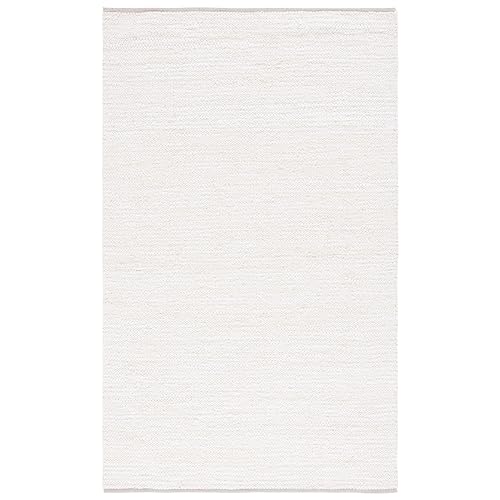
[COLOR & DESIGN]: SAFAVIEH's Natura area rug is flat-woven with a soft tonal texture in ivory and beige tones; actual color may appear darker or lighter than shown, depending on lighting and screen settings.

Luxurious Craftsmanship: Expertly hand-knotted by skilled artisans, each Rida Handloom rug epitomizes timeless elegance and quality craftsmanship.
Weaving Techniques That Shape the Pattern

The Glaoui technique demands the most from a weaver, combining flat weaving, knotting, and embroidery in a single piece. That triple method builds the raised, almost sculptural surface you see in Taznakht rugs, where diamonds and triangles sit slightly above the base like relief work. It is slow, countable labor, and the pattern only holds if each layer stays exact.
Zanafi weaving works flatter but with its own trick: a raised element that runs along the edge, sometimes left loose as fringe, sometimes closed into a loop that reads like embroidery from across the room. The design stays reversible, which matters more than it sounds if you are flipping a rug seasonally to even out wear. Natural hues dominate here, white and cream and the dark browns of undyed wool, so the technique itself carries the visual interest rather than color.
Modern weavers have started mixing these methods, combining Zanafi with hand-knotting or adding flatweave sections to a Glaoui base. The result reads contemporary because the structure itself becomes the pattern, not the motif laid on top.
Frequently Asked Questions
What are the different types of Moroccan rugs?
The main types include Beni Ourain, Azilal, Boucherouite, Kilim, Boujad, Taznakht, Zanafi, and Tuareg mats. Each differs in weave structure, pile height, materials, and color approach, from the plush ivory wool of Beni Ourain to the flat reed-and-leather construction of Tuareg mats.
How do I choose a Moroccan rug for my home?
Match the rug’s weight and texture to how you will use the room. A thick Beni Ourain works well in bedrooms where you want softness underfoot, while a flat Kilim suits hallways you need to shake out yourself. For a quick refresh without changing furniture, an Azilal or Boucherouite adds color and pattern with low commitment.
What materials are Moroccan rugs made from?
Sheep’s wool is the most common material, usually hand-spun and sometimes left undyed. Cotton appears in backings and flatweaves, while Boucherouite rugs incorporate recycled clothing and fabric scraps. Tuareg mats use reeds and leather strips instead of piled wool.
Leave a Reply