
A punch needle rug can read as modern geometry, heritage medallion, or seasonal wall piece, but the deciding factor is line width. Any motif thinner than your yarn strand disappears into the loops, which is why a redrawn Persian runner needs stems nearly half an inch wide on the monks-cloth grid to survive.
1. Modern Geometric Patterns

Clean geometry translates surprisingly well to punch needle work, and that is not an accident. The looped texture of the medium naturally softens edges, so a design built from bold blocks and stripes still reads as intentional rather than sloppy. I have seen rugs with thin, fussy linework where the details simply disappeared into the pile; the loops swallowed them. Line width must match or exceed yarn thickness to survive, which is why solid color fields and thick stripes outperform delicate motifs for modern floors.
Limited palettes keep the look cohesive without demanding a yarn stash that rivals a craft store. Three to five colors is the practical ceiling for a piece you will actually finish, and the restriction forces discipline. A neutral base with one saturated accent, say warm beige against a single rust block, carries a living room without shouting. Retro geometries, mid-century hexagons or bold chevrons, thread that same needle: playful enough to notice, simple enough to punch over a weekend.
Recommended Products

【Size】This gripper strip frame and frame cover is 9.8*9.8 inches(25*25 cm)

Tight Fasting: This punch needle frame is suitable for for holding tufting machine fabric or linen rollers tightly in place. The secure grip effectively ensures that your punch or hook is exactly where you want it, finishing your projects more efficiently

2. Organic and Nature-Inspired Designs

Irregular shapes forgive a lot. When I started punching, my circles wobbled and my straight edges drifted, so I switched to flowing curves and earthy tones that turn those quirks into texture rather than error. A leaf that tapers slightly too wide, a wave that crests unevenly, a river stone flattened on one side; these read as organic variation, not a miscount of loops.
The motifs that work best are the ones with bold, continuous outlines and no fine interior detail. A single fern frond in olive and cream, three overlapping wave arcs in sand and slate, a scatter of smooth stones in warm gray and terracotta; each punches quickly because the yarn does the shading, not tiny color changes. Limited palettes help here, three to five colors at most, keeping the design cohesive even when the shapes themselves are asymmetrical.
Wool rug yarn at proper weight fills the gaps and gives the irregular edges body underfoot. Thin yarn or fine detail in a nature motif defeats the whole point; the loops collapse and the organic shape looks like a mistake instead of intention.
Recommended Products

Suitable for Punch Needle, Rug-Punch, Machine Embroidery and DIY Cloth For Needlework

Punch-Out Dimension: 11/16" x 15/16" (1.75 x 2.38 cm), 1" measured diagonally.

Punch-Out Dimension: 7/16" x 9/16" ( 1.11 x 1.43 cm), 5/8" measured diagonally.
3. Heritage and Traditional Patterns

Heritage motifs survive in punch needle only if you respect the line width. Loops swallow thin borders and tiny details, so any traditional border or floral stem needs to be drawn at least as wide as your yarn is thick, usually wider. I learned this redrawing a Persian runner pattern for my first rug: the original ⅛-inch outlines disappeared entirely, and I had to restart with stems nearly half an inch across on the monks-cloth grid.
The color shift matters as much as the scale. Saturated modern palettes, think terracotta against sage or indigo beside mustard, keep familiar medallions and repeating florals from reading like reproduction antiques. Limited palettes help here too; three to five colors max, which is the same constraint trending in modern designs, gives heritage shapes the same intentional feel. A classic Herati pattern in dusty rose and cream looks grandmotherly. The same geometry in coral, charcoal, and unbleached wool reads like a deliberate 2026 choice.
Cottage-core and granny-core patterns already exist in abundance for traditional rug hooking, and they adapt cleanly to punch needle if you widen the lines and swap the palette. The work is in the redrawing, not the punching.
Recommended Products

Comfortable wooden handle with electropolished stainless steel needle and screw eye

6 Mushroom Patterns with Colorful Yarns: This punch needle coaster kit includes 6 unique mushroom designs, each in a different vibrant color to inspire creativity The high-quality yarn is soft to the touch, brightly colored, and resists breaking and fading — with enough yarn provided to complete all 6 coasters with ease.

Embroidery Punching Needle Set: Punch needle kit includes 5 wooden handle punching needles, 1 punching needle with adjustable clamping position, 8 punching needles with different sizes, 2 threaders, 3 thread guides, 15 sewing needles, 1 positioning pen, 2 stainless steel tube handles, 1 thread cutting scissors and 1 plastic box. Sufficient quantity and rich styles to meet your DIY art and engineering sewing needs
4. Beginner-Friendly Patterns

A circular rug with a simple spiral was the first punch needle project I finished without wanting to throw it across the room. Concentric rings let you build rhythm fast; you repeat one motion until your hands know it, and the yarn does the color work for you. No corners to turn, no edges to panic over finishing. That last part matters more than tutorials admit, because binding a straight edge neatly is where beginners usually stall for weeks.
Small pieces under 1 square foot make sense for testing a spiral or a striped heart pattern. Coasters and mug rugs let you learn tension without investing evenings of work you might pull out. Chair pads in the 1–2 square foot range come next, still manageable in a single weekend. Medium rugs at 3–6 square feet start to read as real floor coverage, and anything over 6 square feet is where the repetition pays off: your speed has built enough that the larger surface feels like momentum, not marathon.
The striped hearts pattern works the same way. Repeating the motif row after row trains your spacing without demanding new decisions every inch. By the third heart you stop counting stitches and start moving, which is the point where this craft stops feeling like homework and starts feeling like something you might actually finish.
Recommended Products

LEMON BRANCH PUNCH NEEDLE KIT: You will get an embroidery fabric pre-printed with lemon flower and branch patterns, 1 wooden frame, 9 coloured yarn, special punch needle, embroidery needles, threader, scissors, effect drawings and instructions. By completing this handmade punch embroidery kit, you can get beautiful handmade decorations while learning punch embroidery skills. Size: 9.4 x 9.4inch

Punch Neeedle Kits for Kids and Adults Beginners: Include an instruction, full range of embroidery starter kit with all the tools you need to embroider; Just with this set, you can finish a pretty embroidery

[DESIGN & PILE]: SAFAVIEH's Vintage Hamadan rug carries a distressed Persian medallion in red over multi, and its dense 5/8" pile sits low enough for a chair to glide in a living room, dining room or bedroom.
5. Seasonal Themes

Seasonal punch needle pieces sit in a closet eleven months of the year, so the format matters more than the design. A full floor rug with Halloween motifs or a Christmas tree border sounds festive until you fold it for storage and realize the loops compress unevenly, leaving a creased pile that never quite recovers. Smaller formats, wall hangings or chair pads around 14 by 20 inches, store flat in a drawer and come out crisp.
The thread weight choice shifts too. A seasonal piece worked in #8 pearl cotton or 6-strand floss, the weights I see in most holiday kits, builds faster and lighter than rug-weight wool. That lighter body keeps storage bulk down and makes the piece manageable as a table centerpiece or stair tread instead of anchoring a whole room.
Scale also controls the time cost. A 30-inch Halloween rug with detailed witch hat silhouettes and tiny candy-corn repeats eats weekends you might not have in October. The same motifs blown up to a 16-inch pillow front or a 20-inch wall square finish in two evenings, and the bold shapes read better at that size anyway. Punch needle’s looped texture does the visual work; the design does not need to shout across a floor to register.
For renters especially, seasonal pieces that hang or sit on furniture travel between apartments without the "will this fit the next living room" math that a 5-by-7 rug demands. The storage footprint of three holiday wall hangings stacked flat equals one folded throw rug, and the wear from occasional display stays minimal.
Recommended Products

Premium 100% Wool Quality: Made from pure 100% wool, this 3-ply solid rug yarn offers durability, natural softness, and a smooth punching experience. Perfect for creating handmade rugs, wall hangings, chair pads, and more.

Premium 100% Wool Quality: Made from pure 100% wool, this 3-ply solid rug yarn offers durability, natural softness, and a smooth punching experience. Perfect for creating handmade rugs, wall hangings, chair pads, and more.
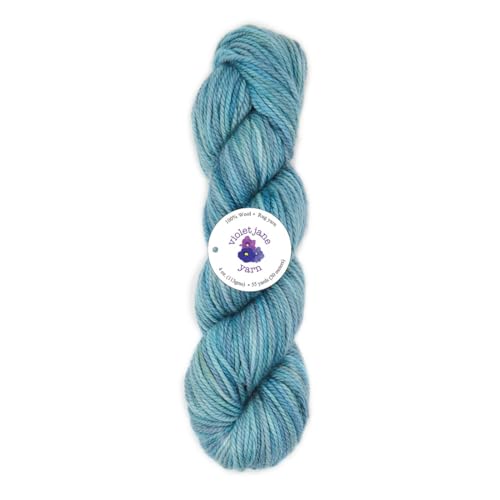
Unique Hand-Dyed Character: Each skein of Violet Jane variegated fine yarn is hand-dyed, giving it natural variations and depth. No two skeins are exactly alike, adding a touch of individuality to every project.
6. Custom Designs

The first custom punch needle rug I mapped out was a simple crescent moon and three stars, nothing fussy. Bold shapes matter because thin lines and tiny details disappear once the loops go in. Line width has to match or exceed your yarn thickness, or you will punch right over what you drew and wonder where the pattern went.
Tracing paper over graph paper let me test scale before I ever cut monk’s cloth. A 12-inch square on paper showed me the moon was too small for a bedside rug; I doubled it and the proportions finally sat right. That step costs nothing and saves the headache of transferring a sketch that turns out cramped.
Start with shapes you could draw with a marker, not a pen. Circles, thick stripes, oversized leaves. The yarn does the detail work; your job is to give it enough room to loop.
Recommended Products

Complete 39 Piece Punch Needle Kit: Punch needle embroidery kit includes plastic poking needle, 5 wooden handle poking needles (2 of which are adjustable), 8 punch needles, 2 metal handles, 15 large-eye blunt needles (3 different lengths), 1 long needle threader, 3 thread guides, 1 yarn scissors, a monk cloth of 11.8*11.8 inches, a cross-stitch cloth of 9.5*9.5 inches and a wooden handle poking needle, punch needle kit is ideal for a comprehensive creative start
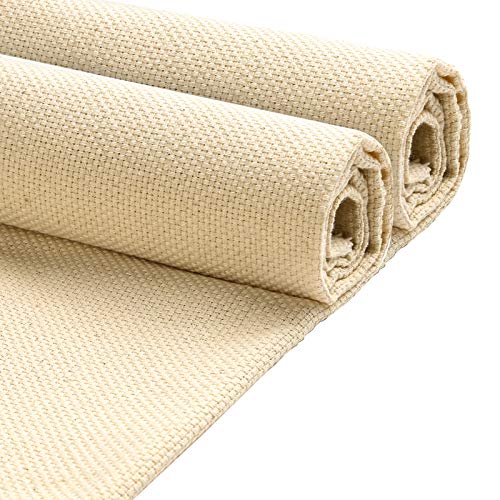
Come with 2 pieces punch needle cloth, each cloth is about 26.4 x 19.3 inch

【Package Includes】1 piece embroidery hoop,1piece plastic handle yarn punch needle, 2 pieces wooden handle embroidery needle, 2 pieces natural punch needle cloth (9.45inch x9.45 inch),1 piece yarn scissors, 1pcs mark pen, 9pcs big eye needles, 2 pieces threaders and 2 pieces long wire thread. A special and intentional gift will bring more happiness to people! Even if the price of these gifts is not that expensive, the intention of the gift maker is priceless.
Tools That Matter

The Oxford Punch Needle comes in two points that pair with specific yarn weights, and getting the match wrong is the fastest way to ruin a rug. Fine point needles work with finer yarns like aran or worsted weight, while the regular point is built for rug weight and chunky yarns that fill out faster and hold up to foot traffic. I spent my first afternoon fighting skipped loops before realizing the needle in my hand was sized for yarn two weights heavier than what I’d bought.
For anything larger than a small wall hanging, a standard embroidery hoop slips and warps under the tension you actually need. Oxford Gripper Frames use gripper strips to hold monk’s cloth drum-tight across wide spans, and they come in sizes that let you shift a rug pattern section by section rather than re-hooping every few inches. A hoop gets you through a 12-inch pillow; a gripper frame is what keeps a 3-by-5-foot rug from sagging in the middle and throwing off every loop height you’ve set.
Recommended Products

【Package includes】 10 pieces of 13.8in punch needle monk cloth fabric, enough quantity to meet your needs.
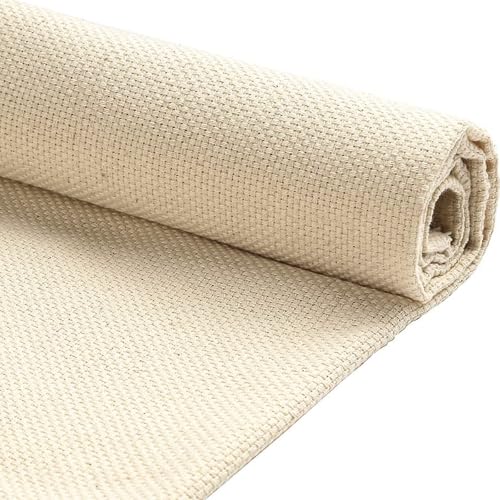
Cotton Monk's Cloth – Made from cotton with a suitable weave for punch needle and rug-punch projects, helping create clean, consistent loops.

Yard Weight and Fiber Choice

Wool handles the abuse a floor rug takes better than almost anything else, but the weight you choose changes where it belongs. Rug weight yarn, the thick stuff sold in those oversized skeins, is what you want underfoot in hallways or by the kitchen sink. Fine weight works for wall hangings or a bedside mat that sees bare feet and not much else.
The ply matters as much as the fiber. Tightly spun yarn holds together when the needle punches through; loosely spun strands fray, shed, and leave you pulling fuzz out of the backing for weeks. Test it before you buy: pinch the yarn between your fingers and tug. If it starts to pill or separate, it will fight you the whole project.
Care splits along the same line. Hand-wash wool keeps its loft and shape for years, but it is a weekend job: cool water, wool soap, flat drying. Machine-washable wool exists and survives a gentle cycle, though the texture flattens slightly over time. For a rug that lives on the floor and collects actual dirt, that trade is usually worth it.
Recommended Products
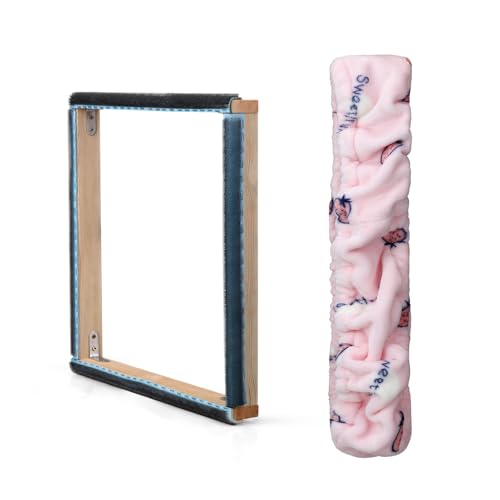
Size: This punch needle frame and cover are 11.8*11.8 inches/30*30cm

Package List: This punch needle tool kit includes 3 pcs knotting needles of different diameters, 7 pcs embroidery needles of different sizes, 2 pcs ergonomic knotting needle handles, and 1 pcs convenient needle threader. The ample quantity and variety ensure that you have everything you need to start your embroidery project.
Mistakes I Made Early

Tiny details that read beautifully on paper will fight the tool for hours. A design with tight curves or single-pixel lines asks the needle to place loops where loops cannot sit cleanly, and the result is a lumpy, unreadable surface rather than the crisp image you imagined. I learned to spot the warning signs by holding a pattern at arm’s length: if the shapes blur together, the loops will blur worse.
Yarn substitution was my other expensive error. I wanted a softer hand feel, so I swapped the rug-weight wool for a thinner merino I had leftover from a wall piece. Within two months the traffic paths flattened to felt, and the backing showed through where the loops had compressed. Thin yarn belongs on wall hangings that never take a shoe; floor rugs need the density and spring-back that comes with proper rug-weight fiber.
Fabric tension slipping mid-project is the mistake that does not announce itself until the damage is done. The loops loosen gradually, the row spacing widens, and by the time you notice, the last six inches of work sit flatter and longer than the rest. I now stop every twenty minutes to re-tighten the frame, checking by pressing a fingertip against the backing: if the fabric drums, it is right; if it yields, I crank it before the next row.
Recommended Products

Punch Needle Kit: Start creating beautiful punch needle embroidery with MOREJMTT's hand – embroidery kit!This adult all – in – one craft kit is designed for both beginners and experienced crafters looking for new creative outlets. It has everything you need to get started.
[DESIGN & PILE]: SAFAVIEH's Vintage Hamadan rug carries a distressed Persian medallion in red over multi, and its dense 5/8" pile sits low enough for a chair to glide in a living room, dining room or bedroom.
Free Patterns and Where I Found Them

Free punch needle patterns are easier to find than I expected, though not all of them translate cleanly to rug scale. The Oxford Company offers digital downloads you draw onto backing yourself, and their grid format resizes well if you keep the proportions locked. I have learned to test a small patch first, because lines that look crisp on paper can blur once your yarn width takes over. Enlarge until no line is thinner than your strand, otherwise the detail vanishes into looped texture.
Public-domain embroidery or stained-glass designs work too, but they need simplifying. I strip out half-tones and interior shading, then blow them up in any basic software or on grid paper. The trick is accepting that a punch needle rug is always going to read bolder and blockier than the source image.
What stopped me cold the first time was the licensing gap. A pattern marked free for personal use is not free to sell from, and the distinction is not always labeled in large type. If you are making a rug for your own bathroom, personal-use downloads from craft sites cost nothing and carry no risk. The moment you photograph it for an Etsy listing, you need commercial rights, which usually means a separate purchase or a different site entirely. I now check the footer before I download anything, not after I have already traced the whole thing.
Recommended Products

Premium 100% Wool Quality: Made from pure 100% wool, this 3-ply solid rug yarn offers durability, natural softness, and a smooth punching experience. Perfect for creating handmade rugs, wall hangings, chair pads, and more.

Pure 100% Wool Quality: Crafted from 100% wool, this 3-ply solid fine yarn offers durability, softness, and a smooth texture that elevates every handmade project. Its natural composition makes it ideal for long-lasting punch needle creations and other fiber crafts.

Leaf Me Alone: Leaf Me Alone is a 100% wool, 3-ply, uniquely variegated hand-dyed yarn in a striking single color. It is a crisp, bright grass green like the fresh green leaves in spring. Leaf Me Alone and Spring Buds are in the same dye family and work cohesively when used together.
Frequently Asked Questions
What are some easy punch needle rug ideas?
Start with circular rugs that use a simple spiral of concentric rings, or a striped hearts pattern repeated row after row. Both let your hands learn rhythm without forcing new decisions every inch. Work small first, coasters and mug rugs under one square foot, then move up to chair pads or medium rugs as your speed builds.
How do I design my own punch needle rug pattern?
Start with bold shapes you could draw with a marker, not a pen, and make every line at least as wide as your yarn is thick. Trace your sketch onto graph paper to test scale before you cut monk’s cloth; doubling a shape costs nothing and saves you from a cramped backing. Circles, thick stripes, and oversized leaves all work because the yarn itself provides the texture.
What types of yarn are best for punch needle rugs?
Wool handles foot traffic better than anything else, and rug-weight yarn, the thick skeins, belongs anywhere shoes walk. Fine weight works for wall hangings or a bedside mat that sees only bare feet. Check the ply before you buy: pinch and tug, and if it pills or separates, it will fight you through the whole project.
Leave a Reply