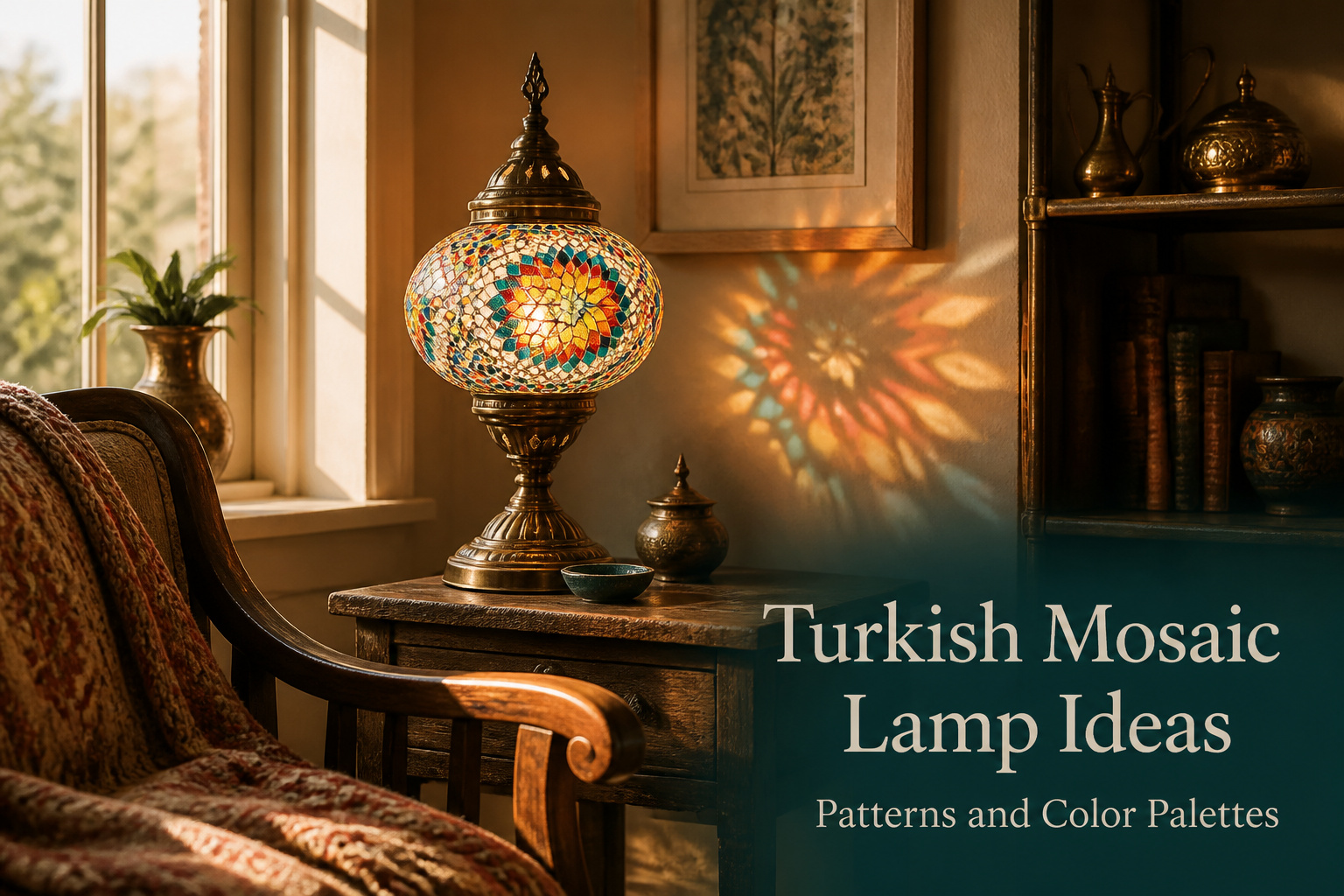
A Turkish mosaic lamp is a globe of hand-cut glass pieces pressed onto a blown glass base, wired to throw colored light through grout lines that fracture the glow across walls. The mistake most buyers make is treating it like any other lamp; the pattern and palette do the actual work of changing a room, and the wrong combination turns the corner into noise rather than atmosphere. A 3/8-inch tile, bought in bulk by the half-pound, decides whether the thing reads as craft-project shyness or the reason the room exists.
Waves and Sunshine

Blues and yellows on a mosaic lamp read like water catching late afternoon light, and the pattern that pulls it off starts from three central points so the glass seems to rise and fall in actual waves. I keep seeing this coastal palette work best in bedrooms and bathrooms, the two rooms where renters usually need the most mood for the least money. A small lamp on a bedside table or a mantel does the job without asking for new furniture or a paint day; the colors handle the whole theme. Bright yellows against soft blues warm up a neutral room that reads sterile, and the reverse, softer blues against quieter yellows, keeps a colorful space from tipping into chaos. The trick is matching the lamp to what is already there rather than building the room around it. That is the budget move: one accent, plugged in where you already sit, and the weekend is yours again.
Recommended Products

Notice:This is a finished mosaic lamp, NOT a DIY lamp kit.

Notice:This is a finished mosaic lamp, NOT a DIY lamp kit.

Notice:This is a finished mosaic lamp, NOT a DIY lamp kit.
A Song of Ice and Fire

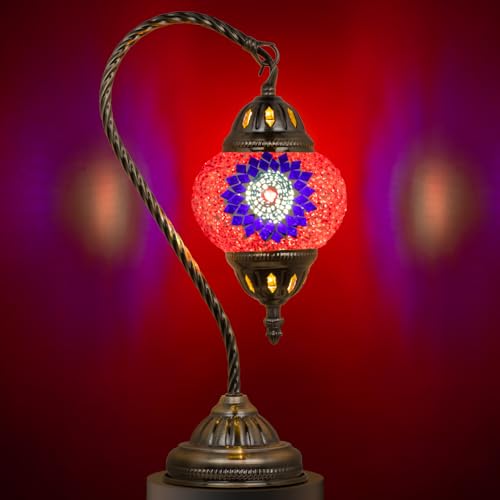
The red-and-blue pairing in a symmetrical mosaic pattern lives or dies by its geometry. Curves divide the shade into distinct sections, and that framing keeps the two colors from bleeding into chaos. In Turkish work, blue carries the weight of sky and water, peace and loyalty; red brings the heat. Set against each other in mirror-image panels, they create visual tension that pulls the eye straight to the lamp without shouting over the room around it.
I have seen this pattern read as flames meeting sea, or a small fire held in ice. The metaphor works because the symmetry forces a truce between the two temperatures. For a bedside table or a narrow bathroom corner, that balance matters. The lamp becomes a focal point you notice, not a color bomb that shrinks the walls. If you are working with a tight footprint, the symmetry is what keeps the boldness livable; the eye travels the pattern once, registers the opposition, and rests.
Recommended Products

Notice:This is a finished mosaic lamp, NOT a DIY lamp kit.

Notice:This is a finished mosaic lamp, NOT a DIY lamp kit.

✔️【Modern Design & Great Gift】- Exquisite handmade crafts make the Turkish lamp gorgeously, It looks high-end and mysterious. A sparkling mosaic glass lampshade is a perfect decoration for anywhere in your room. Being an Ideal Nightstand lamp for living room, bedroom, study room, kids’ room, etc.
Sunrise Vibes

A sunrise-patterned mosaic lamp builds its design from the center of the shade outward, with warm colors clustering together in a burst that reads like early light spreading across a room. The reds, yellows, and oranges gather tight at the core and loosen as they move toward the rim, which keeps the eye moving even when the lamp sits still.
The light that lands on surrounding walls carries that same warmth. Instead of the cool pool a white shade would cast, you get an amber wash that softens corners and flatters skin tones. I have seen this particular effect work best in bedrooms where the morning light is already doing half the job; the lamp extends the feeling into evening without fighting the room’s natural bias toward warmth.
As an accent piece, the outward burst matters more than the base color. A lamp that radiates from the center commands table space differently than one with an all-over pattern. You notice it from across the room, which makes it useful for anchoring a reading nook or dressing a nightstand that faces the door. The tradeoff is that it competes with other focal points, so this is the lamp to choose when you want the light itself to be the decorative moment, not the thing that quietly fills a gap.
Recommended Products

Porcelain Body – Crafted from high-quality, high-temperature vitreous porcelain, our lamps boast exceptional durability and elegance. Each piece undergoes a meticulous firing process, resulting in a smooth and lustrous finish that accentuates the natural beauty of the porcelain.

Asylove Turksish Mosaic Table Lamp 3 Globe Mosaic, Turkish Table Lamp, Decorative Authentic Lighting, Bedside Standing Lamp

✔️【Modern Design & Great Gift】- Exquisite handmade crafts make the Turkish lamp gorgeously, It looks high-end and mysterious. A sparkling mosaic glass lampshade is a perfect decoration for anywhere in your room. Being an Ideal Nightstand lamp for living room, bedroom, study room, kids’ room, etc.
Purple and Yellow Diamond

Deep purple and yellow glass tiles in a diamond geometry read as more expensive than they are. The pattern is simple enough to lay out with painter’s tape as a guide, but the limited palette keeps the material cost down. Specialty glass shops often sell purple and yellow as standard colors, so you are not paying the premium that rarer shades command. I have watched friends burn through their budget chasing six or seven tile colors for a single lamp; two colors, used deliberately, avoids that spiral.
The diamond repeats cleanly across a curved shade without the fuss of fitting a figurative design around bends. You can buy 3/8-inch tiles in bulk by the half-pound and know exactly how far they will stretch. The yellow reads as light source even when the lamp is off, which matters more than I expected in a bedroom corner that gets morning sun but dims by mid-afternoon.
Recommended Products

Vintage Style Table Lamp: you will receive 1 Turkish Moroccan moon table lamp, designed with a globe; This Turkish moon lamp exudes a vintage charm that's timeless and captivating; The metal antique colored lamp body further accentuates its vintage appeal, making it an addition to any room that needs a touch of charm
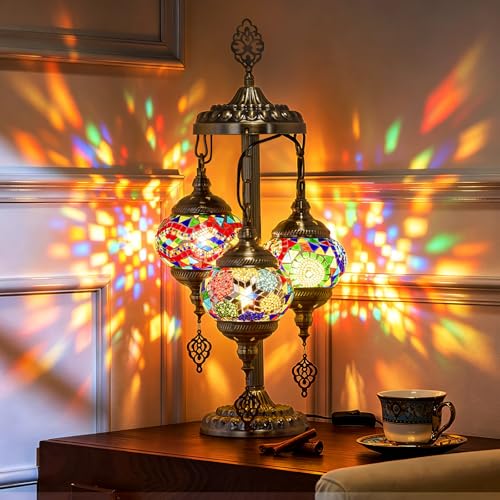
【100% Handcrafted in Turkey with Ancient Techniques】Each BOHMR 3 Globes turkish mosaic table lamp is a unique piece of art, meticulously crafted by skilled artisans using centuries-old Turkish mosaic techniques. The process involves hand-cutting and arranging colorful glass pieces, applying plaster, and final polishing—each step is essential to create the signature vibrant patterns and enchanting play of light, ensuring no two lamps are exactly alike.

【Create Your Unique Masterpiece】Unleash your creativity with BOHMR DIY Turkish Mosaic Lamp Kit, designed for crafting a personalized table lamp that reflects your style. Inspired by ancient Turkish artistry, this lamp making kit empowers you to arrange vibrant glass pieces and beads into patterns ranging from geometric elegance to free-flowing designs, ensuring a one-of-a-kind decorative piece.
Rainbow Explosion
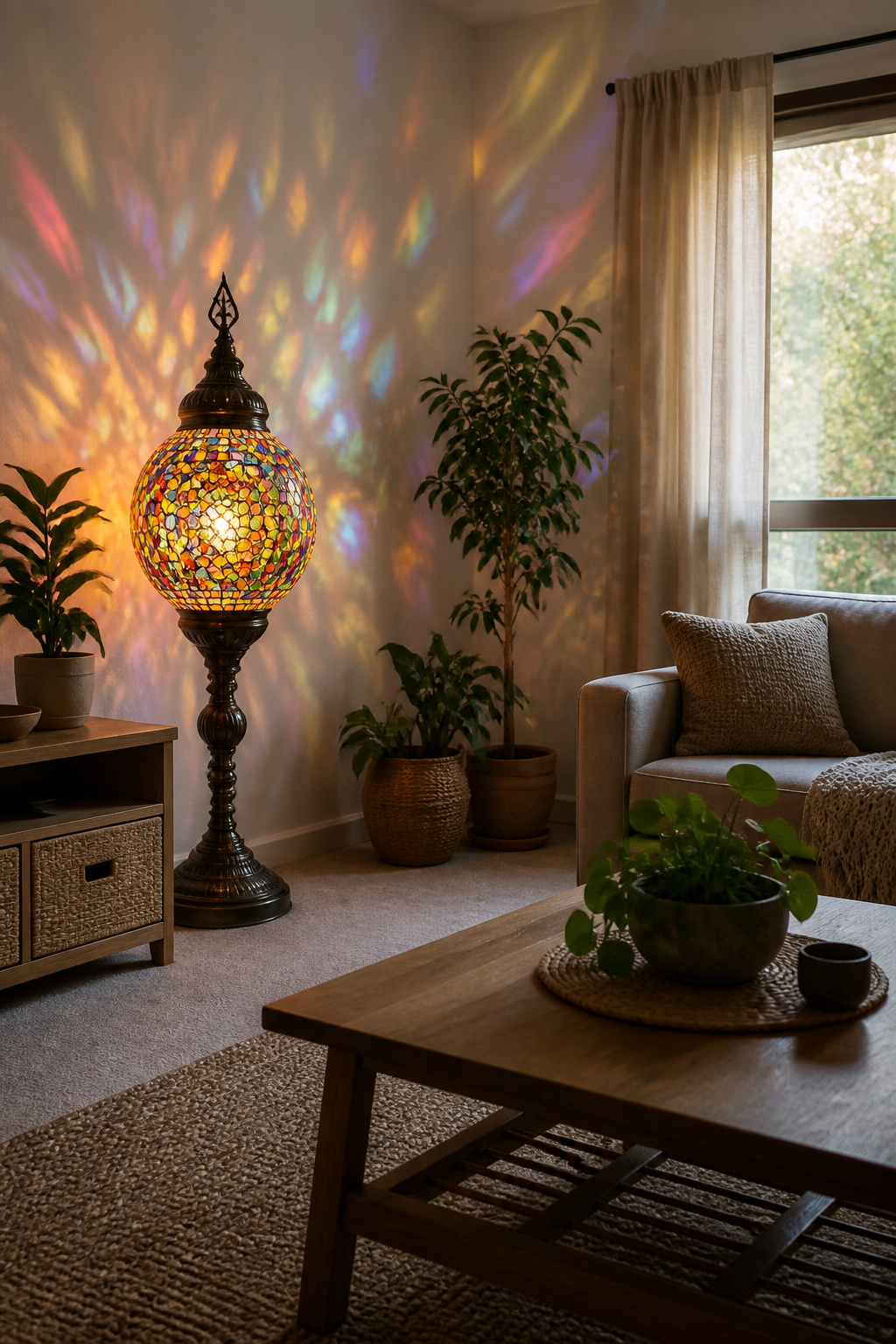
A rainbow explosion mosaic lamp throws red, yellow, blue, and green in every direction at once, and the light hitting the wall looks like someone set off confetti made of color. That is the effect, and it is also the risk. This is the highest-commitment option in the mosaic lamp catalog, the one that stops being a lamp and starts being a room’s entire personality.
Where it works: a neutral box of a rental living room with white walls, beige carpet, and no architectural detail to save it. The lamp becomes the reason the room exists. Where it fails: anywhere that already has a story. Add it to a gallery wall, a patterned rug, or even a busy throw pillow and the space starts shouting in multiple directions at once.
I learned this the hard way with a candy-colored runner I loved in the store. Alone it was electric; against my existing teal sofa it turned the corner into a carnival I did not want to live inside. The same rule applies here. The rainbow lamp needs blank space around it the way a fire needs air. One shelf, one table, one corner. Not a whole decorated room.
Recommended Products

Handmade Mosaic Glass Globe with Decorative Metal Cap – This 7-inch diameter shade features a 6.3 cm (2.48 inch) mouth opening and includes a single antique brass-finish bottom cap with a customizable dangling charm (star, tulip, or leaf). While inspired by Turkish and Moroccan design, it’s also ideal for DIY lighting or replacing shades on various lamp bases. (Glass shade with cap only – no base or electrical parts included).

【SPECIAL DESIGN & GREAT CHRISTMAS GIFTS FOR WOMEN MOM SISTER HER】 – Multicoloured glass shards are attached to the globes and mosaic glass lampshades are paired with the bronze metal bodies. The intricate glass work and interplay of light weave an enchanting ambience. The 3 globes Turkish table lamp will make a big difference in your bedroom or living room

✅ Handmade Mosaic Glass Globe with Decorative Metal Cap – This 5-inch diameter shade features a 6.3 cm (2.48 inch) mouth opening and includes a single antique brass-finish bottom cap with a customizable dangling charm (star, tulip, or leaf). While inspired by Turkish and Moroccan design, it’s also ideal for DIY lighting or replacing shades on various lamp bases. (Glass shade with cap only – no base or electrical parts included).
Mosaic Mosaic

Dark beads pressed against lighter ones create the layered effect that makes a mosaic lamp read as depth rather than flat pattern. The tonal variation does the work: a single color family, say amber or cobalt, shifts from near-black to palest glass, and the eye reads it as three-dimensional surface even under ordinary room light. That depth is what lets one lamp sit comfortably against existing decor without demanding everything else match it exactly. I noticed this most clearly when I was comparing two lamps side by side, one built in flat color blocks and the other with the dark-to-light layering. The flat lamp looked like a souvenir; the layered one looked like something that had already lived in the room for years. The dark beads do the dividing, and the lighter beads do the lifting, so the pattern holds together from across the room but still rewards attention up close. For a renter working around a landlord’s fixtures or a sofa color chosen in haste, that flexibility matters more than a perfect color match ever could.
Recommended Products

Handmade Tiffany Mosaic Shade – Each stained glass shade is hand-assembled piece by piece, so no two lamps are exactly alike; the classic bronze swan neck base pairs with colorful mosaic glass to add warm bohemian character to bedrooms, living rooms, and cozy corners.

Notice:This is a finished mosaic lamp, NOT a DIY lamp kit.

Notice:This is a finished mosaic lamp, NOT a DIY lamp kit.
Abstract Art
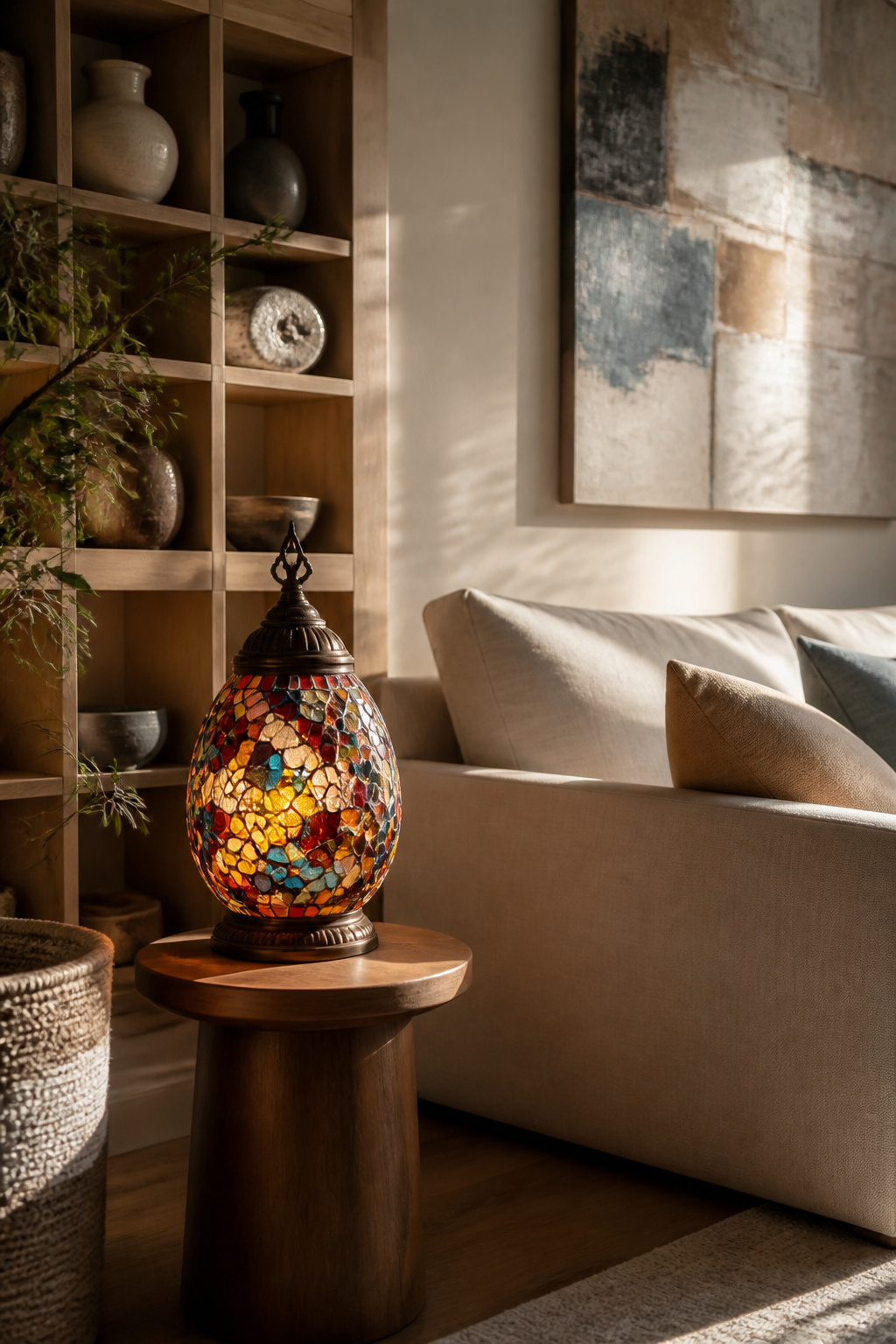
An abstract mosaic lamp is the one project where perfectionism works against you. The whole point is irregular glass pieces pressed into wet plaster with no repeating pattern, so a chipped edge or a crooked cut just becomes part of the composition. The grout lines are what save you: they wander, they widen and narrow, and any gap that looked wrong before grouting disappears into the chaos. I have watched beginners freeze over their first piece, trying to mirror a geometric pattern they saw online, and the ones who finished were the ones who stopped planning and started placing. Dark grout between lighter beads deepens that layered effect, almost like brushstrokes catching shadow, and the lamp reads as intentional art rather than craft-project shyness. If your room already holds a lot of color, keep the palette restrained; all whites and golds, maybe one muted tone, so the lamp adds texture without shouting. For neutral spaces, the reverse works: pile in the multi-tone beads and let it carry the whole corner.
Recommended Products

【Create Your Unique Masterpiece】Unleash your creativity with BOHMR DIY Turkish Mosaic Lamp Kit, designed for crafting a personalized Swan-neck table lamp that reflects your style. Inspired by ancient Turkish artistry, this lamp making kit empowers you to arrange vibrant glass pieces and beads into patterns ranging from geometric elegance to free-flowing designs, ensuring a one-of-a-kind decorative piece.

Turkish Lamp DIY Kit: You will receive all the tools to make your own turkish lamp, including: blank glass lampshade, blue mosaic pieces, blue glass beads, glue, crystal mud, disposable gloves, cups, stirring sticks, compartment storage box, instructions and LED lamp holders, etc, which can be perfectly mastered by both beginners and experienced craftsmen

Make Your Own Turkish Lamp: No prior crafting experience is needed to create your own Bohemian-style masterpiece. The mosaic lamp kit includes pre-sanded, safe glass pieces, an easy-to-follow guide (Over 10 different Turkish patterns can be freely designed based on pictures), and all necessary tools (glue, gloves, etc.), making the intricate art form simple and enjoyable for everyone.
Tulip Theme

The Anatolian Tulip motif reads as simple botanical decor to most eyes, but the pattern carries deeper weight. Ottoman artisans used triangles and square glass pieces to build blooming petals that spiral around the globe, and the geometry still works in a modern bedroom where you want something softer than a star or swirl.
Pair the lamp with an actual floral scent and the light becomes the center of a small ritual. A diffuser on the same side table, or even a candle you light when the lamp goes on, turns the corner into the equivalent of a spring afternoon without the Pinterest-perfect staging. The tulip shape does the visual work; the fragrance does the rest.
I have seen these read as "too ethnic" in rooms that lean farmhouse, but the tulip is the safest entry point. The rounded petals look like any other flower silhouette until someone asks, and then the story is there if you want to tell it. Most guests do not ask. They just notice that the light feels warmer than the LED strips everywhere else.
Recommended Products

Chinoiserie chic, this hand-painted ginger jar lamp base fits seamlessly with traditional décor

AUTHENTIC HANDMADE CRAFTSMANSHIP – Each Mozaist Turkish Mosaic Floor Lamp is handcrafted by talented Turkish women artisans using 3mm real colored glass and original glass beads. No paint, no imitation — just pure handmade artistry perfected since 2008.
Notice:This is a finished mosaic lamp, NOT a DIY lamp kit.
Forest
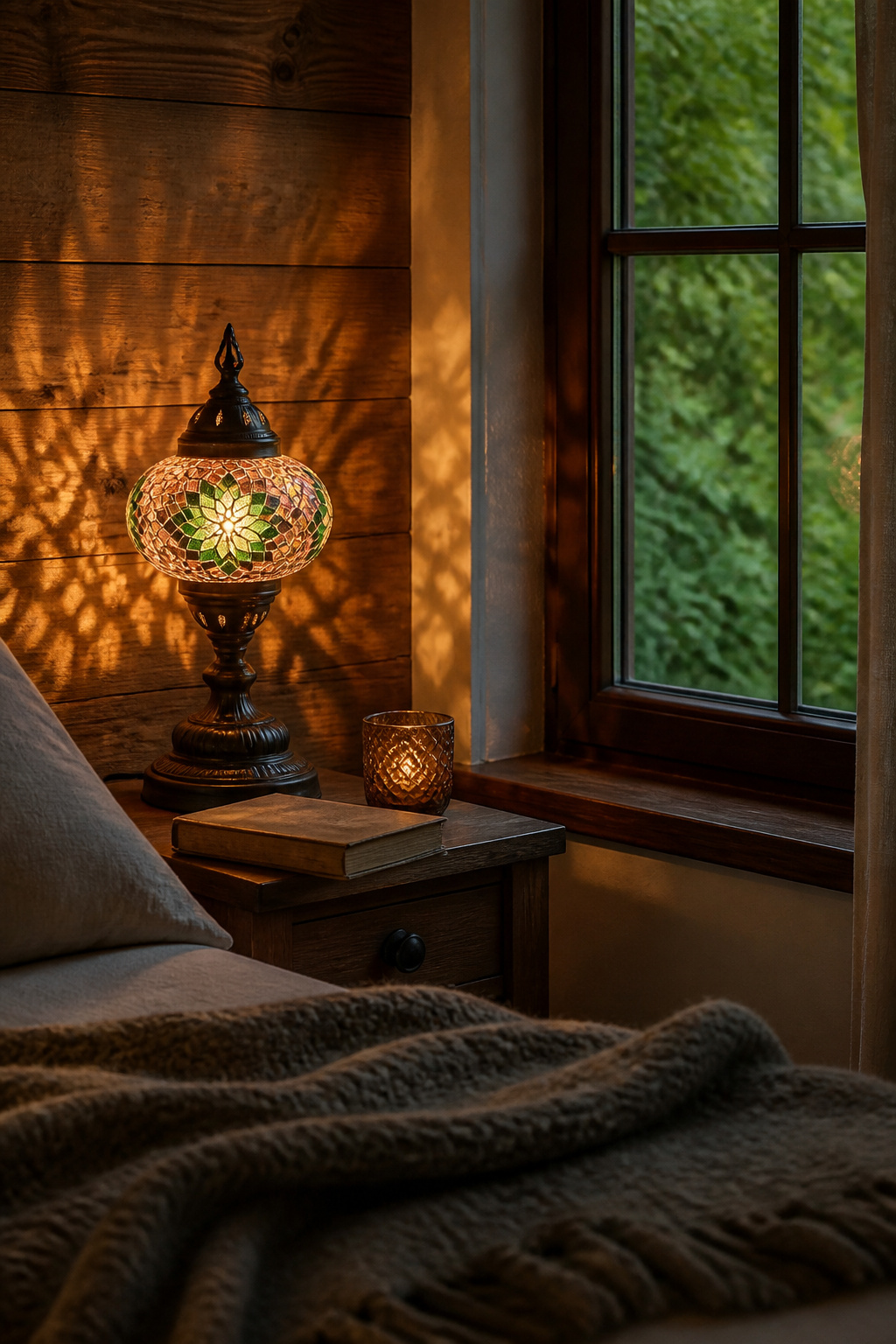
Deep green and soft rose together read like a forest floor after rain, not the bright holly-red pairing that turns nature themes into December decor. The rose here stays muted, almost dried, so the palette keeps a low hum instead of shouting seasonal cheer. When the lamp lights, the greens deepen further and the rose warms to something like late-afternoon light through leaves. I keep one on a bedside table where the pattern throws leaf-shaped shadows against the wall; the effect is calming enough that I have actually mistaken it for a nightlight on evenings when I meant to read. The intricacy matters more than the color alone. Without the mosaic breaking the light into small pieces, the same greens would flatten into a single pool. The pattern does the work of depth, which is why this palette succeeds on a lamp rather than a painted wall.
Recommended Products

【Create Your Unique Masterpiece】Unleash your creativity with BOHMR DIY Turkish Mosaic Lamp Kit, designed for crafting a personalized table lamp that reflects your style. Inspired by ancient Turkish artistry, this lamp making kit empowers you to arrange vibrant glass pieces and beads into patterns ranging from geometric elegance to free-flowing designs, ensuring a one-of-a-kind decorative piece.

【Create Your Unique Masterpiece】Unleash your creativity with BOHMR DIY Turkish Mosaic Lamp Kit, designed for crafting a personalized table lamp that reflects your style. Inspired by ancient Turkish artistry, this lamp making kit empowers you to arrange vibrant glass pieces and beads into patterns ranging from geometric elegance to free-flowing designs, ensuring a one-of-a-kind decorative piece.

【Vintage Bohemian Glass Lamp】 This colorful Mosaic Table Lamp features a Bohemian-style design exuding a natural, free-spirited, and artistic atmosphere. Colored glass lamp immersed in the elegance of Turkish aesthetics It is not only a Vintage Table Lamp, but also a decoration with a unique artistic atmosphere and exotic Decorative Lamp.
Rainbow River
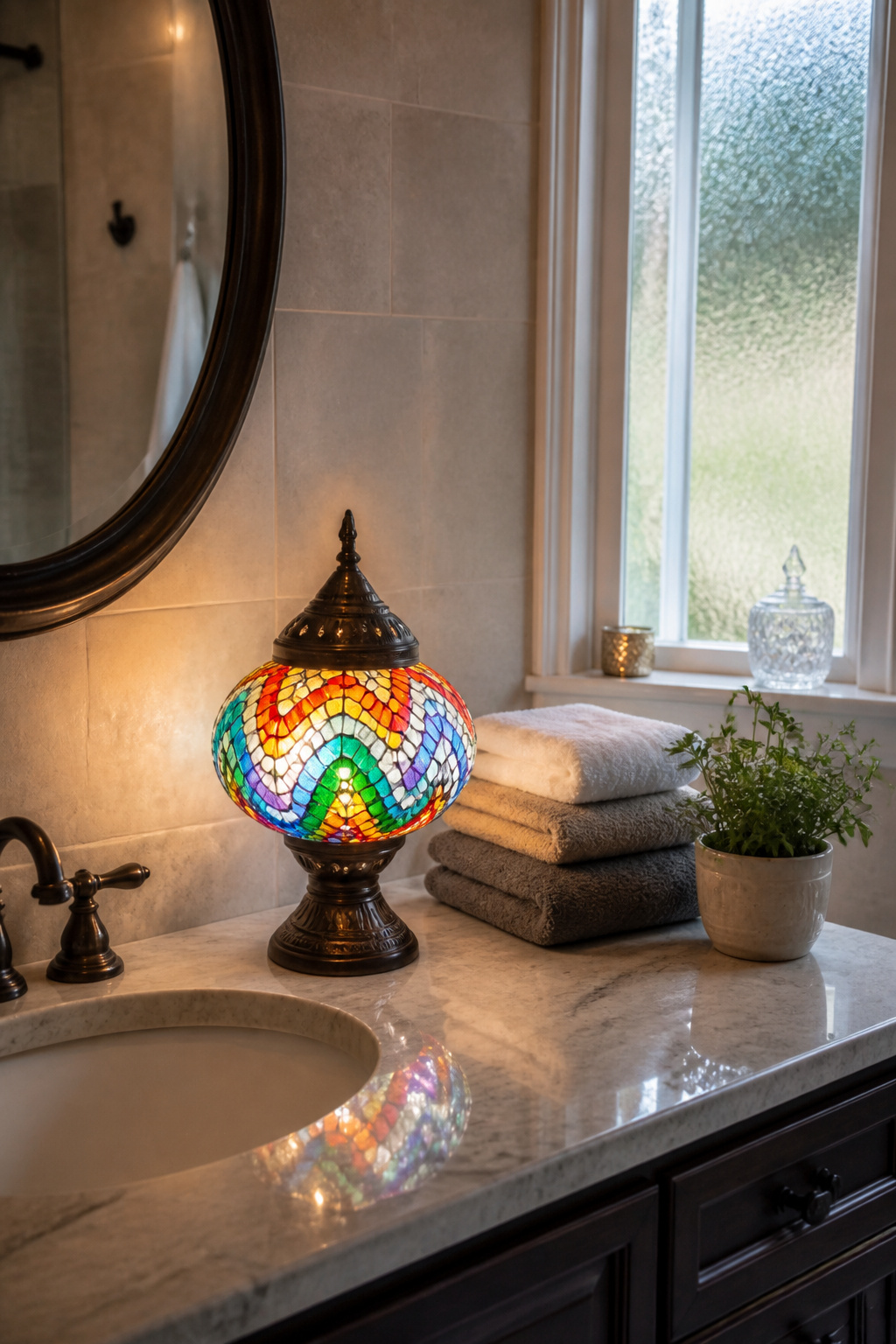
The Rainbow River pattern drops the fixed geometry entirely, so the glass pieces follow flowing, irregular lines rather than radiating from burst points. Where Rainbow Explosion pulls the eye outward to sharp edges, River keeps the gaze moving along the curves, which makes it forgiving if your cuts are slightly uneven. The colors read like candy melting downhill, and because there is no central anchor, the lamp works from every angle instead of having a designated "front." That matters on a bedside table or a bathroom counter where someone might approach from either side. If your room already runs loud with color, this is the pattern to choose; the movement softens the clash that static blocks of rainbow can create.
Recommended Products

Handcrafted Design: This mosaic wall sconce features a glass globe adorned with hand-cut colorful glass mosaics and glass beads in a Tiffany-inspired style, meticulously handmade in Turkey.

ARTISANAL CRAFTING PROCESS: This lamp is a true labor of love, entirely handmade in Turkey by artisans preserving centuries of tradition. The process begins with carefully selected, colorful glass—never painted—hand-cut into small pieces and meticulously glued onto spherical globes to form intricate mosaic patterns with Tiffany-style elegance. The antique brass metal frame is expertly shaped and assembled, reflecting authentic craftsmanship and rich cultural heritage.

Plug and Play Table Lamp- The bedside lamps comes with a 8ft cord with plug and on-off switch. plug this into a traditional wall outlet for use.
DIY Your Pet
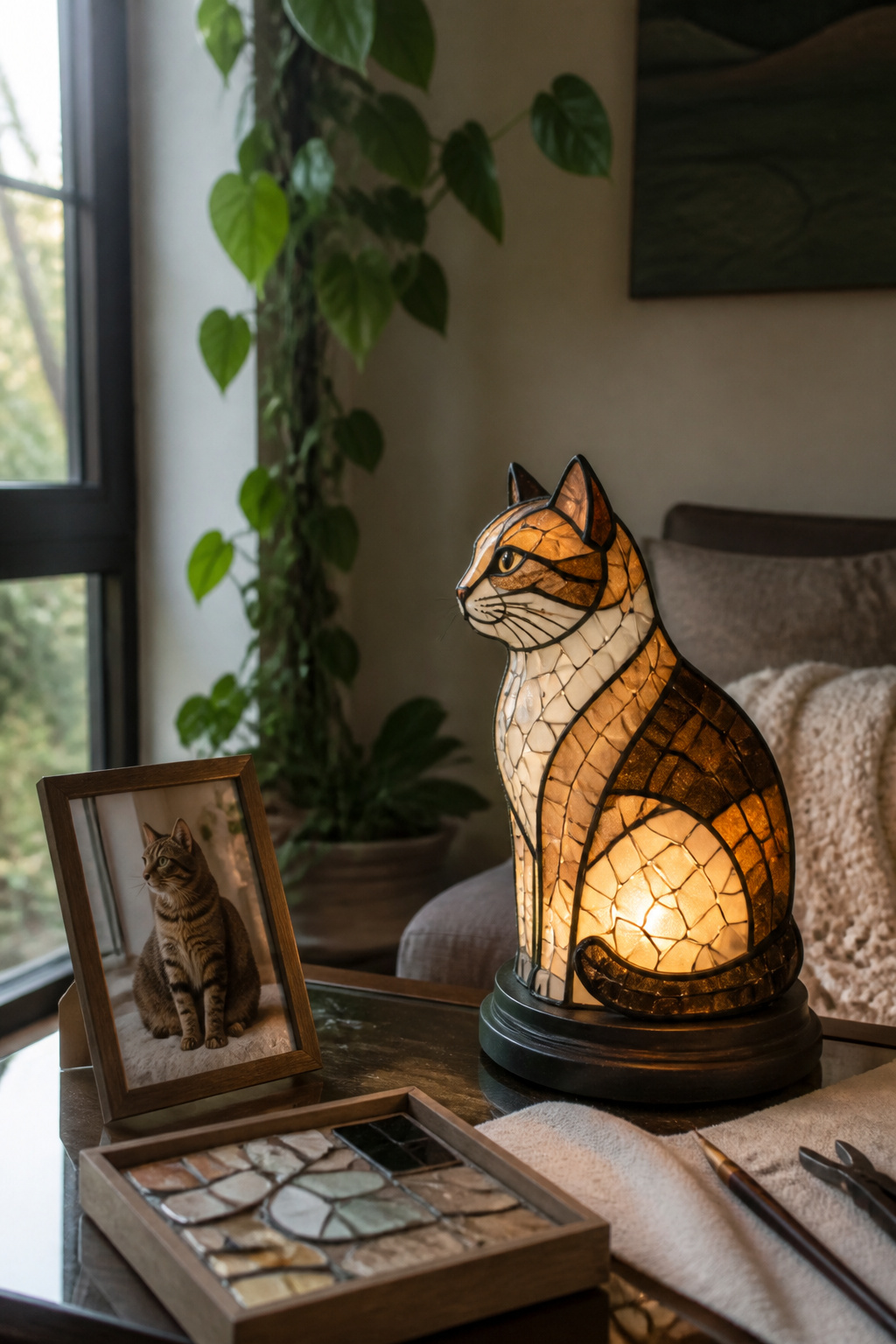
A pet portrait mosaic lamp lands hard as a gift because the design is already personal before the first tile is set. The trick is turning a photograph into something you can actually build with hand-cut glass. Curves and fur texture disappear once you start translating them into simplified tile shapes, so the image needs to be reduced to bold outlines and flat color blocks before you touch glue. Work from a high-contrast sketch, not the photo itself, or you will spend hours trying to cut impossibly thin pieces that crack under the nippers. The eye and the collar read instantly even in chunky geometry; the exact sweep of a tail does not. Most makers settle on a silhouette against a solid ground, which also solves the problem of background pattern competing with the figure. The lamp still reads as Turkish mosaic because the grout lines and the bulb glow do the cultural work, while the motif itself is whatever dog or cat you are building for.
Color Palettes by Room
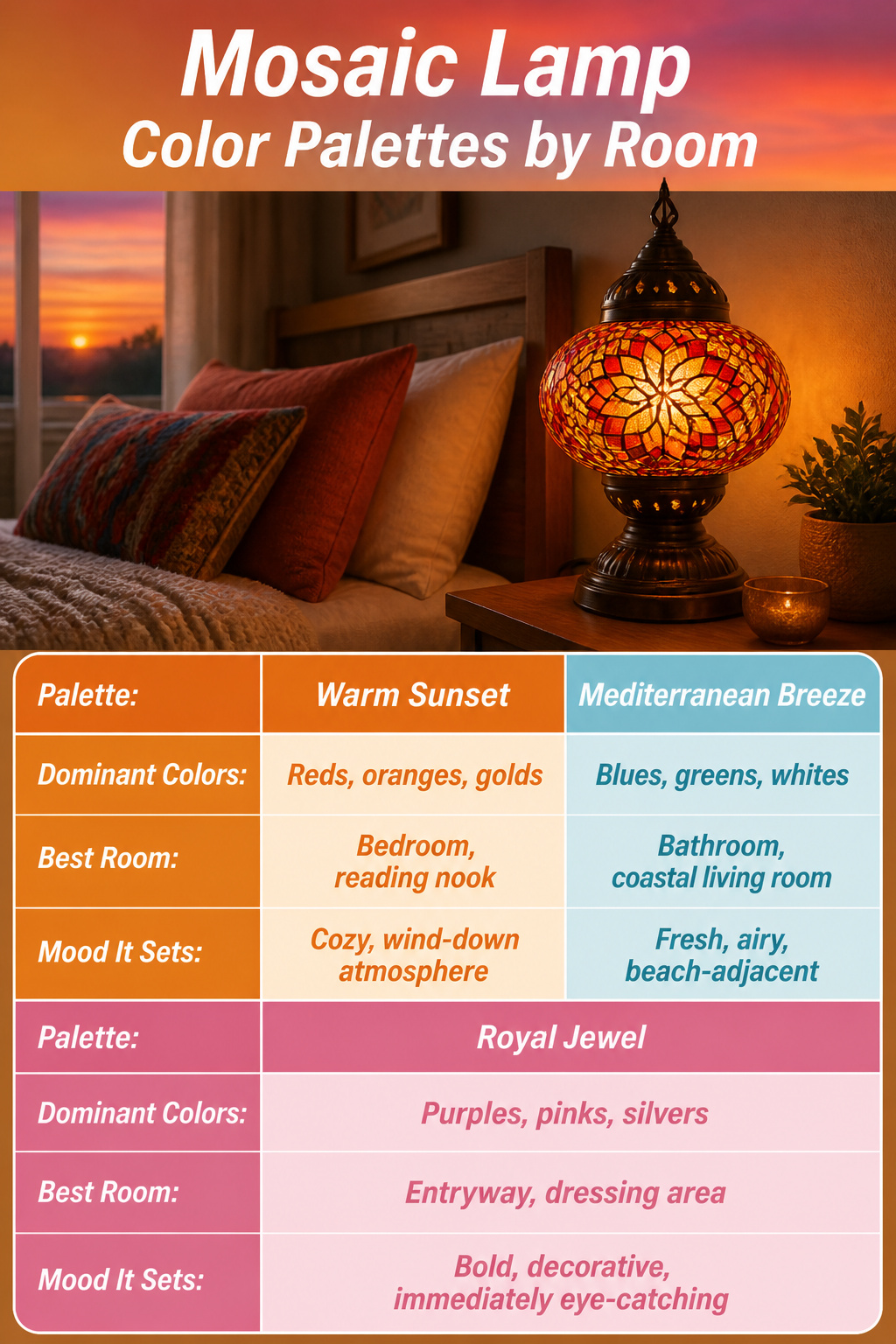
The three palette families that keep showing up in mosaic lamp listings each push a different mood, and matching them to the right room keeps the look intentional rather than accidental.
| Palette | Dominant Colors | Best Room | Mood It Sets |
|---|---|---|---|
| Warm Sunset | Reds, oranges, golds | Bedroom, reading nook | Cozy, wind-down atmosphere |
| Mediterranean Breeze | Blues, greens, whites | Bathroom, coastal living room | Fresh, airy, beach-adjacent |
| Royal Jewel | Purples, pinks, silvers | Entryway, dressing area | Bold, decorative, immediately eye-catching |
Warm Sunset is the one I keep coming back to for bedrooms. The reds and ambers actually dim well; they do not fight evening light the way cooler tones can. Mediterranean Breeze reads as clean in a bathroom because the blues and whites already belong near water, though the yellow accent some makers add risks looking sunny rather than serene if the bulb runs too bright. Royal Jewel is the palette to buy for impact in a small footprint: a single lamp in purple and silver reads as a deliberate bohemian choice, not a color leftover from another scheme. The catch is that it demands a room where it will be the only loud piece. Two of them, and the space tips toward costume drama.
What the Patterns Mean
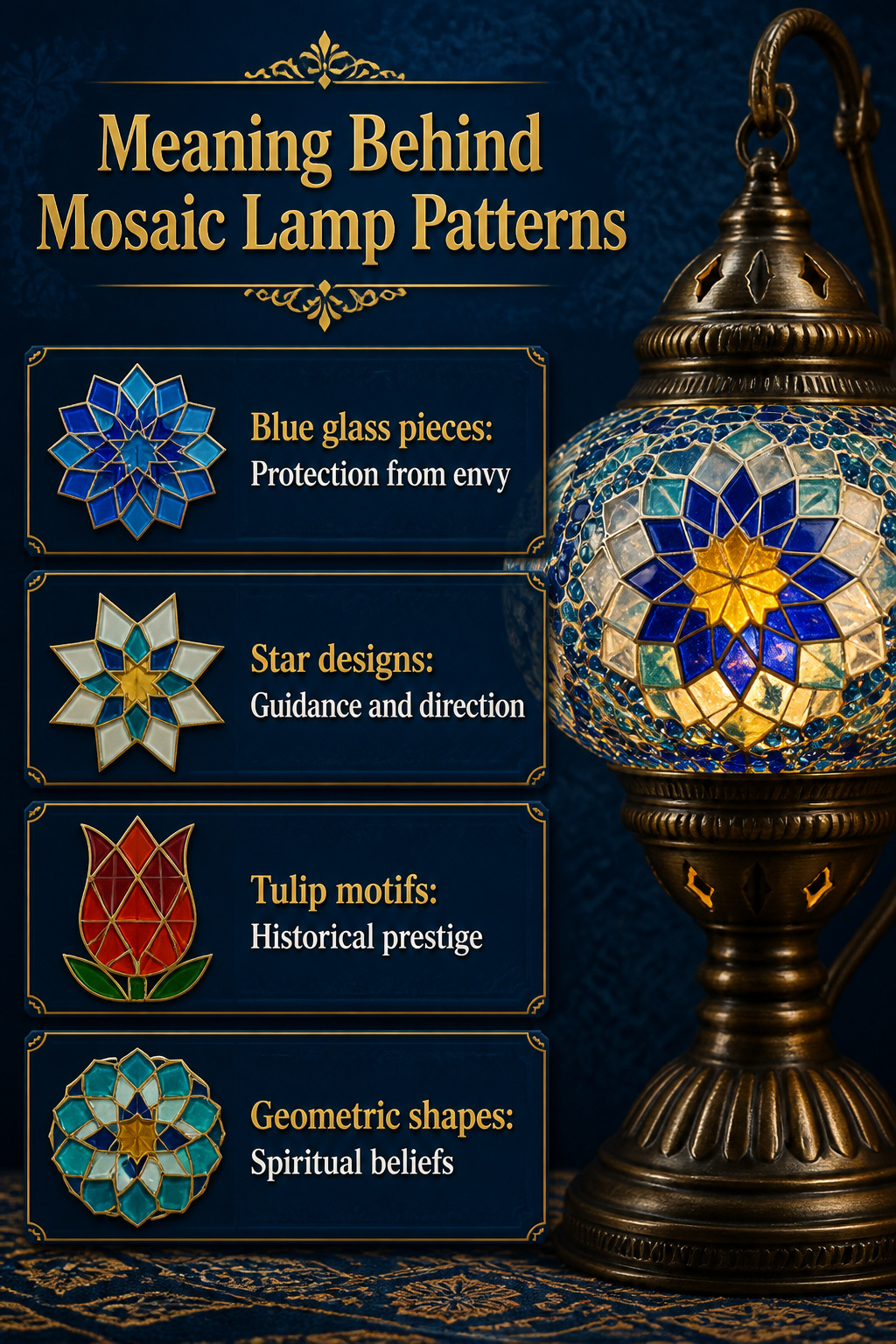
Turkish mosaic lamp ideas carry more weight than color alone. The patterns rooted in Ottoman tradition since the 16th century still signal what the maker hoped the light would do in a room.
Blue glass pieces were set into lamps as protection, the shade meant to catch the eye of something envious and turn it away. Star designs, laid out in rhombus-shaped pieces as an 8-pointed or 6-pointed form, mean guidance and direction; the Anatolian Star sits at the equator of the globe to anchor the whole composition. Tulip motifs, built from triangles and squares to suggest blooming petals, tie back to Ottoman history specifically; this flower carried prestige before it ever reached Dutch gardens.
Geometric shapes beyond these two centerpieces speak to spiritual beliefs, while the overall symmetry of authentic work reflects a balance the craft inherited from Byzantine and Persian sources. Nature symbolism runs through leaves and vines that frame the central motif, keeping the lamp from reading as pure geometry.
A lamp with the tulip reads more formal, more historically grounded. The star pattern feels slightly more versatile, easier to place where you already have other Middle Eastern or North African pieces. Either way, the meaning is visible to anyone who knows the code, and invisible enough to everyone else that it never overwhelms a small room.
Handmade Craftsmanship
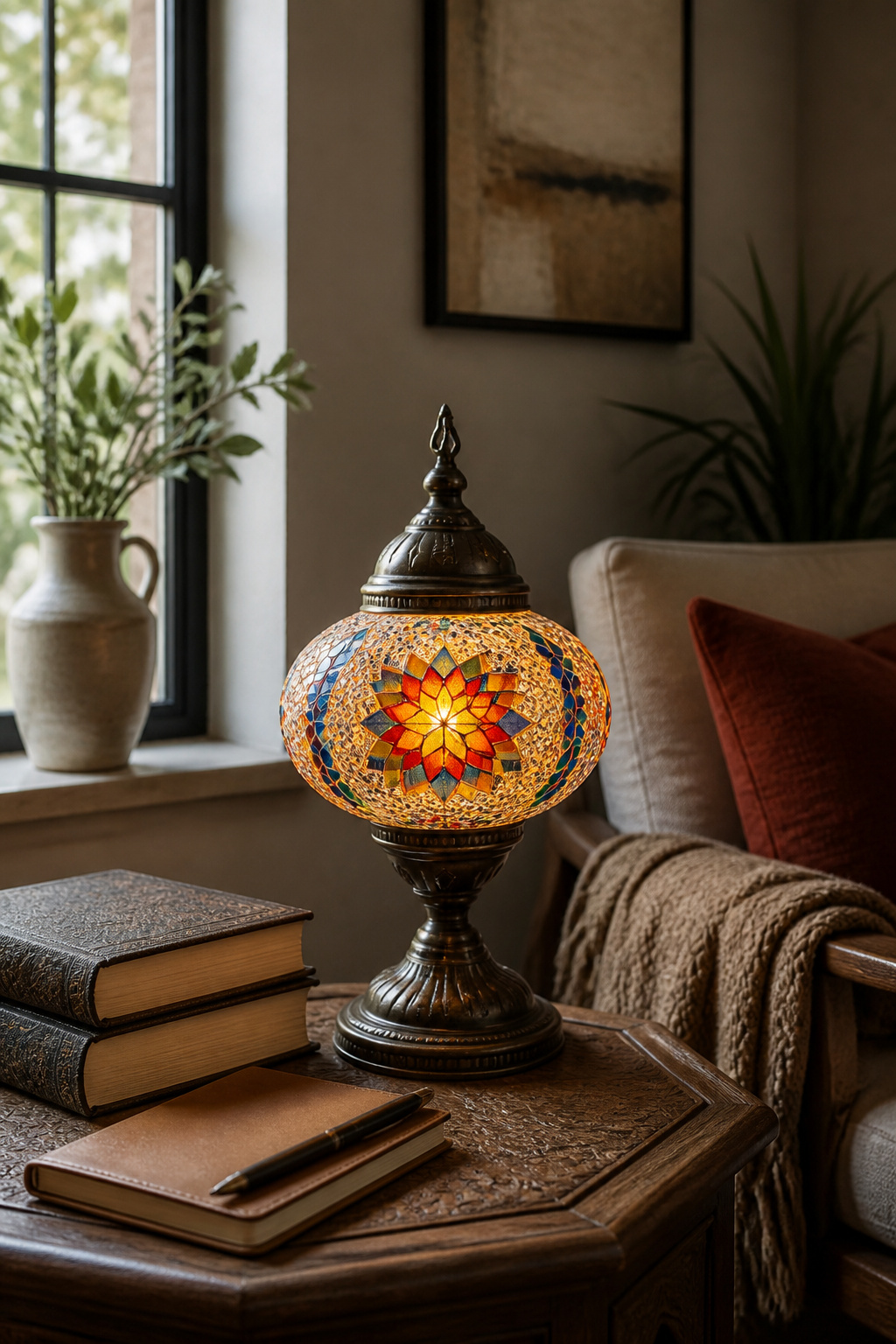
The glass in a Turkish mosaic lamp starts as colored sheets of varying thickness, and the craftsman selects and cuts each piece by hand. In Istanbul workshops, artisans lay those pieces onto a blown glass base with a slow-setting adhesive, working from a pattern drawn on a clear surface. The process has passed through generations, which is why the spacing, the grout lines, and the way light catches the edges still look different from anything stamped out on a factory line.
Factory-made pieces skip the hand-cut stage, using pre-formed tiles that repeat the same shapes. The lamp still works, but the pattern sits flatter and the color variation narrows. If you are buying for a bedside table where the glow matters more than the craft, that tradeoff saves money. If the lamp is the accent in a reading nook and you want the light to fracture across the wall, the hand-cut glass is worth the search. Grout goes in last, and the artisan has about five to six minutes to clean the excess with a wet sponge before it hardens. Miss that window and the surface clouds. That small pressure, repeated across every lamp, is what the generational training is for.
Care and Cleaning

- Dust the shade and base every week with a dry microfiber cloth; dust left too long works into the grout lines and dulls the glass.
- For a deeper clean, wipe with a soft cloth dampened in mild soap and warm water only. Harsh cleaners or scrub pads crack the grout and strip the foil backing that gives mosaic pieces their depth.
- Tackle stubborn spots with a barely damp cloth, not a soaking one. Water seeping behind the glass loosens the adhesive over time.
- Buff dry immediately with a clean, soft towel. Leaving moisture on the metal base or in the grout invites tarnish and mildew.
- Handle the lamp by its base, never the shade. The weight of a mosaic piece can pull free if the bond is stressed, and re-gluing at home rarely matches the original finish.
Frequently Asked Questions
What else are Turkish mosaic lamps called?
They are called Turkish mosaic lamps and believed to ward off evil. Some sources try calling them "evil eye" lamps, but that label lacks reliable backing and did not come up among artisans in Istanbul.
Where are Turkish mosaic lamps handmade?
Skilled craftsmen in Istanbul handcraft these lamps using techniques passed down for generations. That generational training shows in details like the five- to six-minute window artisans have to clean grout before it hardens.
What do the blue Turkish mosaic lamps mean?
In Turkish culture, blue glass pieces were set into lamps as protection against envy and negative energy. The shade was meant to catch the eye of something envious and turn it away.
Leave a Reply